


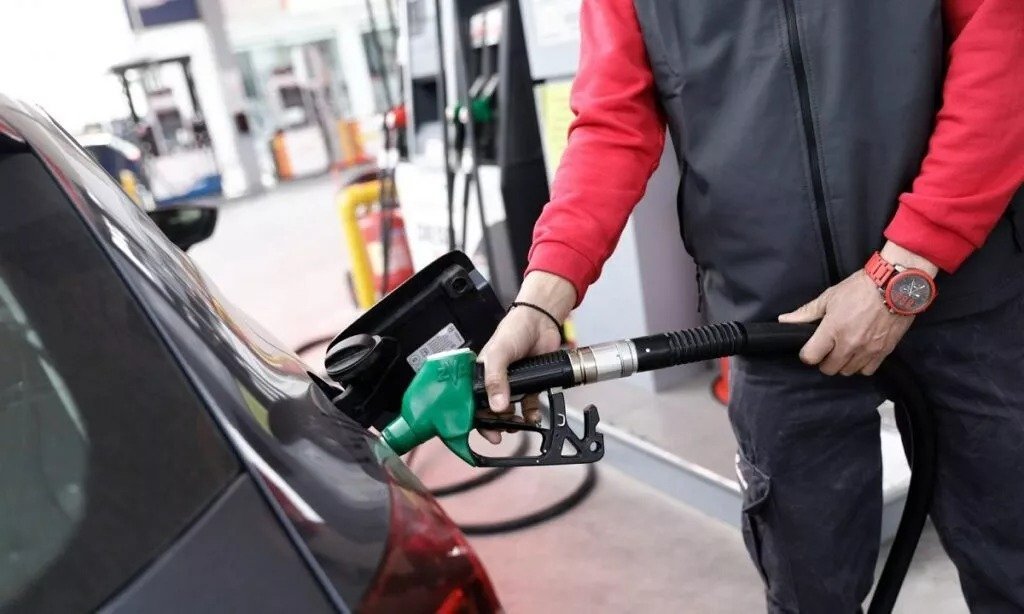
The government must make final decisions on implementing a green fuel tax by the end of the month, with the levy set at 3-4 cents per litre if ultimately applied.
As philenews reported yesterday, Brussels has unofficially expressed opposition to suspending the green taxation, which forms part of commitments made by the previous government in relation to the EU Recovery Fund.
However, a competent government source told philenews that all options remain open, echoing statements made by President Nikos Christodoulides several days ago.
Despite the European Commission’s disagreement and the Finance Ministry’s preparation of legislation for imposing the specific taxation—reduced by 50% from the original plan and set to be implemented next month—the Council of Ministers could decide at the last minute not to implement the measure.
Such a decision would result in the loss of €50-60 million from the Recovery Fund.
The green tax would be applied for 18 months, as the European carbon trading system will be implemented across Europe in 2027. All member states will then impose a carbon tax, increasing fuel costs by 18-20 cents per litre.
EU emphasises reform implementation
European sources told philenews that whilst the European Commission has recently agreed to modify some provisions of Cyprus’s Recovery Plan, there is difficulty in accepting requests for postponement.
The sources indicated that if Cyprus fails to implement the measure—originally scheduled for 2022—it will lose EU funding. The plan’s objective is transition to green development and general compliance with reforms for which Cyprus has received recommendations for years.
Green taxation encompasses fuel tax, green water charges, and waste disposal taxation. The water charge has been implemented so far, and the amount of Recovery Fund grants Cyprus loses will depend on decisions regarding both transport fuels and waste.
The Agriculture Ministry recently opened public consultation on legislative framework for creating a Waste Management Fund to ensure effective use of revenues from landfill tax implementation and their utilisation as compensatory measures to finance investments in municipal solid waste management facilities, equipment and services under the “Pay As You Throw” scheme.
The waste disposal tax is also expected to be implemented at a reduced rate.
AKEL’s criticism
The opposition AKEL party launched sharp criticism against the government, alleging incompetence. Christina Nicolaou, head of AKEL’s Energy and Environment sector, argued these are “green tax storms”.
She said the government failed to persuade the EU to withdraw green taxation commitments made by Nicos Anastasiades’s government but which Christodoulides’s administration was more than willing to impose.
“We do not know to what extent, when and how the government negotiated. What we know is what the Finance Minister supported in a letter he sent us, that there is no flexibility for any negotiation with the European Commission on green taxation,” she added.
She emphasised that by reducing taxation, the government is attempting to sugar the pill.
“We will be left with green taxation because the government did not seek even their postponement when negotiating changes to the Recovery Fund. And when it was forced to do so—if it did—obviously under AKEL’s intense pressure, it was too late,” she concluded.

