


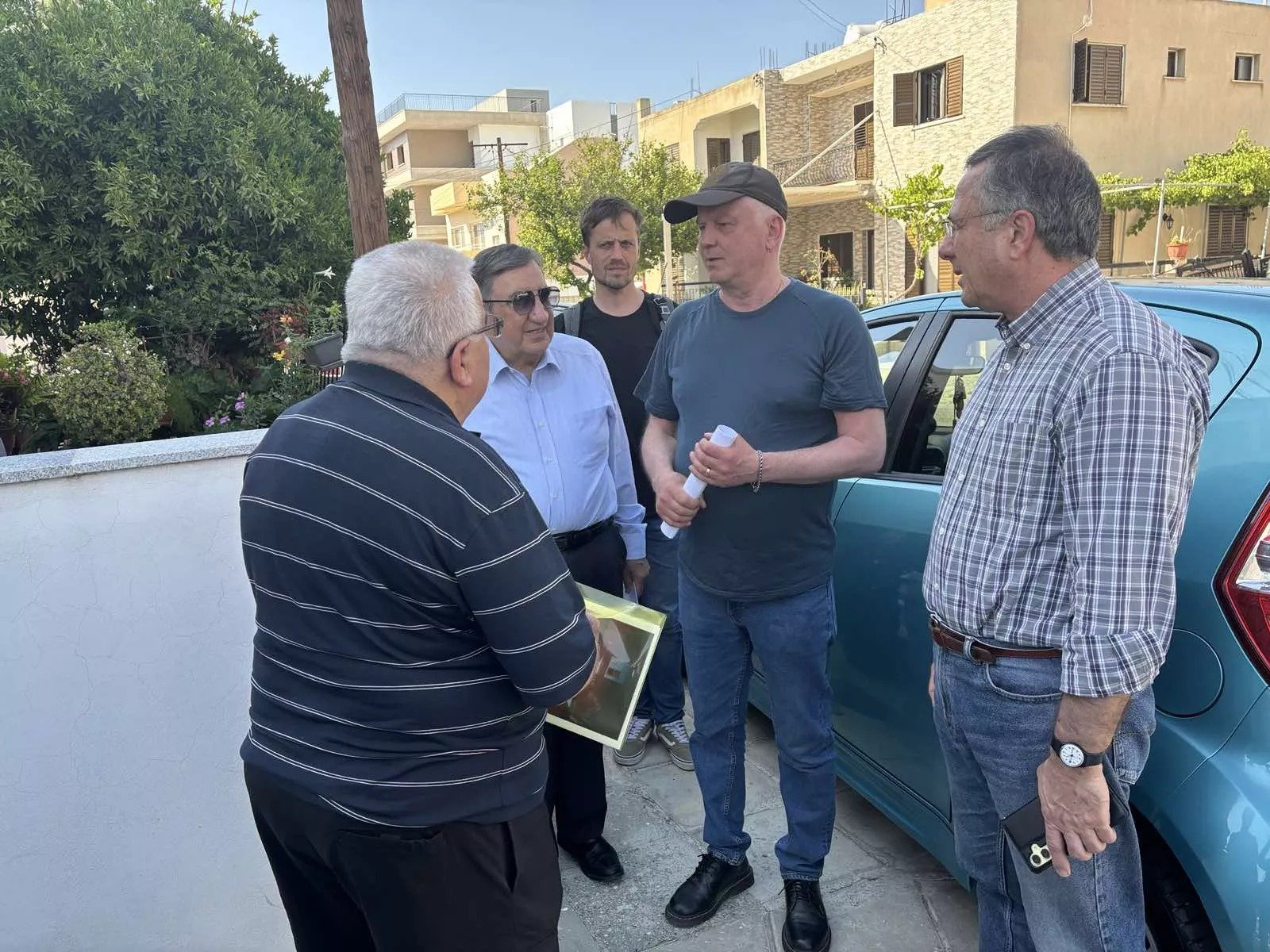
Representatives from an award-winning Swedish media outlet visited Marathovounos Street in Latsia yesterday afternoon to report on the Astrasol factory and the carcinogenic dichloromethane it emitted into the atmosphere through its chimneys for years.
Investigative journalist Andreas Rocksen from Dagens Arbete, a magazine recognised for investigative journalism, and a photographer from the publication were conducting research at the former industrial site.
Rocksen told philenews that the subject of their upcoming report is dichloromethane. He referenced his previous articles about an industrial facility operating in Sweden that had received exemptions from authorities to use specific quantities of dichloromethane.
The journalist explained that the issue has entered public debate in the Nordic country and has mobilised people who have already demonstrated against it.

Present at the site was Ionas Kailis, the symbolic figure in the fight for justice for the 22 families severely affected by cancer, other individuals harmed by the toxic substance, Giorgos Perdikis, who led the Greens in the early part of the previous decade and spearheaded efforts to close the factory, and epidemiologist Dr Michalis Voniatis.

Dr Voniatis, together with environmental health professor at TEPAK Dr Constantinos Makris, conducted the epidemiological study that led to the initial conviction ruling in 2017 for cancer cases in the area around Astrasol.
The Supreme Court overturned this decision on September 21, 2022.

The two scientists’ study on the Astrasol case gained international recognition. In April 2018, it was published in the European Journal of Public Health, the official publication of the scientific society of all public health organisations in Europe.
Additionally, their research attracted attention from the International Agency for Research on Cancer (IARC) and the World Health Organisation. Dichloromethane was included in the updated list of substances related to carcinogenesis, which is reviewed every 10 years.

The Swedish journalist held extensive discussions with Dr Voniatis, who provided him with data from the study he prepared with Dr Makris.
In the presence of Andreas Rocksen and the renowned Cypriot epidemiologist, philenews explicitly asked for clarification on whether the disputed chemical substance was exactly the same as that used at Astrasol.
Both Dr Voniatis and the colleague from the Scandinavian country answered affirmatively.
The Senior Material factory operates in the Swedish city of Eskilstuna. Chinese company Shenzhen Senior Technology Material invested approximately 250 million euros to construct the industrial facility, which produces lithium battery separator films at the Svista industrial park.

