


French President Emmanuel Macron stated that the actions of the Netanyahu government in Gaza are “shameful” and “an unacceptable humanitarian tragedy.” The French president said he was “one of the only leaders to go to the border” between Egypt and Gaza, “one of the worst things he had seen”, lamenting that “all the aid France and other countries are sending” is “being blocked by the Israelis”.
However, he avoided characterising what is happening as genocide, arguing that “It’s not a president’s place to say ‘This is a genocide,’ but that of historians, in due time.”
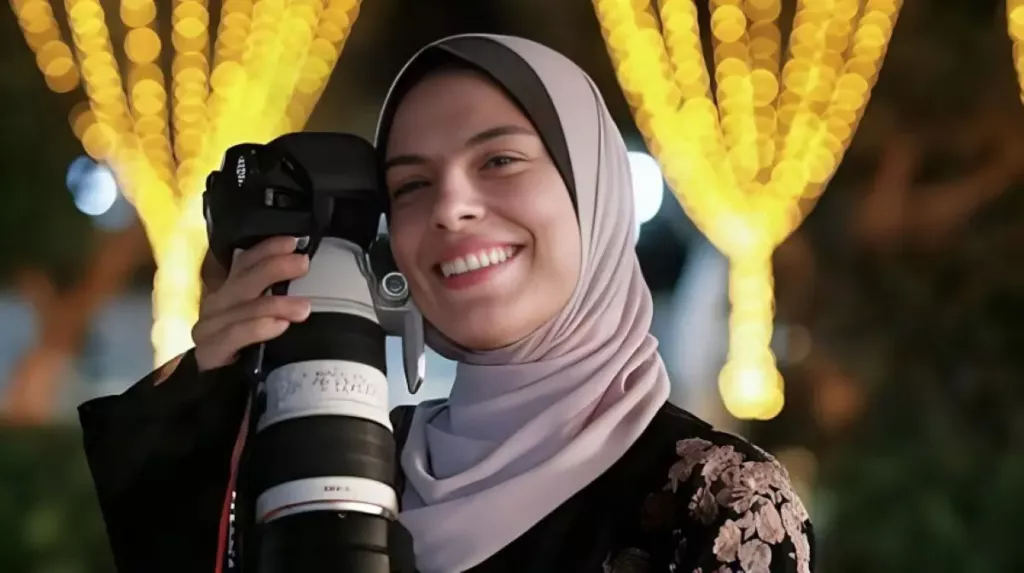
So we will wait for historians to tell us that what was happening in Gaza between 2023 and who knows how much longer was genocide. Then we will be moved by the death of a beautiful photojournalist, 25-year-old Fatima Hassouna (Fatma), when we see her life dramatised through some Netflix of the era. One day before her murder, the film in which she starred – “Put Your Soul on Your Hand and Walk” – had been selected for the ACID programme at the Cannes Film Festival. She was also ready to get married. But she was killed in Israeli bombardments, along with her pregnant sister and ten other family members. This was preceded by the arrest of another artist, director Hamdan Balal, co-creator of the documentary “No Other Land”, which won an Academy Award. His arrest came a few days after his award.
In a decade, perhaps sooner, we will say yes, it is genocide to bomb hospitals and schools, to kill tens of thousands of people, to displace 2.5 million, to deny access to food and healthcare, to impoverish them, to deliberately murder people trying to report what is happening outward or to help (journalists, doctors, artists, poets, volunteers…).
“Let us name reality. Let us reject the propaganda that constantly colonises our imagination and makes us lose our sense of humanity,” write 400 people from world cinema in a letter prompted by Fatima’s murder, noting that silence in the face of violence is tantamount to complicity. “Why this silence?” they ask. “What is the point of our professions if not to draw lessons from history, to make films that are committed, if we are not present to protect oppressed voices? Let’s refuse to let our art be an accomplice to the worst. Let’s act before it’s too late. For Fatma, for all those who die in indifference,” write the 400.
Why all this silence, each of us may ask.

