


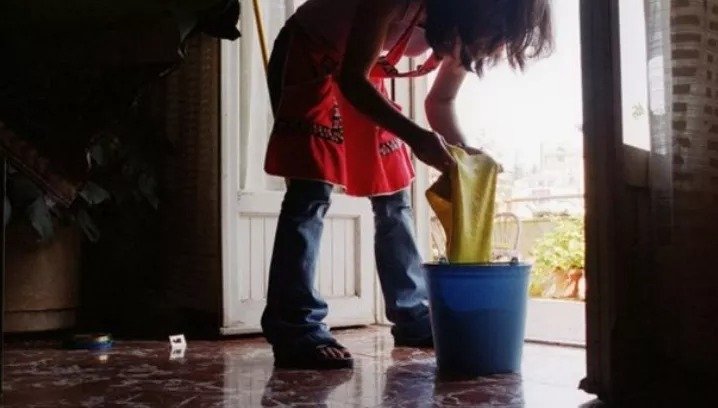
Sandra, originally from Sri Lanka, has lived in Cyprus for the past 15 years. During this time, she has helped raise children, provided companionship and care for the elderly in their final years, cleaned homes, and tended to gardens and pets.
She has contributed approximately €20,000 to the Social Insurance Fund. (Under Cypriot law, the gross monthly salary for domestic workers is set at €460, from which approximately €120-130 is paid into the Social Insurance Fund).
After 15 years and having reached the age of 65, Sandra wants to return to her home country. When she left, her daughter was a teenager; now she is a woman with a child of her own.
Sandra’s health is increasingly sending signals that it’s time to rest. She wishes to return to her country and live near her family as a pensioner.
However, her family relies on the income she sends from her salary, and having worked abroad for so many years, she cannot expect much—perhaps nothing—from her own country’s pension system.
But what about Cyprus, where for 15 years she not only contributed to the Social Insurance Fund but simultaneously helped the state avoid its obligation to care for its citizens—both children and the elderly? Is she entitled to nothing?
Well, it turns out she is indeed entitled to nothing. The twenty-odd thousand euros she contributed to the Fund amount to a donation to the Cypriot state.
The same state that would have needed millions to provide the elderly care that Sandra and other Asian domestic workers offered.
Yet it benefits from the service of Sandra, Kumari, Sunita, and every woman from Sri Lanka, Nepal, India, Vietnam, the Philippines… and when they leave, the state has no obligation towards them.
There are no bilateral agreements with their countries, so Cyprus can exploit them without guilt.
In any case, the government—both current and previous—uses the Social Insurance Fund as a lending bank. The government debt to the Fund stands at €11.90 billion.
How can it provide—even without a bilateral agreement—a lump sum to the women who cared for our elderly in the absence of state infrastructure and services? Not as a gift, but because they contributed, because the state owes it to them.
From their meagre salaries, the state collected a substantial percentage each month, for years, from thousands of foreigners (mainly women). For what purpose? How can the state stoop to stealing from the lowest-paid workers?
Read more:

