


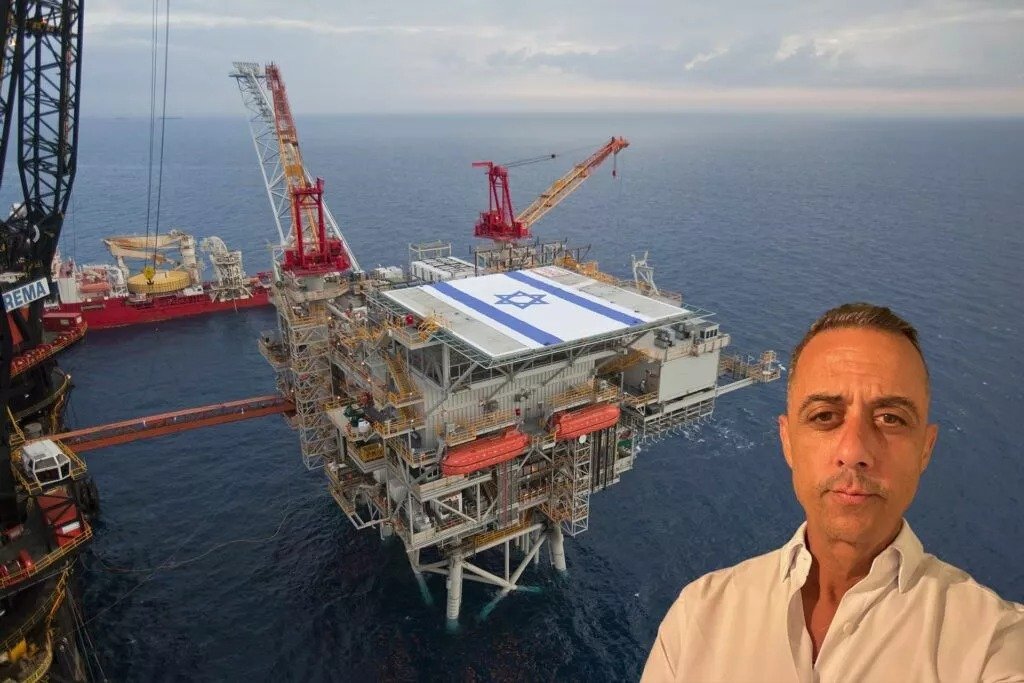
The scenario initially played out primarily in Greece and, following Prime Minister Kyriakos Mitsotakis’s careful response to a journalist’s question – though this was largely overlooked – it’s certain to gain more traction in Cyprus: Is an EEZ (Exclusive Economic Zone) agreement between Syria and Ankara truly imminent? And how would such a development affect regional dynamics?
The answer is far less intriguing than the question itself. For now, the speculation stems solely from an article by retired Turkish Vice Admiral Cihat Yayci, who argued that Turkey should immediately pursue such an agreement to curtail the capabilities of the “Greek Cypriots” – his term for the Republic of Cyprus. Beyond this, there’s no substance to the claims.
This scenario could only materialise once the new Syrian political landscape stabilises, and only if the new Syrian leadership becomes so dependent on Ankara that it would risk confrontation with regional players and the Americans, who have vested interests in the Cypriot EEZ, merely to appease Turkey.
All indicators suggest that stability remains a distant prospect, and despite Damascus’s publicly proclaimed close ties with Turkey (which helped HTS overthrow Assad), such complete dependence on Ankara neither exists nor is feasible.
At a time when the Americans have had a promising initial contact with Damascus’s new leadership – so promising that Washington lifted the bounty on Ahmed al-Siara – and while Israel acknowledges indirect communication with Syrian leadership (presumably through the US), it’s hard to imagine Damascus making such a provocative move. The Syrian leadership is currently trying to convince not just Jerusalem but the entire international community of its potential as a constructive regional player. It seems unlikely they would pursue actions that would bring them into conflict with both Cyprus and the European Union, especially while they’re desperately seeking international recognition.
The reference to the Turkish-Libyan Memorandum, mentioned by the Turkish Vice Admiral himself, might play well for Turkey’s domestic audience, but beyond that, it’s both hasty and risky given current circumstances. The 2019 Memorandum was nullified by the Al-Bayda Court of Appeal and deemed illegal by Greece, Egypt, the European Union, the UAE, and numerous other countries. Its signing was predicated on Libya’s effectively divided state, which persists despite occasional agreements (including the dialogue that resumed between the two sides just days ago). While the Memorandum was followed by another agreement between the parties, its foundation rests on arbitrary Turkish claims rather than Maritime Law or any other legal basis.
Damascus can’t afford such luxuries, especially when its relatively cohesive new regime seeks to build relationships with neighbours rather than create tensions. Unlike the situation with Libya’s Government of National Accord, which faced opposition from France, Egypt, Greece, Israel, Saudi Arabia, the UAE, Russia, and others, the international community isn’t particularly divided over Syria. Therefore, Damascus currently has no incentive to pursue such actions before consolidating power. They do, however, have reason to fear Ankara, which seeks to establish a parallel shadow structure within Syria to control the new status quo. This could potentially be used as leverage against Damascus.
With such a volatile and malleable situation, any such move would bring Damascus far more problems and enemies than benefits. As for Turkey, which is pursuing closer ties with the European Union – achieving some success thanks to Greece and Cyprus’s stance – it would logically want to avoid creating additional problems beyond existing ones, to which the Cyprus issue was recently officially added as a condition for this rapprochement.
Regarding Israel and Egypt, beyond their relationships with Greece and Cyprus and their conflicting interests with Turkey, Ankara will certainly approach them again in the future about the prospect of a new pipeline in Syria. This small land pipeline could connect with the Arab Gas pipeline, which would link Egypt with Jordan and Syria but was blocked by Russia to maintain Europe’s dependence on Russian gas.
If this materialises, Egypt and Israel would have a much more cost-effective solution for natural gas exports. However, this remains a distant prospect. No one would invest in a politically unstable country like Syria, where circumstances change constantly.
For now, therefore, these remain mere scenarios. Not impossible ones, but scenarios nonetheless.
Read more:

