


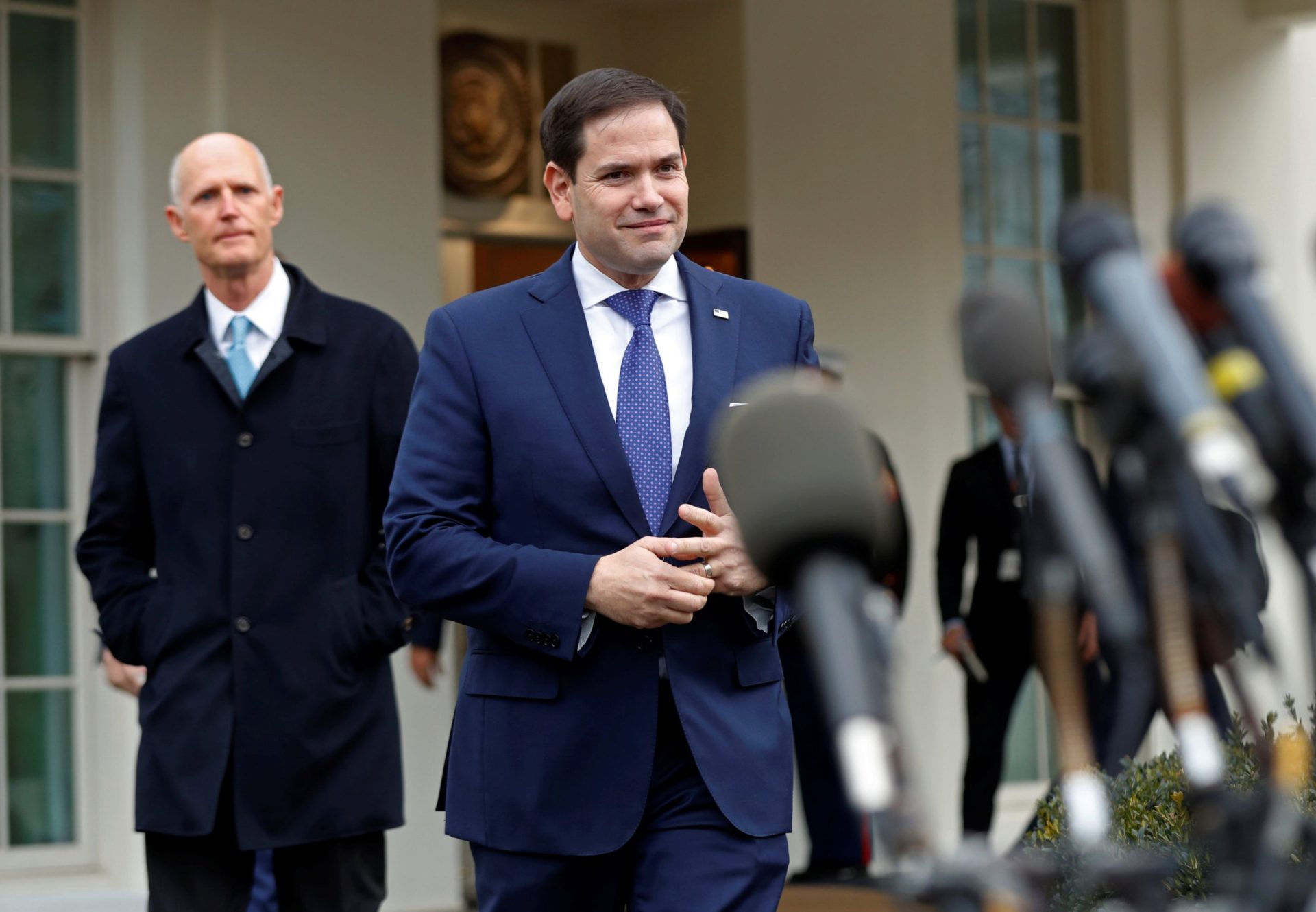
Marco Rubio, known for his hawkish foreign policy stance and as a key architect of the East Mediterranean Security and Energy Partnership Act (EastMed Act), has been selected by Donald Trump as the next U.S. Secretary of State.
The nomination has drawn particular attention in Cyprus, where government and diplomatic circles emphasised Rubio’s role in the EastMed Act, which marked a turning point in U.S.-Cyprus relations.
The legislation has been a point of pride for both previous and current governments, though it has faced criticism from the left-wing opposition AKEL party.
Rubio, 53, who has served in the Senate since 2010, would join Mike Waltz, Trump’s pick for national security adviser, in shaping U.S. foreign policy.
Both appointments are being interpreted as signals of Trump’s intended foreign policy direction.
The Florida senator’s nomination has already sparked concern in Ankara, particularly due to his past criticism of Turkey’s 2019 offensive in Syria, his opposition to Erdogan’s relationship with Maduro, and his characterisation of Turkey’s government as authoritarian, alongside Russia, China, and Venezuela.
Rubio has recently aligned with Trump on several key issues, including the war in Ukraine, suggesting the conflict has reached a stalemate.
He was among 15 Republican senators who voted against a $95 billion military aid package for Ukraine in April.
“I’m not on Russia’s side – but unfortunately, the reality is that the way the war in Ukraine ends is through a negotiated settlement”, he told NBC in September.
The senator has been a vocal critic of both Obama and Biden administrations’ approaches to Latin America, particularly regarding Nicaragua, Cuba, and Venezuela, as well as their Middle East and Asia strategies.
He is notably hawkish on China and supports tariffs, leading Beijing to impose still-active sanctions against him in 2020.
Read more:

