


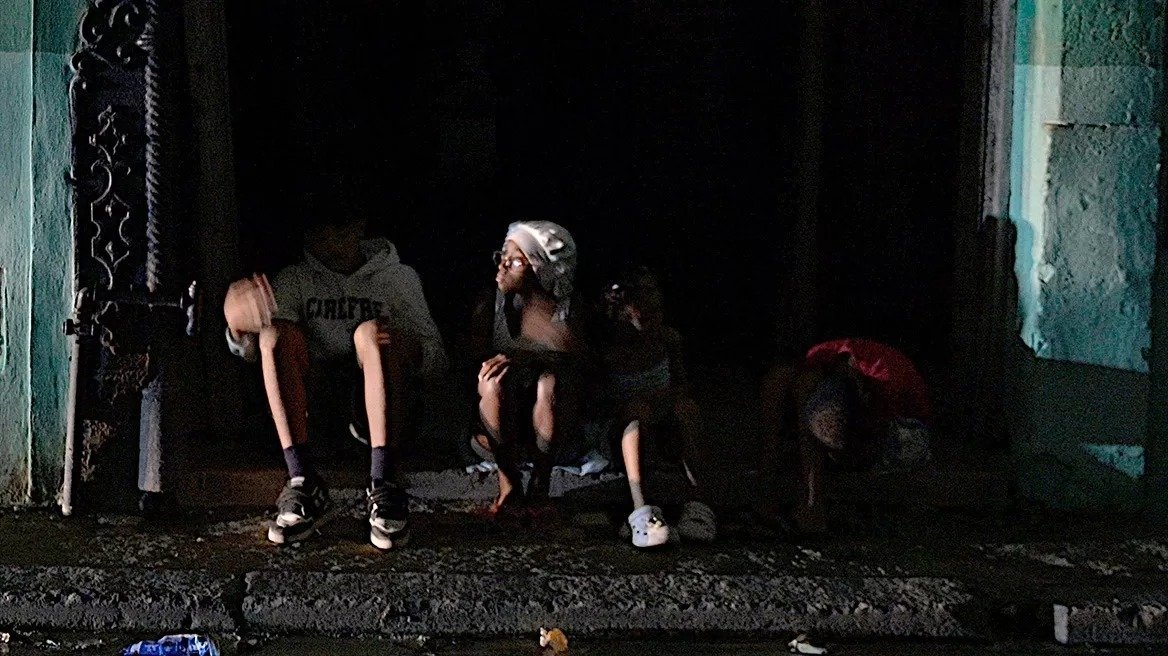
Hurricane Oscar made landfall in eastern Cuba on Sunday, as the Caribbean nation grappled with its third consecutive day of widespread power outages, the US National Hurricane Center (NHC) reported.
#BREAKING: Hurricane Oscar makes landfall in Cuba as a category 1 hurricane. The island is already on its 3rd day of a nationwide blackout after its energy grid collapsed pic.twitter.com/86H0BTox9I
— GBN Network (@GeoBNN) October 21, 2024
The storm reached the province of Guantanamo, near the city of Baracoa, at approximately 22:50 GMT on Sunday, with wind gusts reaching nearly 130 kilometres per hour.
Cuba has been experiencing significant electrical disruptions since Friday, when the country’s largest power station, Antonio Guiteras, ceased operations, causing the national power grid to collapse.
This event triggered the most extensive blackout in at least two years.
🇨🇺 Cuba shuts down for three days as energy crisis deepens
— Andromeda11711 (@Andromeda11711) October 19, 2024
Cuba is grappling with a severe energy crisis, marked by widespread blackouts and crippling power outages. To address the situation, the government announced a three-day shutdown of all non-essential services and… pic.twitter.com/reKXDsbcaG
Despite authorities’ efforts to restore power, the grid failed again on Saturday morning.
The state-owned Havana Electric company announced on Telegram late Saturday: “At 10:25 pm, there was another total disconnection of the national electroenergy system.”
The post was later removed from the company’s Telegram channel, according to Sky News.
More than 10 million people remained without electricity early Sunday morning.
Cuba’s state energy agency stated: “The process of restoring the electrical system remains complex. Around 10:15 pm, there was another disconnection of the western subsystem. Work to restore it continues.”
The western subsystem includes the capital, Havana.
Two small protests occurred overnight in Marianao and the Cuatro Caminos area of Havana.
By Sunday afternoon, some progress had been made, with power restored to certain Havana neighbourhoods.
However, much of the country remained in darkness, and some services requiring electricity, such as water supply, were suspended.
Following the initial collapse on Friday, the government closed schools and “non-essential” industrial facilities to conserve supplies.
Rolling blackouts have plagued the country in recent weeks, lasting up to 10 to 20 hours a day across much of the island.
Cuban Prime Minister Manuel Marrero attributed the problems to a combination of extremely high temperatures.
A somewhat unexpected situation is unfolding in the Atlantic as Oscar has rapidly intensified into a hurricane, exceeding all expectations. This represents an incredibly rare model failure. Hurricane warnings are now in effect for the Turks and Caicos and SE Bahamas. pic.twitter.com/uRFHjmY6CD
— Nahel Belgherze (@WxNB_) October 19, 2024
The Cuban government estimated that power would be restored to the majority of the population by Monday evening.
Energy and Mines Minister Vicente de la O Levy stated, “We can say that between morning, afternoon, or evening,” electricity will be restored for most Cubans.
Hurricane Oscar made landfall in the southeastern Bahamas early Sunday, moving towards Cuba.
🌀 (Huracán #oscar 2 pm) INSMET
— Samurái De Cuba (@CubaSamurai) October 20, 2024
👉Oscar se mueve hacia el oeste-suroeste a cerca de 7 mph (11 km/h). Se espera que continúe su movimiento hacia el oeste-suroeste a una velocidad lenta a lo largo de la noche, seguido de un giro hacia el noroeste y norte el lunes y martes. pic.twitter.com/fsPSoBwyW1
The US National Hurricane Center in Miami reported that the storm’s centre reached Great Inagua Island.
Meteorologists forecast up to 25 centimetres of rain in eastern Cuba, with some areas potentially receiving up to 38 centimetres by Tuesday.
Hurricane warnings were issued for the southeastern Bahamas and parts of Cuba.
(information from protothema.gr)

