


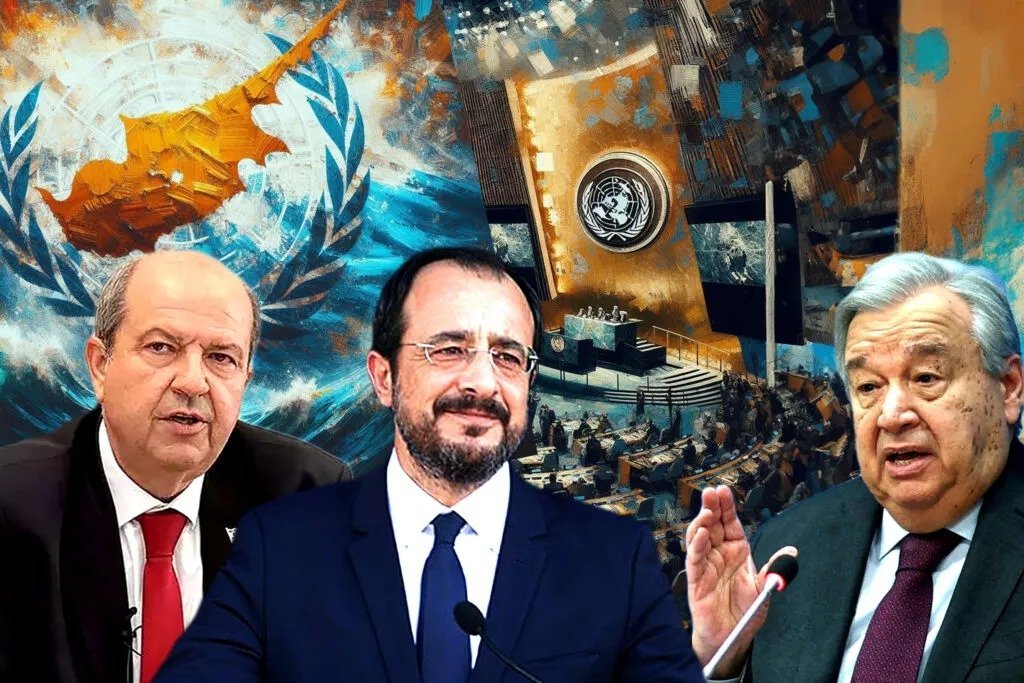
Both sides have claimed partial victories amid a shift towards informal dialogue at the United Nations-hosted dinner for the Cypriot leaders in New York on Tuesday.
A UN statement following the meeting on the 38th floor of the organisation’s headquarters maintained a neutral stance, expressing regret over the lack of progress made by the Secretary-General’s personal envoy without assigning blame to either party.
From Holguin to DiCarlo
While the Turkish Cypriot side may view the non-renewal of Maria Angela Holguin Cuellar’s contract as a win, her successor, Rosemary DiCarlo, represents an upgraded UN involvement, according to Nicosia. DiCarlo is an official of the international organisation, which apparently removes any narrative the Turkish side may have regarding the form of UN involvement, a Nicosia maintains.
Checkpoint solution
The announcement of discussions to open new checkpoints was met with cautious optimism. However, talk of opening new checkpoints is considered a smokescreen to hide the lack of progress in the peace talks, given Turkish Cypriot leader Ersin Tatar’s refusal to link the opening of the Mia Milia checkpoint with either Kokkina or Pyroi.
Informal negotiations with no deadline in sight
The UN appears to be favouring informal meetings as a way to break the three-year deadlock. Informal meetings will be useful and productive if they serve as a preparatory stage for substantive negotiations. However, no specific timeframe has been set for these discussions.
What has the government achieved
The Greek Cypriot side expressed satisfaction at convening the meeting after 18 months of effort. President Christodoulides has managed to maintain the interest of the UN Secretary-General, who wanted to meet the two leaders amid two significant wars. Christodoulides also succeeded in keeping the discussion within the UN framework.
Tatar
Tatar, who had previously refused to engage without recognition of “sovereign equality“, softened his stance by attending the informal dinner. Now, the informal talks provide Tatar with an excuse to attend without compromising his position.
The role of the guarantor powers
The involvement of the three guarantor powers – Greece, Turkey, and the United Kingdom – in future talks has also been noted. This closes any attempt that was made, even behind the scenes, to limit the dialogue to the level of communities and ‘motherlands’.
As the process moves forward, the frequency and intensity of these informal meetings remain unclear, with the UN statement mentioning only that the two leaders agreed to meet again in the “near future”.
The role of the guarantor powers in addressing issues of security, guarantees, and troop presence is expected to be closely watched in the coming months.
Read more:

