


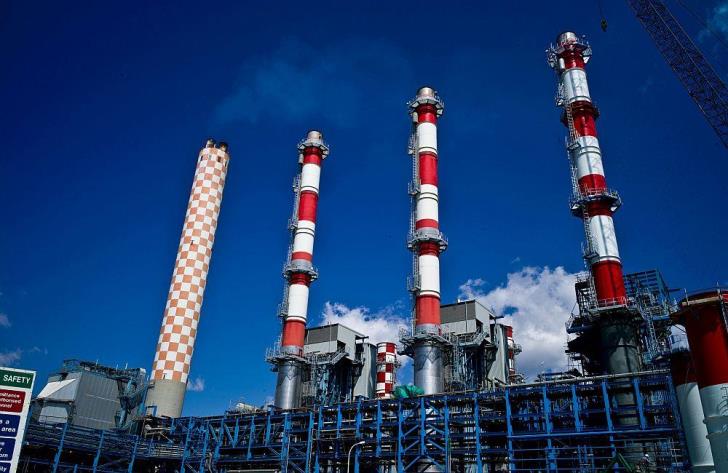
A damning report on the Dhekelia power station was presented to the House Human Rights Committee, highlighting its illegal operation and persistent environmental issues spanning 15 years.
The plant’s continued use has resulted in an annual €400 million fine for pollutants, with surrounding neighbourhoods reportedly abandoned due to exhaust fumes and noise pollution.
The Electricity Authority of Cyprus (EAC) defended its position, citing the plant’s critical role in the country’s power supply and the age of its 40-year-old units. Meanwhile, Cyprus faces a deadline to apply for a European Union derogation on industrial emissions, which could extend operations until 31 December 2029.
Frangeskos Kekkou, representing the EAC refugee settlement in Dhekelia, described longstanding issues of pollution affecting local produce and driving residents away. The EAC’s compensatory measures, including church expansion and sports facilities, were criticised as inadequate responses to the underlying environmental concerns.
“The lemons were black and deformed. The people of the settlement gathered in the square, to discuss it. I was in elementary school then… 20 years have passed. The only thing that has changed is that most people have left and the shops have closed,” Kekkou said.
European Commission representative Nikolaos Isaris confirmed significant exceedances in emissions of sulphur dioxide, nitrogen oxides and particulate matter at the plant. He noted that Cyprus had expressed interest in the EU’s derogation regime following a reminder in May 2024.
EAC’s Charalambos Menelaou acknowledged the plant’s operational challenges but questioned the feasibility of improvements without reducing electricity production.
“There cannot be an improvement unless operating hours are reduced,” Menelaou said. “Do we want Cyprus to have electricity or do we not want it to have electricity? Of course, we want it”.
He added that Cyprus currently bases its sufficiency for electricity on units over 40 years old. “Technically, it is not feasible to improve the situation”.
The Ministry of Energy cited a 2022 assessment concluding that Dhekelia’s output could not be reduced until 2029.
Environmental authorities stressed the need for a comprehensive energy model and cleaner alternatives. The Department of Labour Inspection reported that while air quality limits were not exceeded in the area, they often approached critical levels.
Critics, including the Federation of Environmental Organisations of Cyprus, condemned the continued operation of a plant that “should have been closed 15 years ago” and the resulting financial penalties.
The situation has prompted the left-wing AKEL party to propose a constitutional amendment to enshrine the right to a healthy and clean environment.
Read more:

