


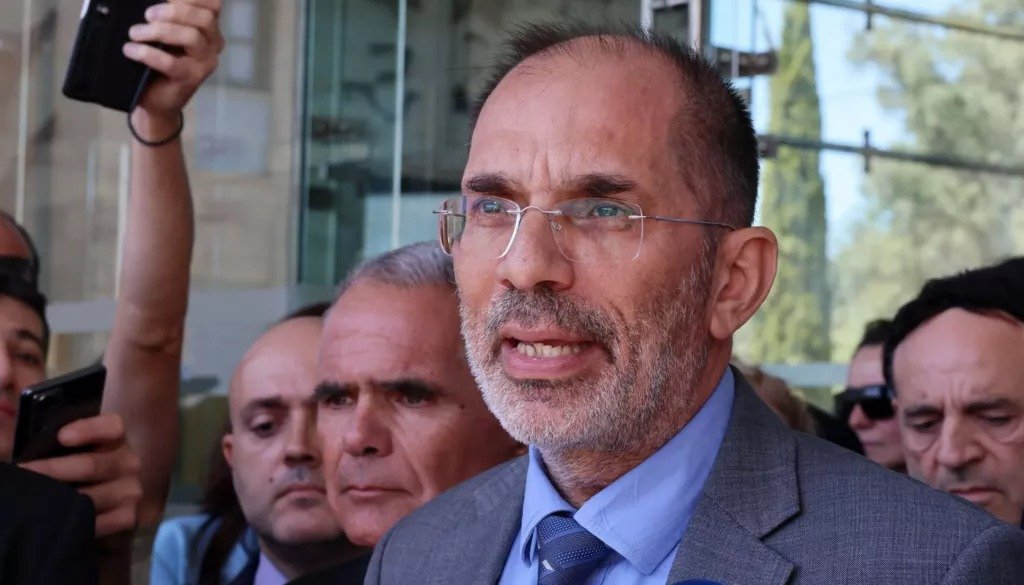
The Court’s decision to dismiss Odysseas Michaelides is undoubtedly a historic one and will serve as a significant reference point in the future. While we won’t pass judgment on the decision itself, each individual is free to form their own opinions based on the content of the Court’s decision. Decisions are to be respected, but they are not immune to criticism.
The decision covers a wide range of topics, but what it fails to address is the management of the aftermath. The Court’s decision signifies two crucial points. Firstly, it marks a change of leadership in the Audit Office, which essentially paves the way for the government’s proposed reforms to establish an Audit Council. Secondly, and more importantly, it highlights the impact this decision will have on public opinion. Herein lies the increased responsibility that comes with the decision.
Odysseas Michaelides, whether rightly or wrongly, justifiably or not, has cultivated an image in society as a Robin Hood-like figure, a person and an institution striving against corruption and collusion for the betterment of public life. He has established himself as an official who does not tolerate any deviation from legality and is unafraid to challenge established powers and expose scandals.
Consequently, in all public opinion polls, Odysseas Michaelides, as the Auditor General, enjoyed widespread acceptance and a high degree of trust from citizens. Thus, a perception was firmly established in a large part of society that Odysseas Michaelides was the person fighting against the deep state and was above interests and ulterior motives.
He was a stickler for the letter of the law, and as a result, there were sometimes complaints from the public service that his persistence caused delays in the implementation of various projects. However, the general perception that remained among many was that due to Odysseas Michaelides’ behaviour, certain individuals were being hindered from continuing their “feasts.” After all, we live in a state where corruption is synonymous with the state, as President Christodoulides himself stated last Sunday, and where, in the perception of the public, every form of power is associated with corruption.
Therefore, for the people, it was much easier and logical to identify with Odysseus Michaelides, who appeared to them as the person combating this corrupt system of collusion and scandals. Why this role was given to Odysseas Michaelides and not to another individual or institution is also a point worth considering. Whether Odysseas was truly all that a part of society sees in him is not as significant as the fact that this is what the citizens believe.
Moving on to the decision, how will the state manage this given situation, i.e., the public’s trust in Odysseas Michaelides and their suspicion towards everyone else, in the aftermath of the Court’s decision? The question now is how this decision has been perceived by a society that already stands prejudiced against everyone else.
The public views corruption as a pathology that affects all aspects of public life in Cyprus. This includes the judiciary, which is a very serious issue. If trust in every institution is lost in a society, it means democracy has begun dying.
Read more:

