The term ‘Metapolitefsi’ is used to describe Greece’s transition to democracy after the collapse of the military junta that ruled the country between 1967 and 1974.
This year marks fifty years since the Metapolitefsi. It was the early hours of July 24, 1974, when the French presidential aircraft landed at Athens’ Ellinikon airport, and Konstantinos Karamanlis was welcomed by thousands of people. Just a few hours later, the country had a Government of National Unity, and a new period of political, institutional, cultural, and social transformations began.
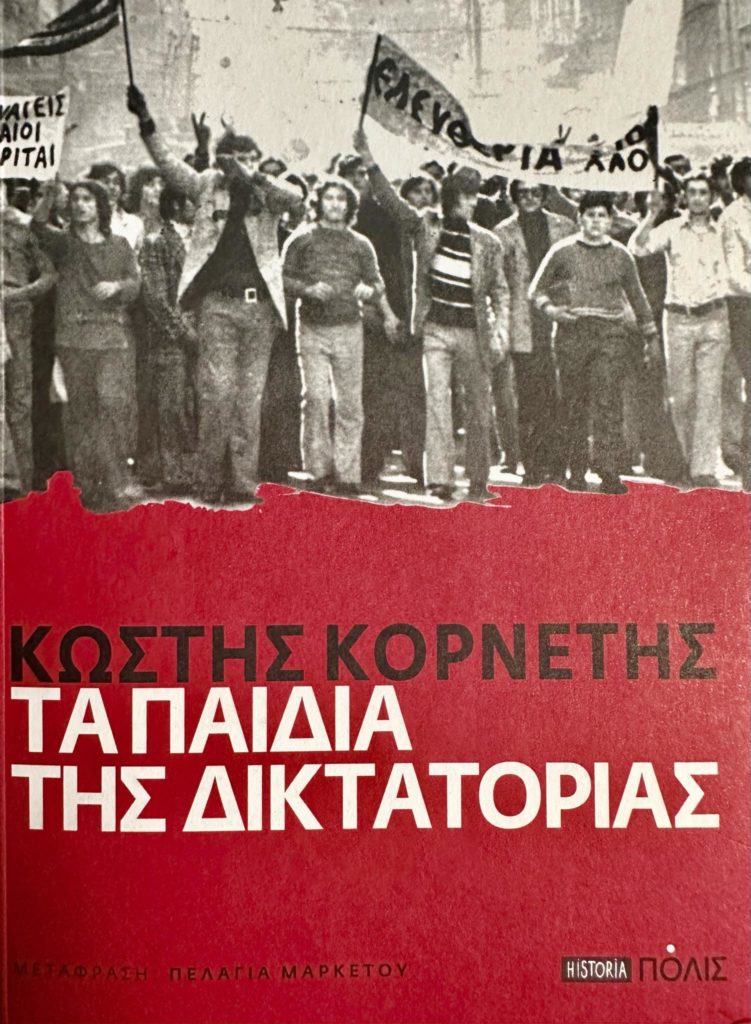
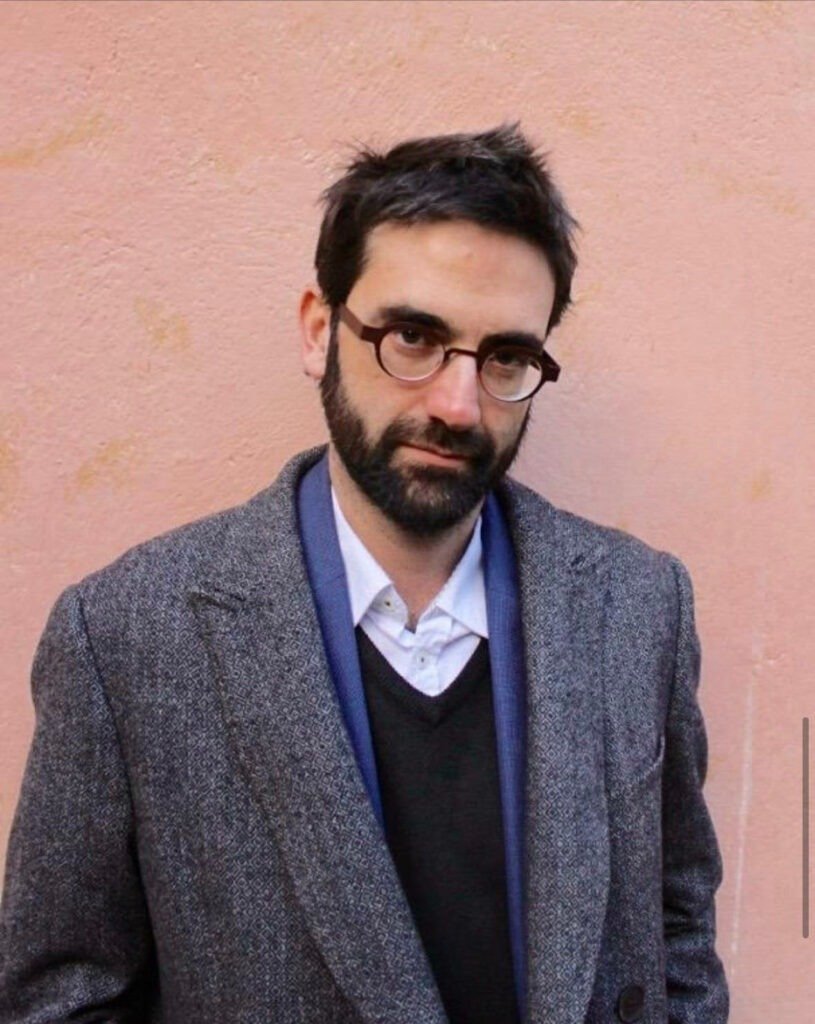
“It was a period of intense ferment and change,” noted Kostis Kornetis, assistant professor of modern history at the Autonomous University of Madrid, in his interview with Phileleftheros. He is also the author of the book Children of the Dictatorship (Polis Publishing).
“Greek democracy greatly benefited from the profound reforms brought by the Metapolitefsi, which put an end, for example, to the issue of political discrimination and the existence of two-tier citizens,” he emphasised.
What is particularly interesting is that many people today view the junta era with a certain nostalgia, something to which television series have contributed.
According to Kostis Kornetis, it was time to approach that period from a personal or family perspective, giving rise to discussions about daily life under a dictatorial regime, as well as resistance through small, everyday acts and minor liberties.
Nevertheless, the junta dictatorship remains a traumatic event for both Greece and Cyprus. There was resistance against both Georgios Papadopoulos’s regime and that of Dimitrios Ioannidis, the historian stated. However, it wasn’t widespread or immediate.
“A large part of society was stunned and in a state of paralysis, another part found itself instantly in prisons and exile islands, and a significant portion, particularly outside urban centres, tolerated and partly supported the dictatorship because they benefited from its populist handouts,” he stressed.
Of course, the final chapter of this drama was written in Cyprus with the Turkish invasion and occupation. For Kornetis, it was the events on our island, not the Polytechnic uprising, that brought down the dictatorship.
“The myth that the Polytechnic brought down the dictatorship is linked to the need to identify with a heroic narrative after July 24, 1974. Instead of introspection and reflection, the myth of a universal resistance by the Greek people was promoted, which was quite convenient for sweeping under the rug issues such as the tolerance of the regime,” he noted.
Fifty years since the Metapolitefsi. Do you believe that Greek democracy has achieved maturity?
I believe that, to a large extent, yes. It has been the most mature period of stable parliamentary life in Greek history, characterised by political stability, free from deviations, military interventions, electoral fraud, and political discrimination.
The 1975 Constitution, with its subsequent revisions, is the institutional framework for all the above, and its defence, even now, ‘is entrusted to the patriotism of the Greeks,’ as its famous final article states.
Greek democracy has benefited greatly from the profound changes brought by the Metapolitefsi, which, for example, put an end to political discrimination and the existence of two-tier citizens. Since then, democracy has weathered significant challenges, including the recent financial crisis that shook it to its core, without ultimately weakening it.
Even phenomena like the Golden Dawn, which gained significant momentum due to the extreme economic and social conditions after 2009, proved to be temporary. The decisive handling of Golden Dawn by the Greek state — despite delays and hesitations — largely demonstrates its maturity.
What characteristics did the Greek state acquire after 1974? And what are its pathologies?
The Greek state benefited from a series of reforms after 1974 — such as the establishment of the National Health System (ESY), ASEP (the Supreme Council for Civil Personnel Selection), or the transparency initiative ‘Diavgeia’, as well as from its interaction with EU directives after joining the EEC.
However, it remained slow and dysfunctional, with significant issues of transparency. Among the clear pathologies of the Greek state are the slow delivery of justice and, at times, the inadequate separation of powers, with issues of corruption plaguing the country for decades. The state apparatus is still riddled with problematic mentalities and practices (corruption, clientelism) that have not been eradicated.
Today, many view the era of the dictatorship with nostalgia, fueled by TV series and songs that emphasise human relationships and society. How accurate is this portrayal?
It was time to approach that era from a low, personal, or family perspective, and not just through the major and extraordinary events of the time. On the other hand, calling that period ‘our best years’ is somewhat risky.
However, it’s a trend we’ve also seen in Spain (where the concept of such series originated), in Portugal, and in Latin America, which has sparked discussions about daily life under such regimes, the tolerance, but also the resistance, through small, everyday acts and minor liberties.
In continuation of the previous question, why is there so much appeal to this nostalgic view of the past? Is there a connection between this nostalgia and the rise of the far right?
I don’t believe the two are connected. The nostalgia isn’t for the ‘Greece of Christian Greeks’ of the junta or its kitsch parades, nor for its cheap patriotism, nor the violence of the regime, the EAT-ESA (Military Police), and the tortures.
The nostalgia is for the aesthetic aspects — the bell bottoms, turtlenecks, minis, vintage Vespas, wallpapers, vinyl records, and all the other everyday accessories. It’s about the long hair, beards, shoulder bags, trinkets.
All these seem exotic and innocent — it’s an aestheticisation of the 60s and 70s and their memory, which has occurred in many places in recent years. I would say, in contrast, that today’s far-right doesn’t reference Papadopoulos, Pattakos, or Ioannidis. However, it does have in common a hatred for the Polytechnic, as it’s seen as supposedly responsible for the Cyprus issue.”
Was there resistance to the junta of the colonels? How did the majority of Greeks respond to the junta?
Of course, there was resistance, in various forms. From the so-called ‘dynamic resistance’ of the early years through illegal organisations like PAM, Democratic Defense, and PAK, to cultural resistance through the explosion of political book publications, and the flourishing of political cinema and theatre.
From 1972 onwards, the student movement emerged, coming into direct confrontation with the regime, along with a section of the navy, indicating cracks within the military itself. All of this was supported by the anti-dictatorship movement abroad.
However, these efforts weren’t in the majority. Resistance didn’t begin on the first day, nor was it widespread. A large portion of society was stunned and paralysed, another found itself in prisons and exile, while a large segment, particularly outside urban centres, tolerated and partly supported the dictatorship due to its populist handouts. The everyday experience in rural areas and support for Papadopoulos remains a significant taboo and a subject for future research.
Finally, some of society was indifferent, particularly in the early years, focusing on their personal affairs. There was a clear radicalisation after 1972.
The relationship between Papadopoulos’s junta, but especially Ioannidis’s, with EOKA B’ was well-known at the time. Was the Greek public aware of the junta’s dark role in Cyprus?
I don’t think these connections were widely known. The criticism at the time was mainly focused on the recall of the division by Georgios Papadopoulos, which was seen by many as harmful to national interests.
There was great ambiguity regarding Georgios Grivas, who was considered a hero of the anti-colonial struggle on the one hand but was also clearly undermining Makarios on the other. It wasn’t until after the overthrow of Makarios and the Turkish invasion that the public learned more about these underground (or overground) connections between the junta and the dark role of EOKA B.
Complex relationship with the U.S.
What was the relationship between the leadership of the junta and U.S. intelligence services?
The relationship was labyrinthine and complex, but evident. Alexis Papahelas, in two masterful books, covers the period up to 1967, highlighting the connections between Georgios Papadopoulos and Greek-American CIA agents, such as John Fatseas, dating back to the early post-civil war years.
Clearly, these relationships and contacts intensified after 1967, with U.S. intelligence services operating almost hegemonically within the American embassy in Athens. There was also a peculiar struggle between these agencies and the State Department for control of U.S. policy in Greece.
In the last years of the dictatorship, agents like the infamous Gust Avrakotos operated with their own, almost personal agenda — what Americans call ‘loose cannons’ — but with clear influence over the decisions of the colonels. Dimitrios Ioannidis, in particular, acted on the belief that he was receiving messages of support from the intelligence services, although this may not have been true.
Cyprus, not the Polytechnic, brought down the Junta
Was it the Polytechnic uprising or the Turkish invasion of Cyprus that brought down the junta?
It was clearly the Turkish invasion. However, the Polytechnic irreparably damaged Papadopoulos, and especially his attempt at controlled liberalisation, which had reached its peak with the so-called ‘Markezinis experiment.’
Although Papadopoulos was ultimately overthrown by Ioannidis, and not by the uprising itself — meaning by the hardliners who imposed an even harsher form of authoritarianism — it was clear that the regime couldn’t survive for long after this major setback, which essentially turned the clock back to 1967, with a large portion of society having turned against it by then.
Why was the myth created that the Polytechnic brought down the junta? And why is this myth still maintained today?
“The Polytechnic uprising was the most massive moment of resistance against the regime, which was forced to resort to extreme violence to confront it, undermining its own attempt to transition to authoritarianism with a parliamentary façade.
“In that sense, it indeed played a significant role in the regime’s deterioration. However, the myth that the Polytechnic brought down the junta is linked to the need for identification with a heroic narrative after July 24, 1974. Instead of introspection and reflection, the myth of universal resistance by the Greek people was put forward, which was convenient for sweeping under the rug issues such as tolerance towards the regime.
“Today, the Polytechnic is no longer as idealised as it was back then — we have since gone through a long period during which it has even been demonised by people who openly and linearly link it to the rise of Ioannidis and the invasion of Cyprus.
“Additionally, there are others who believe that a poorly understood culture of left-wing entitlement has dominated the country since then, undermining efforts at modernisation and reform. Therefore, we are now far from the halo surrounding the first post-Metapolitefsi period.