


Energy self-sufficiency is undeniably of utmost importance and a priority for any country. Therefore, the primary issue on the table is whether Cyprus’s energy dependence on another country, even if that country is Greece, is indeed the optimal and desirable scenario for an independent state. The Great Sea Interconnector was proposed at a time when Cyprus’s needs and circumstances were very different from today.
However, numerous questions remain unanswered. What will be the final cost of this project? The estimated cost has risen from €1.5 billion to €1.9 billion, and the project has yet to start. How can the viability of a cable, which seems likely to exceed €2 billion in cost and has secured €657 million in EU grants, be so dependent on the timing of its initiation? How is it possible for a regulated project to be deemed unviable? How can we trust the Independent Transmission System Operator of Greece (ADMIE) in Greece, tasked with implementing the interconnection, given its history of data concealment, distortion of facts, and pressuring the Cypriot government with ultimatums? Additionally, the ADMIE has not provided any guarantees regarding the final cost of the interconnection.
The Cyprus Energy Regulatory Authority (CERA) has rightly halted ADMIE’s brazen demands to start charging Cypriot consumers from the beginning of the construction rather than from the start of the cable’s operation. CERA has correctly decided that consumer charges should begin with the commercial operation of the project, not from January 1, 2025, just a few months from now. Additionally, CERA decided not to change the methodology for calculating the rate of return on capital, which would have periodically increased the already scandalous preferential rate of 8.3%. Furthermore, CERA decided against additional financial guarantees for the project in case of discontinuation, placing the risk of implementation on the ADMIE. The project’s useful life and repayment period are set at 35 years instead of the 25 years requested by ADMIE. In simple terms, CERA appears to be fulfilling its mission to protect consumers from further charges and delays.
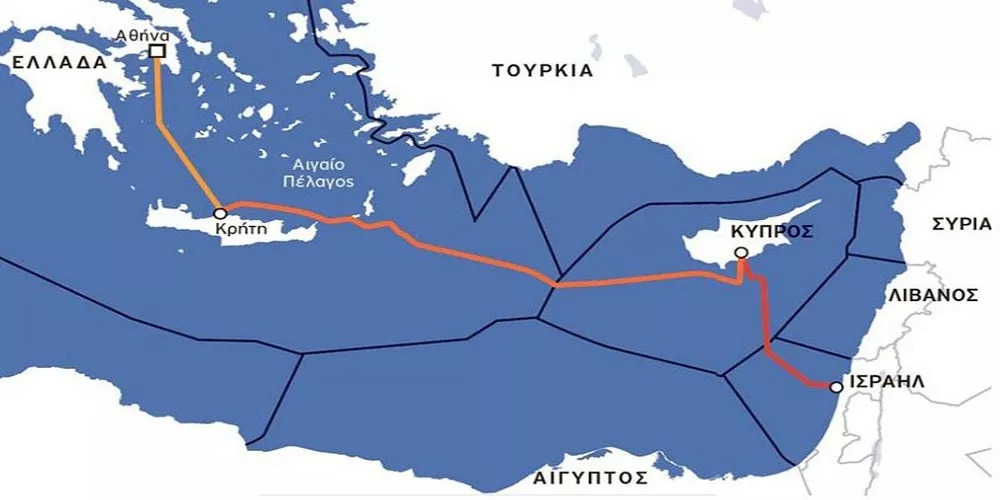
Instead of respecting CERA’s unanimous decision, ADMIE has started an overt blackmail campaign to alter the decision of an independent regulatory authority of another sovereign state. Andreas Poulikkas, chairman of CERA, stated unequivocally that the authority is under pressure from all sides to change its decision by mid-August. Otherwise, ADMIE has warned it will halt the project. Instead of issuing threats, why doesn’t ADMIE simply provide the guarantees CERA is demanding to ensure the final project cost does not exceed the current estimate of €1.9 billion?
The answer is clear and comes directly from the Energy, Commerce, and Industry Minister, George Papanastasiou, who indicated during a Parliamentary Energy Committee session on July 30 that two uncertainties could alter the project’s cost. The first uncertainty is the lack of a signed contract between ADMIE and Siemens, which will determine the cost for the electrical conversion stations in Kofinou and a location in Crete. The second uncertainty pertains to the final selection of the submarine corridor through which the cable connecting Cyprus to Crete will pass.
However, the contentious cost is not the only issue, as this project is fraught with uncertainty in every aspect. Its viability study has yet to be evaluated. The seabed survey in the area where Nexans will lay the cable and ADMIE’s negotiations with Siemens for the conversion stations will not conclude until September 2025. These technical challenges could either dramatically increase the project’s cost—which consumers will ultimately bear—or the project may never be completed, leaving us in a familiar situation of unfulfilled promises.
We must also highlight a crucial point about this project: it relies on a cable passing through the contested maritime zone resulting from Turkey’s illegal declaration of an Exclusive Economic Zone (EEZ) with Libya. Turkey, a country that repeatedly harasses and expels research vessels from the Cypriot EEZ, poses an unpredictable threat to the project’s critical moments and its eventual implementation. The Minister mentioned to the Parliamentary Energy Committee that ADMIE requested CERA include a provision in the regulatory decisions allowing the project implementer to recover expenses incurred until geopolitical factors may force a suspension or termination of the project, without ADMIE bearing responsibility. CERA, on this matter, sought the Energy Ministry’s position on whether the state would cover the uncertainties arising from geopolitical issues. This means that if Turkey creates problems, ADMIE would not suffer any loss or bear any responsibility, while the state, and by extension, the taxpayers, would be liable for a project that might never be completed.
This ties into the fact that the Cypriot state is required to invest €100 million in the shareholding structure of ADMIE’s subsidiary, the Great Sea Interconnector. The Energy Minister asserts that many investors have shown interest in the electricity connection project, but they have not yet finalized an agreement with ADMIE because they are waiting for decisions from the Cypriot government. Essentially, they require some form of state guarantee. However, what exactly is the Cypriot government’s guarantee for participating in a project that only exists on paper? Why haven’t these investors materialized over the past 14 years, despite securing a €657 million grant from the European Commission and receiving political support?
Currently, the ball is in the court of the Christodoulides administration, which must decide whether to take on the responsibility of guaranteeing what is essentially an unsustainable project, promising a return of 8.3%. This amount is notably guaranteed by the state and paid by consumers. The government must also officially clarify what will happen if the construction costs further escalate and shareholders are asked to contribute additional funds. Will the government need to invest significantly more than €100 million? And if so, they need to explain to us, the consumers, what additional charges we will face on our electricity bills.
At the same time, things could be much simpler. Sometimes, numbers speak for themselves. If we focus as a country on completing the processes for bringing in natural gas, the reduction in electricity prices would be around 40%. Combined with the installation of storage systems, our country would be energy-independent with an additional 20% reduction in electricity prices. In contrast, the reduction in electricity prices with the Cyprus-Greece electricity connection—assuming it is completed—would be around 30%, according to ADMIE. Therefore, someone, particularly the Energy Minister Mr. Papanastasiou, needs to explain why this project is in the interest of every Cypriot taxpayer and consumer. And why, amidst so many unresolved issues, the Minister himself seems so clear in supporting participation in this project.
The Christodoulides government is therefore obliged to decide wisely and based on data if this time public interest will finally prevail. It’s high time they both realize that the Cypriot consumers’ pockets cannot withstand paying for more mistakes.

