


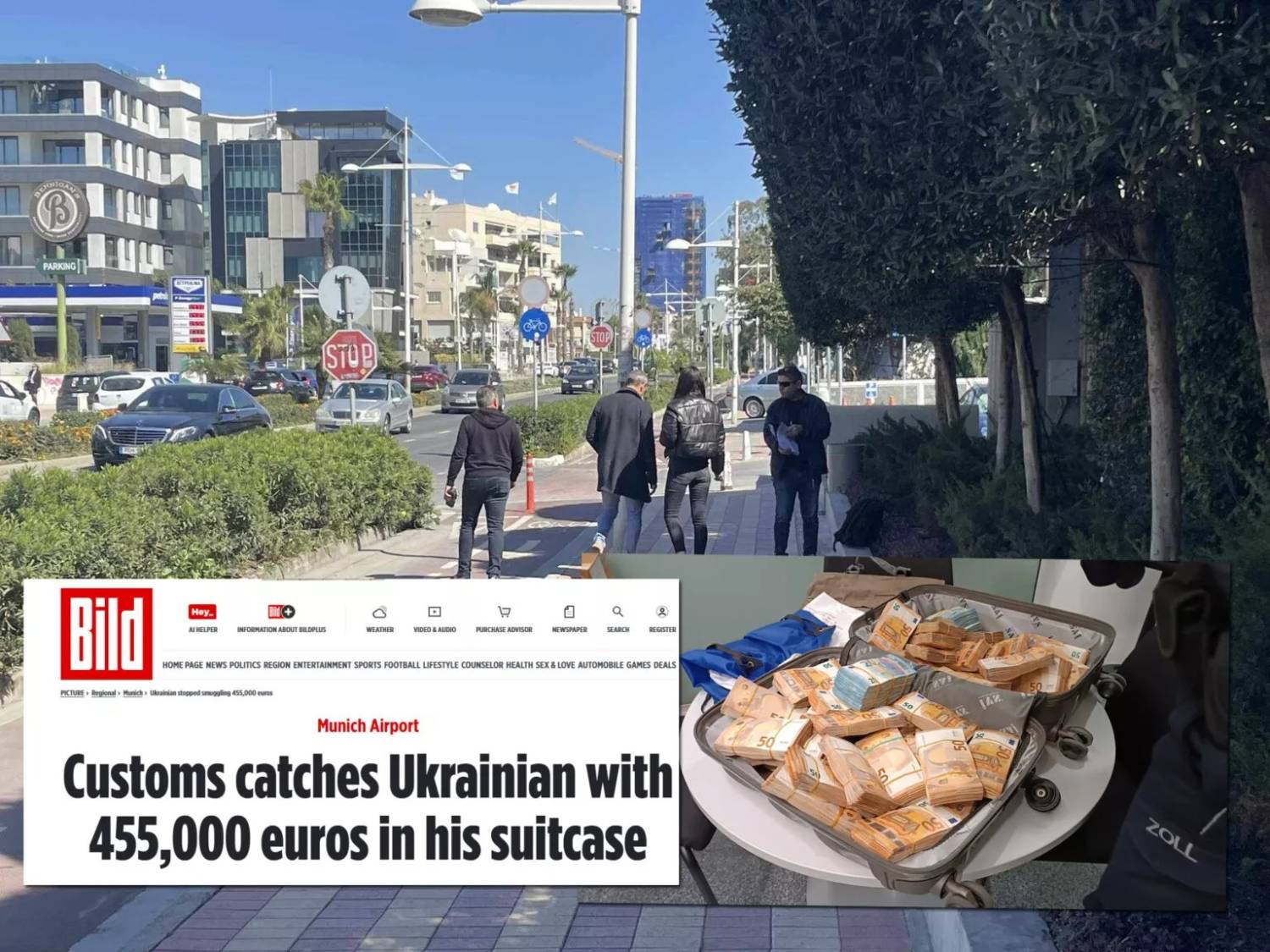
The belief that there is a money laundering scheme involving Ukrainian nationals and Cyprus is reinforced by information, recent incidents, and the way the Cyprus Police handled the case of the 31-year-old Ukrainian over the last 24 hours.
The latter has been under arrest since last Saturday, based on a court order.
Initially, the woman had reported on Friday afternoon that earlier that day she had been a victim of robbery in Yermasogeia. Specifically, she claimed that an individual riding a passing motorcycle forcibly took her bag, which contained the amount of 420,000 euros in cash.
Subsequently, however, the case took another turn, and the Department of Criminal Investigations (DCI) of the Police Headquarters got involved in the investigations.
This department examines cases when the crimes are deemed particularly serious, and their scale extends nationwide. They are not limited to local level.
It is not coincidental, moreover, that the request for pretrial detention was examined yesterday by the Nicosia District Court and not in Limassol.
The press release issued by the Police last Saturday refers to an investigation into “participation in a criminal organization, participation and acceptance of the commission of crimes, money laundering from illegal activities, and conspiracy to commit a crime.”
It is not directly related, therefore, to the circumstances of the alleged robbery last Friday.
An authoritative source speaking to Phileleftheros mentioned that the case concerning the reported robbery continues to occupy the relevant department of the Police in the province where the alleged crime took place (DCI Limassol), adding that the broader dimensions of the case, which refer to money laundering from illegal activities and money laundering, are logically of concern to the DCI Headquarters.
“Moreover, the arrest and pretrial detention were made for the broader case and not for the alleged robbery or its circumstances,” the same source added.
It should be noted that information from our newspaper does not rule out the possibility that the DCI Headquarters investigation team may seek the assistance of the Money Laundering Suppression Unit (MOKAS).
MOKAS specializes in potential crimes involving financial transactions leaving traces in the financial system (e.g., bank transfers), however, it has mechanisms to seek assistance from equivalent services in other countries, while at the same time having access to international databases.
At the same time, information suggests that Cypriot law enforcement authorities are examining broader issues of money transfers to Cyprus from Ukrainian nationals.
In this case, the 31-year-old Ukrainian arrived in Cyprus through Larnaca and Paphos airports over an eight-month period (8/2023 – 3/2024) declaring to Customs officers large sums, which – according to a police source – amount to six million euros.
Incidents with similar circumstances involving large sums of cash and related to Cyprus are not uncommon, according to an authorized person who spoke to “F”.
In any case, regardless of the information and handling by the DCI Headquarters, we are aware of two characteristic cases in recent months that refer to money laundering and concern our island.
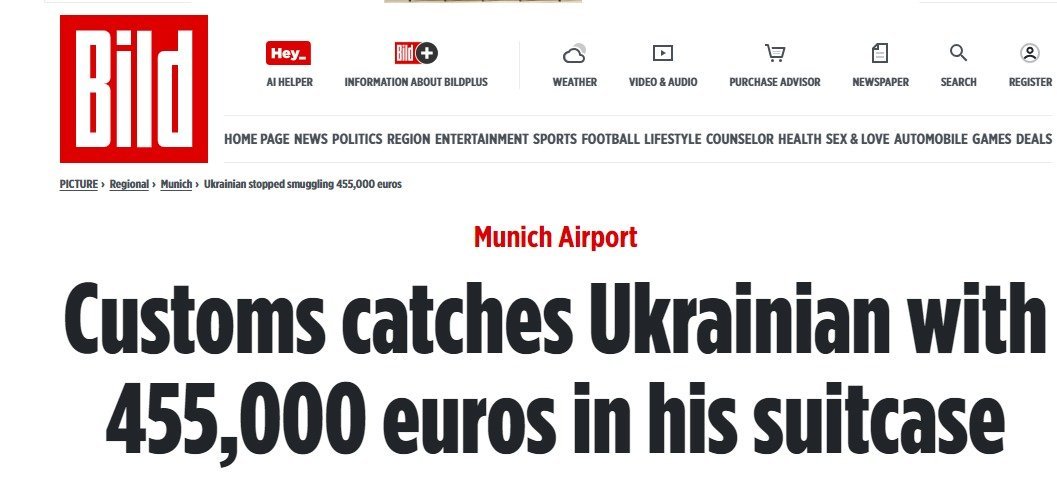
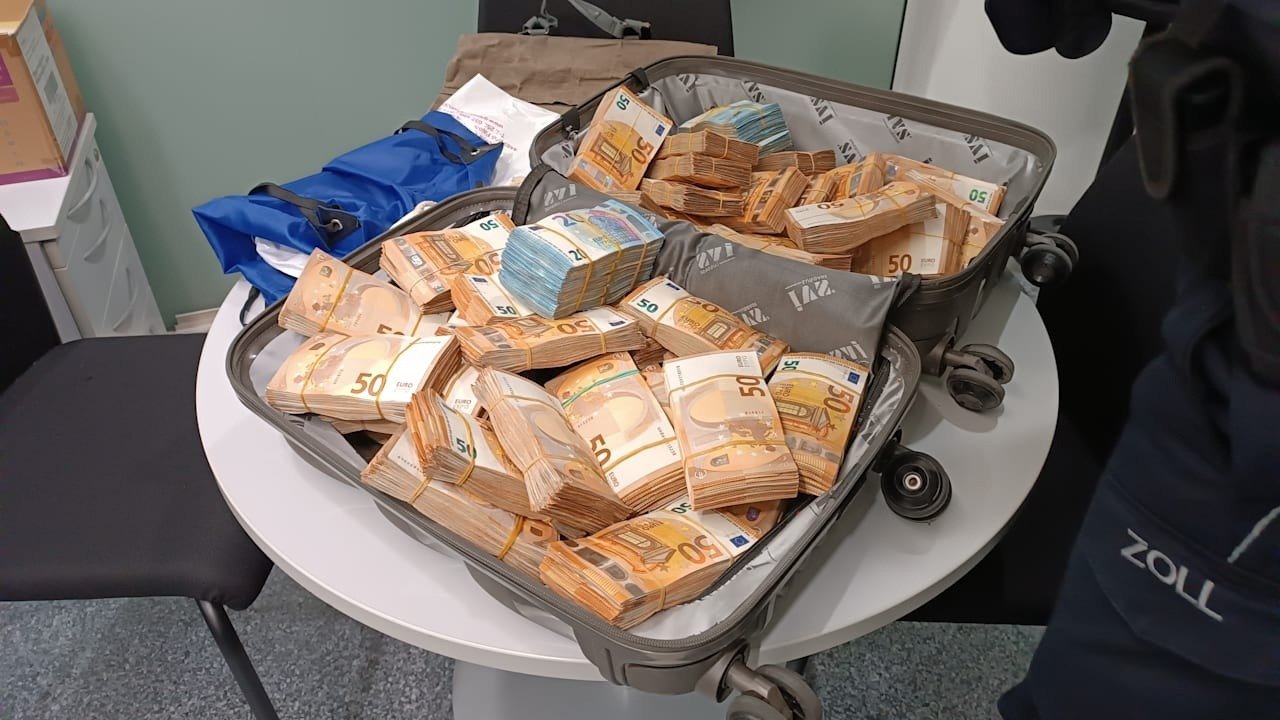
One is related to a retired Ukrainian who attempted to come to Cyprus with a large sum of money. Specifically, as revealed by the well-known German newspaper Bild in late January, a 66-year-old Ukrainian national was arrested last November as he tried to travel by air from Munich to Larnaca, having €455,000 in his luggage.
The arrestee had initially declared that he had about €300 on him. However, according to the controversial publication, a German customs officer noticed suspicious actions and stopped the 66-year-old for inspection before boarding.
As it turned out, he had bundles of banknotes of €50 and €20 in his luggage, totaling €455,000. The money was seized, and since the 66-year-old had not declared the amount (which he was obliged to do since it exceeded €10,000), he was arrested.
The other case occurred in the occupied territories last November. A Russian national lost his life following a criminal act at a photo studio in occupied Kyrenia.
Information indicated that the perpetrators’ motive was robbery and that the victim had a bag containing a large sum of money.
For this case, the pseudo-police had arrested a Ukrainian couple and a Russian, while a “court” in the occupied territories had then issued a three-day detention order against them. The bag had not been found.
The process of transferring large sums of money is more or less known. According to the legislation, a person upon arrival in Cyprus is obliged to declare in writing that they are “carrying liquid assets of equal or greater value than ten thousand euros (€10,000)” and to justify their origin.
Otherwise, they are subject to fines and/or imprisonment. In the case of the 31-year-old, according to the Police, although she declared the large sums of money she was carrying during her trips to Cyprus, during the police interrogations after the Friday incident, it emerged that she “does not seem to have provided adequate explanations for the origin of the money and the reasons for their transfer to Cyprus.”

