


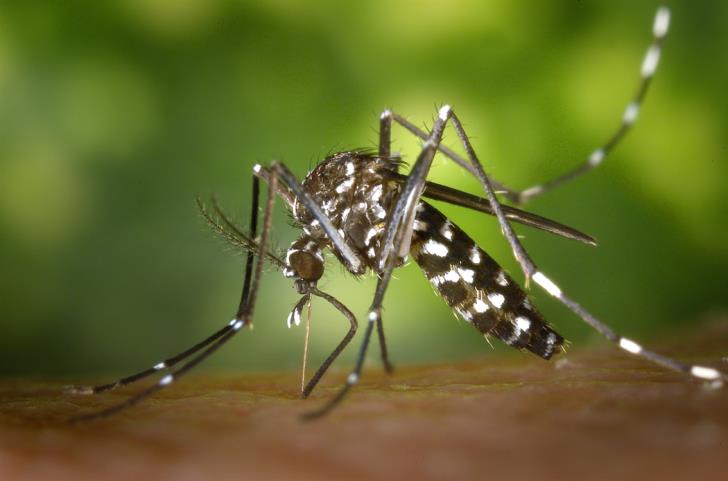
Authorities in Kiti, Larnaca have started testing a new technique to combat mosquito overpopulation, the Health Ministry said.
Through the method called ‘Sterile Insect Technique’ (SIT), crews will be releasing irradiated male mosquitoes into the wild using drones or cars, to mate with wild female mosquitoes.
After mating with an irradiated male, females give birth to eggs that do not hatch. Over time, the number of mosquitoes being targeted in an area decrease. It is noted that male mosquitoes do not bite, therefore they cannot transmit diseases.
“Irradiated male mosquitoes are not harmful to people, pets and the environment,” the Health Ministry stressed.
Batches of 100,000 mosquitoes will be released each week
Cyprus released the first weekly batch of 100,000 mosquitoes on June 13, and two more batches have been released since then, noted the International Atomic Energy Agency (IAEA) which supports the country in the implementation of the project.
Each week until the end of the year, batches of 100,000 mosquitoes will be released in as part of the pilot project, which is being tested for the first time in Europe.
“The presence of the two species of invasive mosquitoes introduced significant challenges to Cyprus and, if Aedes aegypti is not eradicated, could have serious consequences for all of Europe,” said IAEA Director General Rafael Mariano Grossi. “The SIT pilot project offers a nuclear solution, and its success would have far reaching benefits for Cyprus and worldwide.”
Through SIT, large numbers of mosquitoes are raised in a lab and the males are irradiated, using ionising radiation, before being released into ecosystems.
In the United States, SIT has been used to control Aedes aegypti mosquitoes, since the 1950s.
SIT is recommended by the UN’s Food and Agriculture Organisation as a method for mosquito control, the Cyprus Health Ministry notes.
Mosquito-born diseases in Cyprus on the rise
Figures from the European Centre for Disease Prevention and Control (ECDC) showed that mosquito-borne diseases, such as dengue fever, recorded a “striking” rise in Europe due to the changing climate and the spread of mosquitoes carrying the viruses.
“If this continues, we can expect to see more cases and possibly deaths from diseases such as dengue, chikungunya and West Nile fever,” said Andrea Ammon, ECDC director. “Efforts need to focus on ways to control mosquito populations, enhancing surveillance and enforcing personal protective measures.”
The agency said that the mosquito species Aedes albopictus, which spreads chikungunya and dengue, was moving further north and west in Europe. Aedes aegypti, which spreads diseases including dengue, yellow fever and chikungunya, became established in Cyprus last year and could make further inroads, it said.
Read more:
What makes some people more attractive to mosquitoes than others?

