


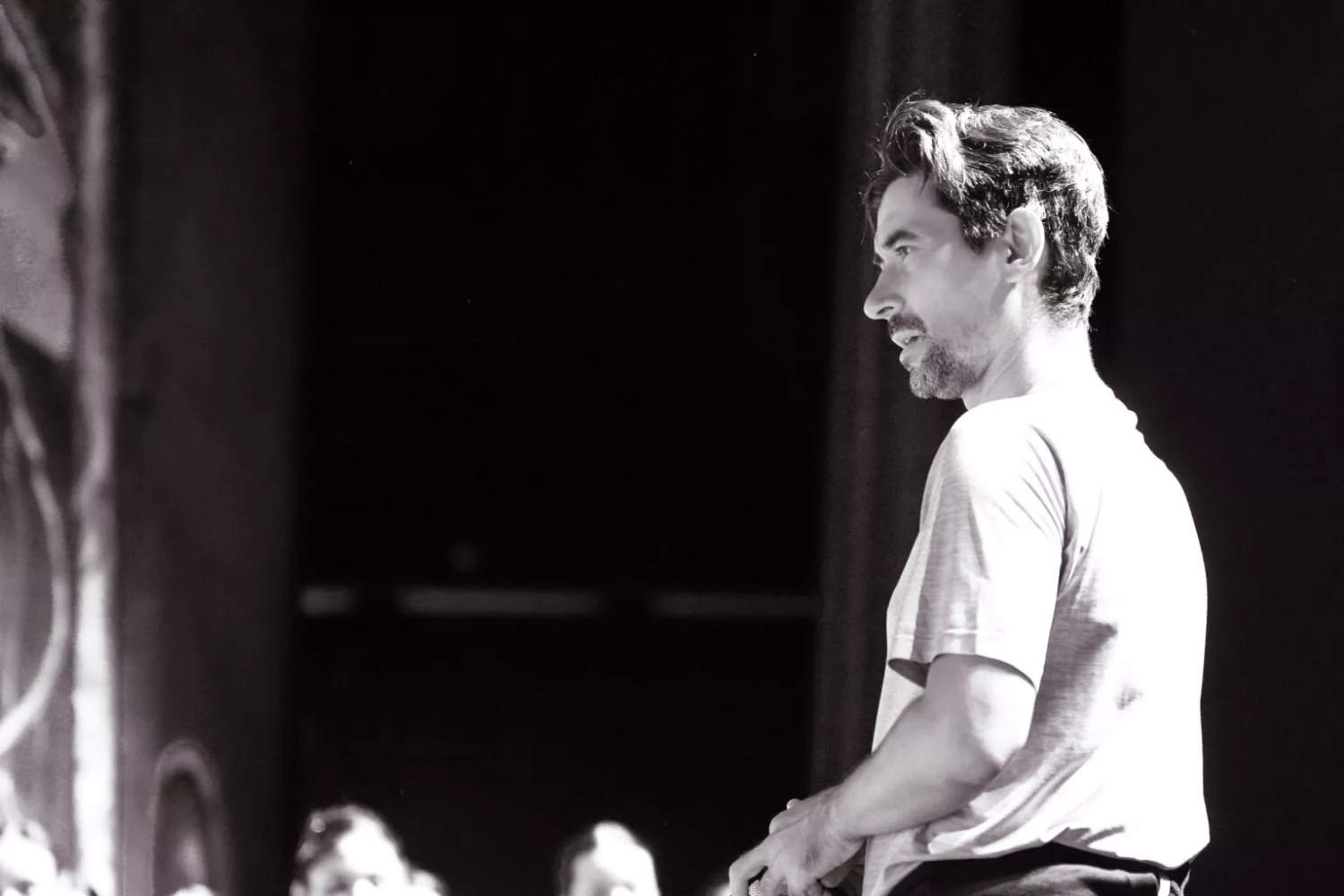
Mikhail Martynyuk, choreographer and artistic director of the Philippine National Ballet, is being introduced to Cyprus as part of his international tour, with two works that draw deeply on his personal and cultural identity, blending classical ballet technique with contemporary choreographic expression.
An Honoured Artist of the Russian Federation, and holder of the Vaganova Prix, the Gold Medal at the International Ballet Competition in Astana, and the Soul of Dance award, Mikhail (Misha) Martynyuk has built an artistic career that bridges classical tradition and contemporary choreographic expression.
With Panaginip — a deeply personal statement about the Philippines, the country that became his home — and Alice in Wonderland, which unfolds as a dreamlike field of transformations where logic gives way and imagination takes on physical form, Martynyuk is eager to discover how both works will speak to Cypriot audiences.
How would you describe your choreographic style, and how has it evolved over time?
My approach combines classical ballet with contemporary physicality and theatrical storytelling. Over time, it has become more minimalist, more symbolic, and more deeply rooted in cultural identity.
What influences — cultural, musical, or personal — have shaped your artistic voice?
I have been shaped by Filipino culture, ritual and mythology, as well as by music, nature, and personal experiences of being uprooted, and travel.
Panaginip (The Dream) consists of two independent works. How did the idea of bringing them together under the shared theme of dreams come about?
The idea grew from a sense of dreams as a bridge — something that connects different stories, different times, and different identities into a single emotional journey.
What does “dream” mean to you — is it an escape, or an inner search?
For me, a dream is an inner search. It is the place where memory, identity and desire meet. The greatest challenge was preserving authenticity while translating traditional movement into the “academic” language of ballet without losing its spirit.

What was the biggest challenge in transposing traditional elements into the language of classical ballet?
I focused on key symbols and archetypal forms from each region, using legends as a unifying language that can be both local and universal at the same time. The work functions as a reflection of the Philippines as a country that is layered, diverse and poetic — a country of memory, resilience and imagination.
Panaginip has been described as your personal statement about the Philippines. What did you want to express through this work?
Living and working there made my art more honest, more grounded, and more connected to community and history. Audiences may interpret the work in different ways, but the emotion remains universal — and that is what holds it together.
Do you think audiences from different countries “read” the work differently?
I hope audiences come away with a sense of discovery — one that touches both the culture itself and something personal within themselves.

Your version of Alice in Wonderland reverses a key element of the story — Alice shrinks rather than grows. What led you to that artistic choice?
My aim was for that reversal — turning growth into shrinking — to express vulnerability as a process of losing certainty. I believe it is through that process that a deeper inner self can be discovered.
The production is aimed at both children and adults. How do you balance the fairy-tale element with the work’s deeper, philosophical dimension?
I balance that duality through two layers of storytelling: first, the visual narrative for children, and then the metaphor and implied symbolism for adults.
For Alice in Wonderland you chose the music of Claude Debussy, which is not considered traditional ballet music…
Yes, for this production I chose exclusively the music of Claude Debussy. His works are full of nuance, mystery and poetic imagery, which gave me a wide creative canvas to work from. Following the original libretto and the logic of the fairy tale in part, I translated sound into movement and music into the language of dance. Each scene in the ballet has its own small story, its own atmosphere, emotions and characters.
How did that affect your choreographic language and the atmosphere of this particular production?
Through the prism of Debussy’s music, I sought to embody the central figures by drawing out their individuality and inner world. In Alice’s music, for instance, you feel her curiosity and openness; in the Queen of Hearts, authority and drama; in the card scenes, playfulness and irony. In this way, Debussy’s music functions not merely as accompaniment but as a true co-creator of the production, shaping its rhythm, mood and physical plasticity of movement.
Cyprus is hosting this production as part of a major international tour. What does presenting this work to a new audience mean to you?
Presenting this work in Cyprus feels like opening a new dialogue. It is an opportunity to share our cultural voice in a space where it has never been seen before, and to connect through art beyond geographical boundaries. For me, it is both a responsibility and a privilege to represent this work internationally and to discover how it resonates with a new audience.
INFO
Panaginip / The Dream: Limassol, Marios Tokas Municipal Garden Theatre, May 10, 7.30pm
Alice in Wonderland: Limassol, Pattihio Theatre, May 12–13, 6.30pm
Tickets: SoldOut Tickets
Media sponsors: Phileleftheros, en.philenews.com

