


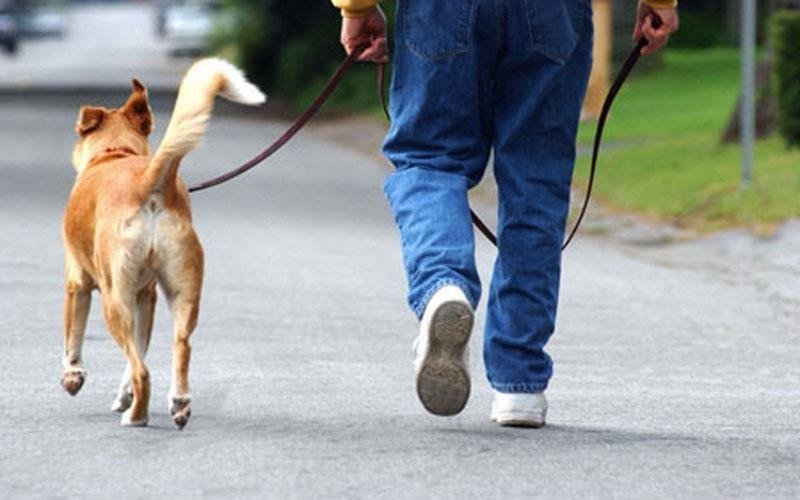
The long-held belief that one dog year equals seven human years has been debunked by recent scientific research.
This simplistic calculation fails to account for the complex factors influencing a dog’s ageing process.
Why the 7:1 Rule is Flawed
If the 7:1 rule were accurate, humans could reproduce at age seven and live for over 150 years. This highlights the absurdity of applying a single ratio to all dogs, regardless of breed or size. While the rule’s origins remain unclear, it likely emerged around 1950 based on the average lifespans of humans (70 years) and dogs (10 years).
Size and Breed Matter
Dogs mature much faster than humans during their first year, reaching sexual maturity by age one. Experts suggest that the first year of a dog’s life equates to 15 human years, the second year equates to nine human years, and each subsequent year equates to five human years. However, this rule still fails to consider variations in size and breed.
Biological Clocks and Aging
Research indicates that dogs’ biological clocks tick faster than ours, particularly during their early years. In the first year, a dog’s biological clock is 15 times faster than a human’s, slowing to nine times faster in the second year.
Larger dogs tend to age faster than smaller breeds, further complicating the calculation of dog years to human years.
A New Approach: The Epigenetic Clock
Scientists have developed a more accurate method to calculate a dog’s age in human years based on DNA methylation, a process where chemical modifications occur in DNA over time due to various factors. These modifications, known as methylation groups, can activate or deactivate certain genes, allowing researchers to estimate an individual’s age using an “epigenetic clock.”
How the Epigenetic Clock Works in Dogs
A study conducted at the University of California, San Diego, analysed the DNA of Labrador Retrievers and found that their epigenetic clocks differ significantly during the first year but then align more closely with humans.
This led to the development of a new formula to convert a dog’s age into human years after the first year.
Limitations and Future Research
While this new method offers a more scientific approach, it’s important to note that the study focused on a single breed.
Further research is needed to validate its accuracy across different breeds and sizes. Nonetheless, the epigenetic clock provides a promising avenue for understanding the complex ageing process of our canine companions.

