


The Democrats’ victory in the US midterm elections was broadly expected. What few could have predicted was the scale of their defeat of the Republicans and, by extension, President Donald Trump’s administration.
The “blue tsunami” that swept across American politics, delivering Democratic victories even in longstanding Republican strongholds such as Texas and Kansas, represents a serious political blow to the US president.
The new balance of power in Congress deprives Trump of his ability to push through his legislative agenda without obstruction, while giving the opposition powerful tools to scrutinise his administration.
The crucial question for the rest of the world is whether this political upheaval will remain confined to domestic affairs or also reshape US foreign policy, particularly Washington’s handling of the wars in Ukraine and Iran and their wider consequences.
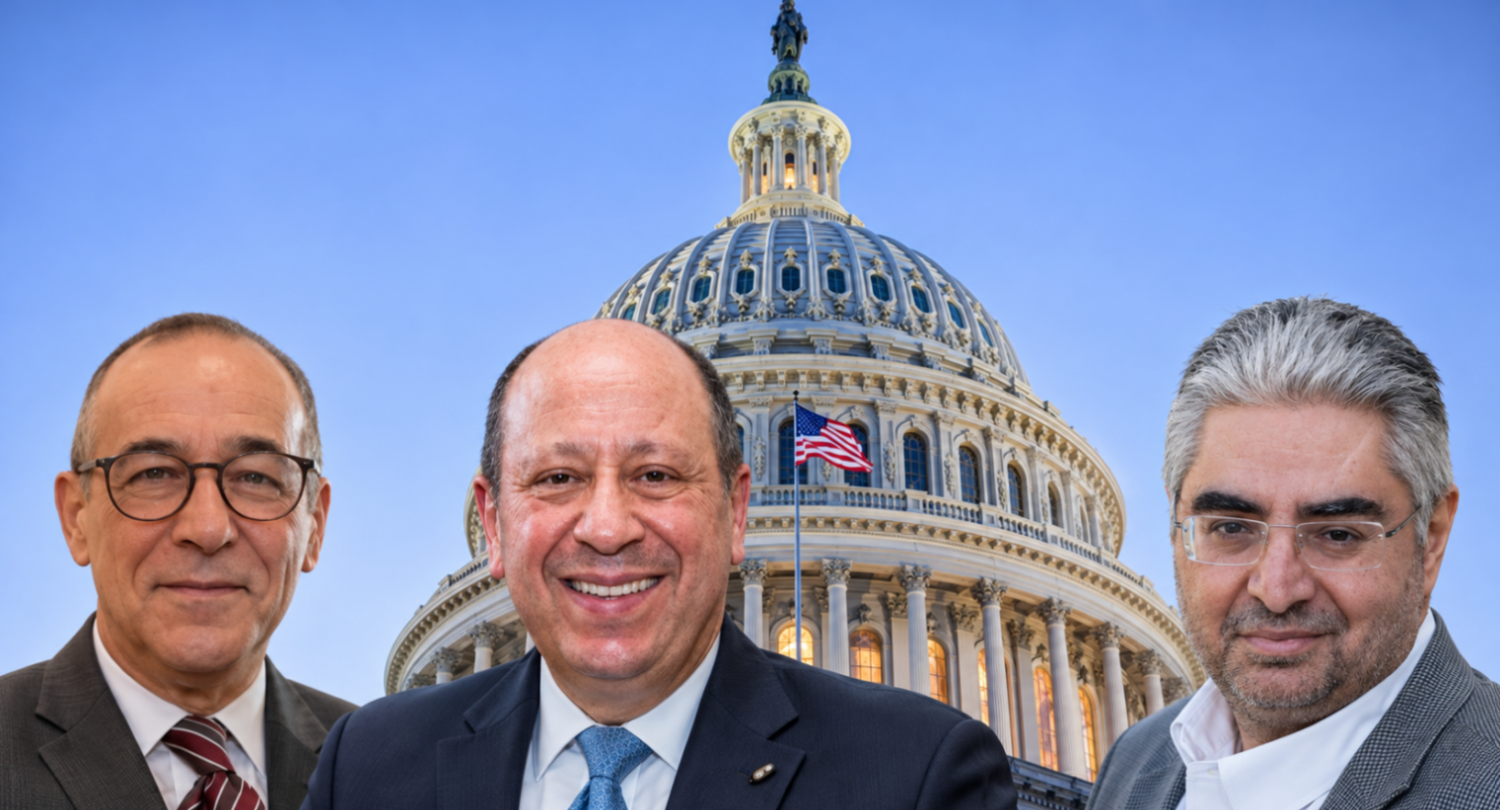
Three experts with extensive experience of American politics spoke to Phileleftheros about the election results and their potential implications for US domestic and foreign policy: Evripidis L. Evriviades, Marios Lysiotis and Thodoros Tsikas.
Evriviades and Lysiotis both served as Cyprus’s ambassadors to the United States, while Tsikas is a Greek political scientist and international relations expert.
Lysiotis was Cyprus’s ambassador in Washington from 2018 to 2023, serving during Trump’s first term in the White House. Evriviades held the post from 2003 to 2006, a particularly significant period that included the Annan Plan and Cyprus’s accession to the European Union.
Evripidis Evriviades: Trump’s presidency has an expiry date, but Trumpism is here to stay
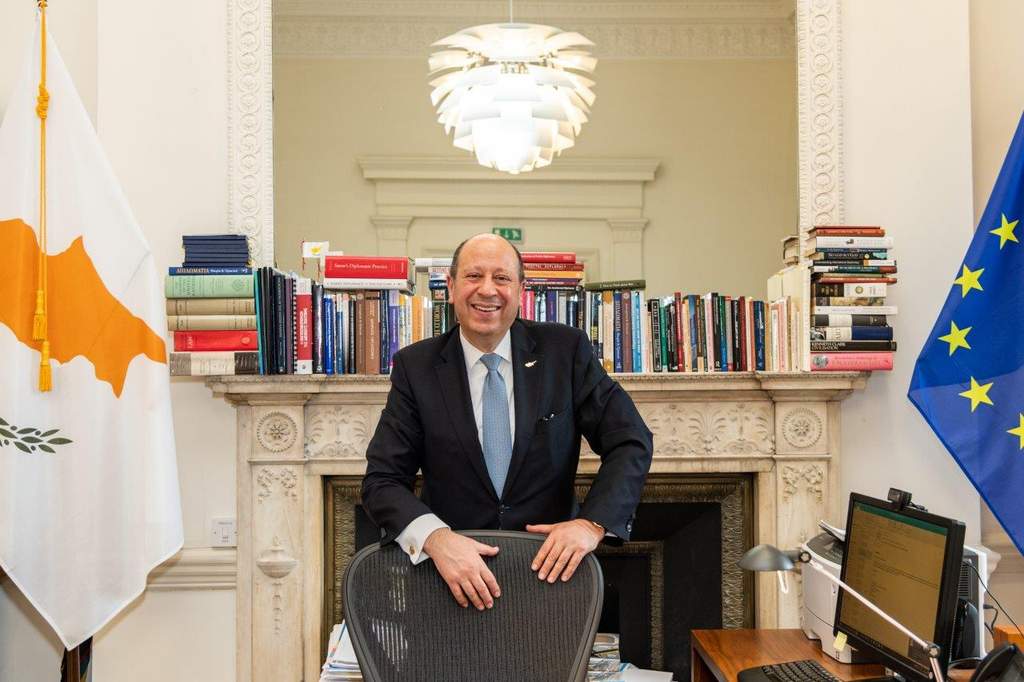
Donald Trump’s electoral weakening at home could push him towards an even more assertive and unpredictable foreign policy, former Cypriot ambassador Evripidis L. Evriviades told Phileleftheros.
Despite the Republicans’ heavy defeat in the midterm elections, Trump retains considerable presidential powers, he warned, while the political influence of the Make America Great Again (MAGA) movement will not necessarily diminish when his presidency ends.
Evriviades believes the economy and cost of living played a decisive role in shaping voting behaviour.
“For many, the answer was in their pockets. Food, housing, healthcare, petrol and, yes, the price of eggs. Eggs had become a symbol of the cost-of-living crisis. Trump had promised to bring down the cost of living. Did he keep his promise?” he asked.
Americans voted primarily on the issues affecting their everyday lives, Evriviades argued, but the consequences of their choice extend far beyond US borders.
He said the scale of the Republican defeat was considerably greater than the losses traditionally suffered by the governing party in midterm elections.
Although Trump will remain in the White House until January 2029, Evriviades does not believe he will necessarily withdraw from political life afterwards.
“He may be considered a ‘lame duck’ in American political terminology, but perhaps he is more like a wounded lion. And a wounded lion can be dangerous,” he said.
At the same time, Trump’s political influence extends beyond the presidency itself.
“His political influence extends beyond the presidency. It also rests on the movement that has transformed the Republican Party in his own image,” Evriviades said.
“The Trump presidency has an expiry date, but Trumpism is here to stay.”
He also pointed to the way Trump’s willingness to challenge established norms, confront institutions and use economic pressure as a diplomatic weapon has changed the conduct of American foreign policy.
“Unconventional methods, however, do not mean an absence of strategy. The fundamental objectives of the United States remain remarkably consistent: maintaining global primacy, preventing the emergence of a rival dominant power, preserving military and technological superiority, and using economic strength to advance national interests.
“What often distinguishes Trump is not so much the destination as the way he tries to get there. And that approach can be extremely unpredictable.”
Weaker at home, more aggressive abroad
Perhaps the greatest paradox of the election, according to Evriviades, is that a president weakened domestically could become more assertive internationally.
From January, Democratic control of Congress will bring closer scrutiny, investigations and legislative obstacles.
The Senate can block appointments, while both chambers exercise significant powers over spending and legislation.
Evriviades believes Trump may increasingly turn to his executive powers, testing their legal limits.
“Trump may pursue results that depend less on Congress: an agreement with Putin over Ukraine, an understanding with China, or a diplomatic opening in the Middle East. Alternatively, he may increase pressure on allies and adversaries. Or he could seek common ground with the Democrats on foreign policy. He often uses unpredictability as a negotiating weapon,” he said.
Asked about the wider world’s dependence on developments in the United States, Evriviades recalled an old saying that he believes still holds true:
“When America sneezes, the rest of the world catches a cold.”
Europe, he said, faces the continuing challenge of strengthening its own security while dealing with a Washington that increasingly approaches international relations in transactional terms.
Ukraine must protect its interests as American and European approaches to ending the war diverge.
Russia and China, meanwhile, will look for opportunities while weighing the risks posed by an unpredictable Trump.
In the Middle East, traditionally bipartisan American support for Israel could face greater scrutiny from Congress, particularly in relation to the war with Iran.
“A fundamental reversal of this strategic relationship, however, is inconceivable,” Evriviades said.
He also stressed that foreign policy increasingly affects everyday economic life.
“Tariffs affect prices. Wars affect energy markets. Sanctions affect trade and investment. Decisions taken thousands of miles away reach into the pockets of American voters.”
For smaller and more vulnerable states, including Cyprus, the lesson is a familiar one, he argued.
“Strategic partnerships matter. American presence and involvement matter. But personal assurances cannot replace institutions, binding agreements or a coherent national strategy.”
Marios Lysiotis: Major changes in US foreign policy are unlikely

The Democrats’ sweeping victory in the midterm elections does not necessarily mean that American foreign policy will change substantially, former Cypriot ambassador Marios Lysiotis told Phileleftheros.
Lysiotis examined the potential consequences for Washington’s relations with Iran, Israel, Ukraine and the European Union, as well as Cyprus and Greece.
He noted that the president’s party losing control of both chambers of Congress in midterm elections is more the rule than the exception.
Nevertheless, the scale of the Democrats’ victory, combined with intense political polarisation, has created a new dynamic that will become particularly important after January 2027, when the new Congress takes office.
According to Lysiotis, the US president’s constitutional powers over foreign policy make any substantial change in direction difficult, even after his party loses control of the House of Representatives and Senate.
As in similar situations in the past, he believes the new political reality could encourage Trump to devote even more attention to foreign affairs, where he enjoys greater freedom of action than in domestic policy.
Lysiotis also pointed out that the president retains the power of veto, something Trump himself has highlighted.
Congress’s powers and the limits of Democratic control
Despite the president’s extensive authority, Congress, and particularly the Senate, possesses significant oversight powers, Lysiotis explained.
Beyond its authority over the federal budget, the Senate has the power to confirm senior officials and ambassadors, as well as ratify international treaties.
The importance of these powers became evident during Barack Obama’s presidency in connection with the agreement on Iran’s nuclear programme.
Congress can also hold hearings and request investigations, including into foreign policy matters.
Lysiotis expects the Democrats to make use of these powers to scrutinise the administration.
He also referred to the ability to initiate impeachment proceedings against officials, while making clear that these mechanisms do not automatically allow Congress to force changes in American foreign policy.
Congress also has powers concerning arms sales and military assistance, enabling it to influence important aspects of US foreign policy.
For Lysiotis, one of the key questions is how the Democratic Party, which is far from politically unified, will use its decisive electoral victory.
Equally important will be how Republicans manage their relationship with Trump under the new political circumstances.
All eyes on Iran
Lysiotis identified the war with Iran as the most important foreign policy issue facing Trump in the coming months.
He believes the conflict, particularly its economic consequences, contributed to the Republicans’ electoral defeat.
According to his analysis, Trump retains complete freedom of action until January 2027.
The situation will change, however, once the new Congress takes office.
Lysiotis also noted that the Iran issue is already causing political tensions within the Republican Party, adding another complication to the administration’s handling of the conflict.
In his view, the ideal outcome would be to seek a diplomatic solution, provided Iran responds accordingly.
Nevertheless, he believes no possibility can be ruled out as events develop.
Another issue requiring close attention is the future of US-Israeli relations.
Lysiotis said Israel’s image, and particularly that of Prime Minister Benjamin Netanyahu, has deteriorated within the Democratic Party.
This becomes especially significant in light of the new composition of Congress and the Democrats’ strengthened position.
Ukraine, the EU, Cyprus and Greece
On relations between the United States and the European Union, Lysiotis does not expect substantial changes as a result of the midterm elections.
Ukraine, however, is an area where changes could occur, given the bipartisan nature of American support for the country.
Lysiotis noted that Trump would like to bring the war to an end, something that could also have positive economic consequences.
However, he believes achieving that objective will be extremely difficult, as demonstrated by the efforts Trump has made so far.
Turning to Cyprus and Greece, Lysiotis expressed confidence that their existing relationships with the United States would continue along the same lines.
He expects continuity in Washington’s relations with Nicosia and Athens, without significant changes resulting from the new balance of power in Congress.
He placed particular emphasis on the strong support networks Cyprus and Greece have established within Congress, which he believes will remain beneficial under the new composition of both chambers.
Thodoros Tsikas: The two wars remain in Trump’s hands
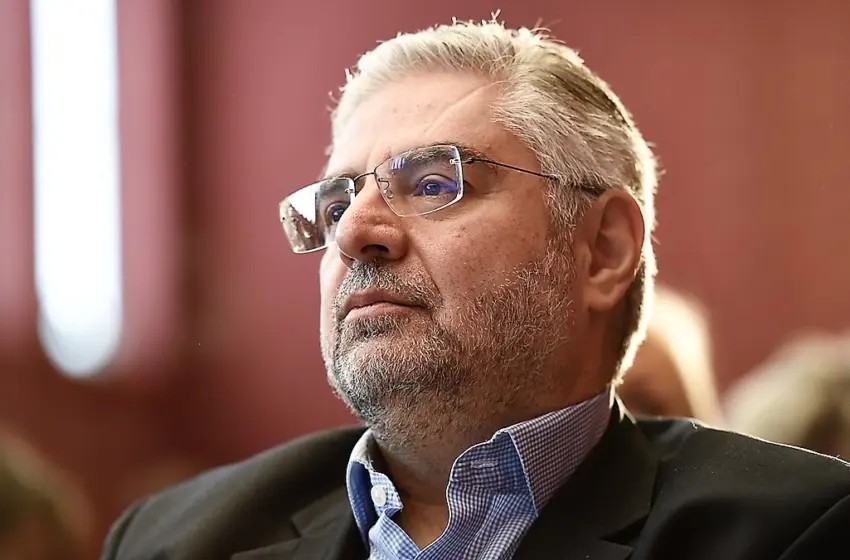
US President Donald Trump will retain considerable control over Washington’s handling of the wars in Ukraine and Iran despite his party’s heavy defeat in the midterm elections, Greek political scientist and international relations expert Thodoros Tsikas told Phileleftheros.
Asked specifically how the election result might change American policy towards the two conflicts, Tsikas said the president retains substantial foreign policy powers that Congress cannot easily restrict.
Decisions on how to manage both wars therefore remain largely in Trump’s hands.
However, Tsikas believes the new political balance in Washington could influence Trump’s decisions, particularly over Iran, as the president’s weakening domestic position could also undermine Israeli Prime Minister Benjamin Netanyahu.
Netanyahu’s weakened position and the prospect of another conflict with Iran
According to Tsikas, Trump’s weakening position in the United States also weakens Netanyahu in Israel.
Combined with growing criticism of Israel from Democrats and some Republicans, this could make Trump less receptive to any pressure from Netanyahu for another military confrontation with Iran.
Tsikas believes Netanyahu would favour a new military conflict after the elections, seeking to delay the current Israeli opposition from taking power.
He also stressed that Israel’s opposition maintains very good relations with the Democrats in the United States.
It is therefore far from certain, he argued, that the Democrats would want the conflicts initiated by Netanyahu to remain unresolved.
Iran: From another military strike to a political solution?
Turning to possible developments in Iran, Tsikas said that although the most likely scenario had been for the United States to launch further military strikes after the midterm elections, those plans could now change.
Trump’s painful electoral defeat has created new circumstances that could make it more difficult for the United States to continue military operations, he argued.
Under these conditions, Tsikas believes the administration may turn towards political solutions rather than another military escalation against Iran.
Ukraine: Trump’s dilemma over a deal with Putin
On Ukraine, Tsikas expects the new Congress to be much more determined to advance measures supporting Kyiv.
The central question, he said, is how Trump will respond to Russian President Vladimir Putin and the changing political balance in Washington.
Will the American president seek to pursue an economic deal with Putin, downgrading Ukraine’s interests and attempting to resolve the conflict without involving Kyiv?
Or will he eventually adapt to the political climate in the new Congress?
Tsikas believes Trump has not yet made a firm decision.
Instead, he expects the president would prefer to allow some time to pass before deciding on his final approach, so he can assess how the political balance within the United States develops.
The crucial two months before the new Congress takes office
Tsikas attached particular importance to the period before the new Congress takes office in early January 2027.
Trump still has approximately two months during which he can act with greater freedom, before the balance of power changes in both chambers.
Tsikas believes the president may use this window to take specific actions that would become more difficult once the new Congress assumes office.
This possibility, he argued, must be taken into account when assessing Washington’s next moves, both towards Iran and Ukraine.

