


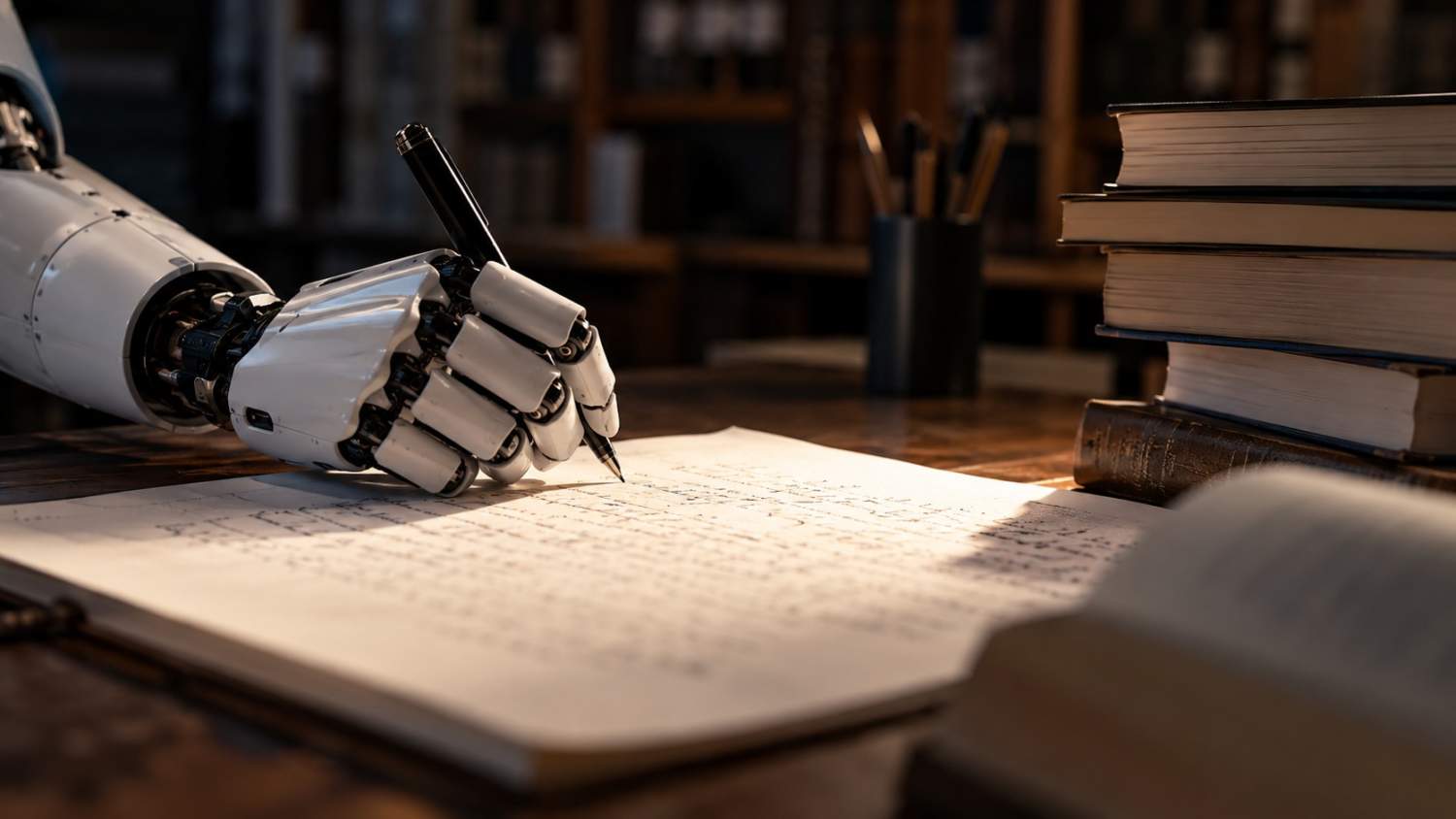
In March 2026, the American publisher Hachette withdrew the horror novel Shy Girl by Mia Ballard. The book had been released in Britain and had sold about 1,800 copies—a figure considered satisfactory these days—before its distribution was halted. According to The New York Times, a detection tool judged the text to be 78% generated by artificial intelligence. The author denied the accusation, to no avail.
A few months later, Jerry Falade’s literary agents pulled his crime novel Call Me, I’ll Hide the Body from the market, even though they had put in a bid of more than two million dollars for its rights. The explanation was even murkier than in Falade’s case. The agency could not certify that the novel had not been produced using artificial intelligence. The author denies it and maintains that black writers face more intense scrutiny.
In September, the French novel C’était ça ou mourir by Thélyson Orélien was withdrawn from the shortlist of the 2026 Goncourt Prize following an anonymous complaint on social media. In October, his publisher, Éditions du Boréal, announced that evidence of AI use had been found in document metadata, ended the collaboration, and stated that it would not reprint the book. The author insists that “not a single sentence” was written by AI.
The common element in the three cases is not proof, but doubt. Detection programs give percentages, not certainties, and are known to produce false positives, especially in the texts of non-English-speaking writers. At the same time, the industry itself has not settled on a common protocol. As Canadian publishers told the press in October, they rely mainly on trust and on a declaration in the author’s contract that the work contains no AI-generated material.
A study published in July that examined 14,419 self-published works of fiction on Amazon found that about 20% of the sample contained a “substantial” proportion of AI-generated text—that is, more than 25%. None of these books disclosed the use, as they were required to under Amazon’s terms of service. These texts account for a smaller share of sales, but they occupy an ever-greater number of positions in the top rankings, pushing down revenue per title for everyone. The category with the most cases were children’s books, where the research identified more than 500 titles showing signs of partial or full AI production. Amazon removed 198 of them.
Should the literary world, instead of hunting witches, accept the use of artificial intelligence in literature? The Nobel laureate Olga Tokarczuk has stated publicly that she uses AI while developing her novels. France, rather than banning it, created a prize for books written with artificial intelligence. And reports from inside the major publishing houses indicate that AI is already being used for back-cover copy and promotional material, often without the authors being informed.
For now, none of the books on the famous 2026 Booker shortlist has been accused of using artificial intelligence. The damage, however, is not measured only in withdrawn titles. It is measured in the suspicion that now accompanies every new name, every style that seems “too clean” to have come from a human hand. Literature faces not only the question of who wrote a book, but also of who has the right to challenge its authorship, and on what evidence.

