


In yesterday’s column I wrote about the inhumane punishment of dissidents’ families under totalitarian regimes, prompted by the case of the Iranian footballers who sought and were granted asylum in Australia days ago, while the Islamist dictatorship has already taken their parents and close relatives hostage.
North Korea — a regime modelled on the Stalinist terror of the former Soviet Union — remains the most brutal living embodiment of this reality, with hundreds of thousands of political prisoners held as slaves in concentration camps alongside their families.
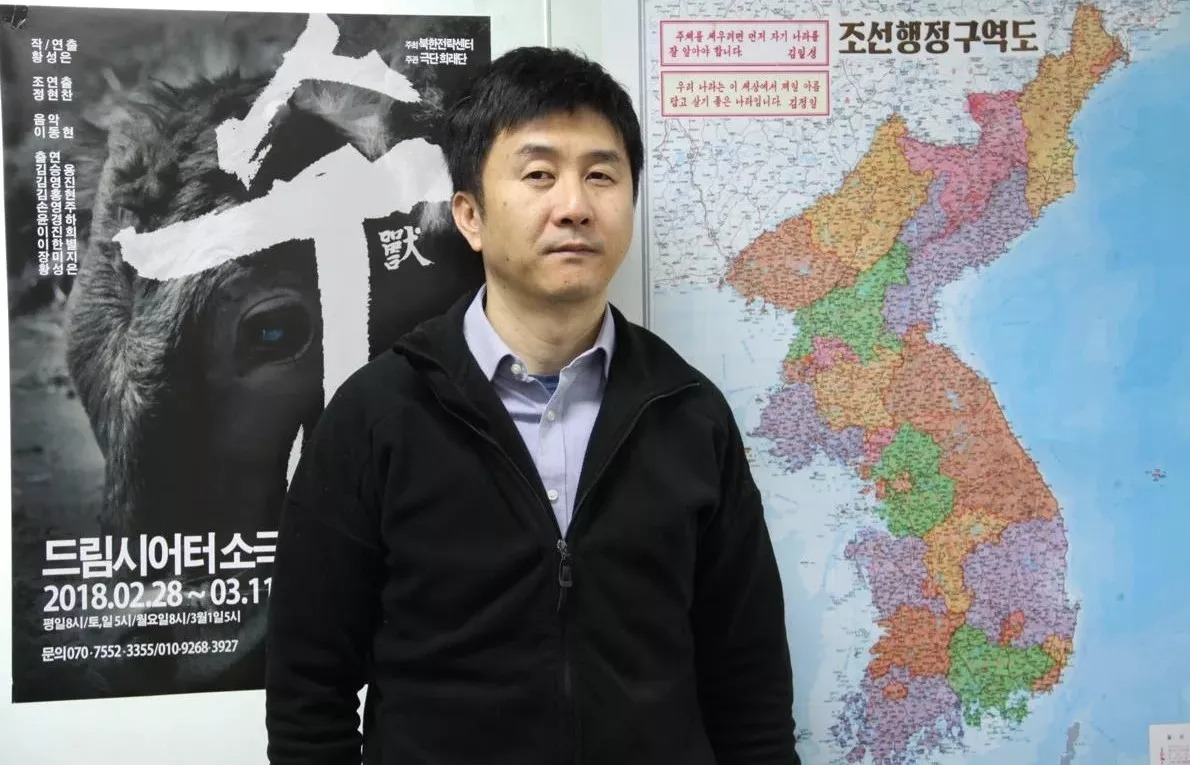
Nobody understands this better than Kang Chol-hwan, a 58-year-old North Korean journalist and political activist who has lived and worked in Seoul since 1992, where he wrote his shattering memoir The Aquariums of Pyongyang — a harrowing personal account of his own imprisonment.
I met him in the South Korean capital on 16 March 2007, when I was representing the Cyprus Journalists’ Union at an international conference on peace and reconciliation on the Korean Peninsula, organised by South Korean journalists in Seoul.
In the interview he gave me, Kang told me he had been imprisoned from the age of nine — nine years old! — in the notorious Yodok concentration camp, along with his entire family. He remained there for ten years, from 1977 to 1987, when he managed to escape, first to China and then to South Korea. At the time, he said, Yodok held 35,000 prisoners — predominantly families who, like his own, had previously emigrated to Japan and were therefore considered by the regime to be “contaminated” by capitalist ideas, and thus “enemies of the people”.

In 1977 the regime came first for his grandfather, then his grandmother, his father, his uncle, and finally Kang himself, along with his seven-year-old sister. His mother was left behind — but not out of mercy. She was forced to divorce his father and remarry another man. The aim, as Kang put it to me directly, was “to achieve the total destruction of the family.”
He described how prisoners in the camps are left to die from starvation, cold, disease, and abuse, forced to labour in quarries and mines from five in the morning until nightfall, fed nothing but a handful of maize. “The reason I survived as a small child in Yodok,” he told me, “is that I ate worms, cockroaches — and mostly rats”…

