


In the so-called “free” world, at least, punishing an offence pre-emptively, before it is committed, even if it never is, must be a global first.
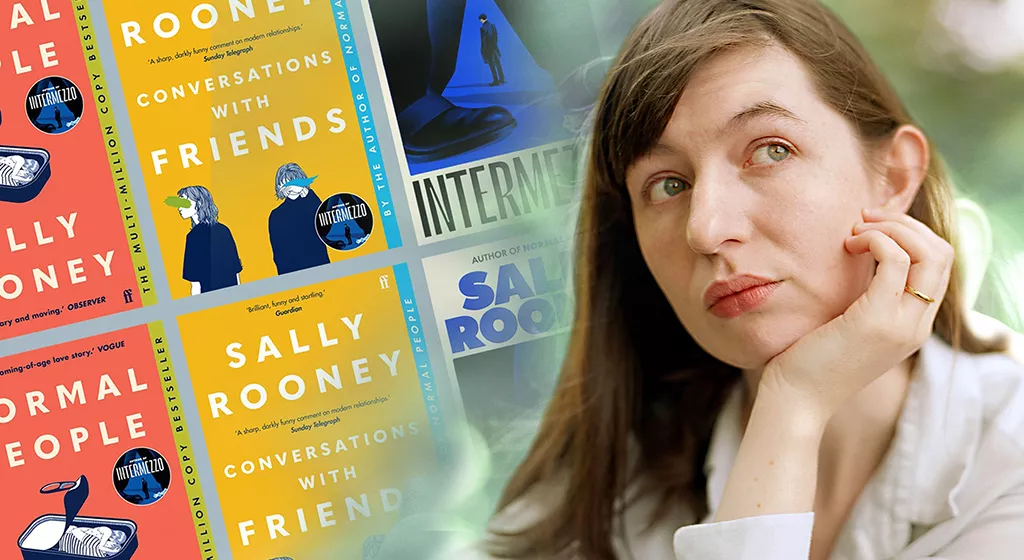
Sally Rooney (born 1991) is a young Irish novelist. Her books are hugely popular around the world, and above all in the British market. They are sold everywhere, even in supermarkets. Rooney, however, has decided to stop making them available in Britain from now on. The reason is that the state has barred her publisher, Faber & Faber, from paying her the proceeds from sales because, as she herself has said, she donates a share of them to Palestine Action, a British activist group proscribed as a terrorist organisation by the Labour government in 2025. That makes financial support for it illegal too. The author, however, has said she will not change her views and will carry on doing what she has been doing, even at a financial cost to herself.
This is an unprecedented paradox. Is it censorship? Technically, no, because the author is not being punished for what she writes. The state is not telling her to stop writing. It is saying something worse: we are punishing you for what you do with the money you earn from writing. And not only for what you have done, but for what you will do in future, for what we suspect you intend to do!
I think it is a global first, at least in the so-called “free” world, for an unlawful act to be punished pre-emptively, before it is committed, even if it is never committed at all. Rather like Philip K. Dick’s futuristic story Minority Report (which “lent” this column its name): in a future society, police use precognitives to arrest criminals before they break the law. And what if they get it wrong?
Consider this. I, or others, write in support of the Palestinians, who are fighting for a dignified life in a state that oppresses them, displaces them and kills them. I give, we give, a sum to support some related activist groups. So if the state decides that throwing paint, say, at the building of an arms company with Israeli interests is an act of terrorism on a par with the killings and other crimes of Hamas, it will also deem our financial support for them illegal.
So what will it do? Ban us from collecting our salaries, our pensions or our income from other activities, because we might pass some of it on to the “terrorists”? Sally Rooney could face arrest if she travels to Britain. Would they arrest us too, as supporters of terrorists?
In Rooney’s case, the stance of her publishers is also worth noting. They considered it unethical to profit from the work of someone who cannot herself be paid for it. In short, in an intensely utilitarian age, when individuals, politicians and even entire governments sacrifice everything on the altar of money (the Cypriot president, for instance, the Greek prime minister, the British one and others, who cosy up to Netanyahu for the sake of Israeli investment, weapons systems or whatever else, not to mention our controversial alliance with Israel), it is deeply comforting that there are still people who stay true to their values whatever the cost, financial or otherwise.
Here is what really ought to be a criminal offence: supporting a terrorist regime that is committing genocide. By the same logic, then, let us in turn declare the governments that support it “terrorist”, and demand that they give it not a penny and, above all, accept nothing from their terrorist allies.
Another comforting point is that a host of cultural figures have rallied behind Sally Rooney: writers such as Julian Barnes, Anne Carson, Annie Ernaux, Colm Tóibín and Arundhati Roy, as well as people from cinema, including actors Tilda Swinton and Jessie Buckley, director Jonathan Glazer, and Paul Mescal and Daisy Edgar-Jones, who starred in the 12-episode 2020 television adaptation of her hugely successful bestseller Normal People.
Incidentally, the next “logical” step may be to outlaw reading the books or watching the work of creators who support illegal organisations, with police entering homes to check what citizens are reading or which series they are watching. A return to the Middle Ages, or to Fahrenheit 451, Ray Bradbury’s dystopian novel carried from distant 1953 into today’s 2026, in which… firemen burned the “bad” books.
Are we sliding into totalitarianism? Are we already there, and with the tolerance, if not the support, of the many? That last part is perhaps the worst of it: many of the great dictatorships of the modern era began with popular support. They ended up unpopular, however, once citizens, or most of them at least, realised they had been wrong.
By then it was too late, of course. They may have collapsed in the end, but they cost many thousands, millions, of lives before societies rid themselves of their oppressors, who, let us not forget, had been sold to them as saviours. And although some survive under false colours, such as Putin’s Russia as a poor copy (?) of the USSR, some South American (and other) “banana republics” or certain African regimes, the danger lurks in every democratic country, in inverted commas or not. So let us stay vigilant…

