


Yesterday we heard some thoroughly substantive answers — from the community leader of Arsos and from representatives of the surrounding communities, who called a press conference to have their own say about the development at Trozena. The one that has caused such a furore lately.
But what the businessman and investor who went and bought up derelict houses in Trozena and decided to breathe life into them had to say is yet another slap in the face for the state and its bureaucracy — the same state that goes around courting investment and then, when investors actually show up, does its level best to make them regret it. Not just foreign investors. Cypriot ones too.
However many ministers launch attractive incentive schemes and investor-friendly initiatives, the state machine appears to remain firmly anchored in a different era entirely.
“I submitted eleven applications for approvals,” the businessman said. “I received no response. It is like a black hole. You put in your application and it disappears somewhere.” He continued: “I have applications that have been pending for over two years. I bought the land three years ago. The land just sits there, haemorrhaging money. I have lost 300,000 euros in interest over three years and nobody answers.”
Same story, same denominator. Applications, red tape, swallowed whole by the machinery of the state. The very machinery that stirred itself into action and descended on Trozena to conduct inspections only once the noise on social media became impossible to ignore. Before that: nothing.
As the businessman puts it: “You ask questions and they tell you ‘we are working on it’, ‘we are studying the matter’, and various other things. Never any answer, never any cooperation. Nobody ever came to me and said ‘perhaps we could do it this way’, ‘perhaps we could suggest something.’ Nothing. No communication whatsoever.”
This EU citizen, originally from Israel, decided to create in Trozena a village and a range of services to draw visitors — whether because he fell in love with the place, or because he saw a business opportunity. It doesn’t matter. Either way, the Cypriot state should have been at his side from the start, guiding him to ensure that whatever he built was legal, swift, beneficial to the area, protective of the environment and respectful of the village’s character. Instead, as he describes it: no communication, no response to his applications and letters. No cooperation. Full stop.
And then, once various people began venting their outrage on social media, the obstacles of state bureaucracy duly materialised. The village leaders and local residents are absolutely right to be angry. After years of state indifference and outright abandonment of the area — as the Arsos community leader put it — this development came as a lifeline. “It will make a real contribution to pulling the area out of isolation, to generating life and economic growth across the wider region,” said G. Yiannakis. Around ten families from Arsos are already employed in the Trozena area, with “many more jobs expected to be created that will be of particular significance for the communities of the region.”
But others — from Limassol, from Nicosia, from places whose residents have never had the faintest idea what our villages actually need — are expressing outrage that Trozena has been “sold to an Israeli.” Oh, the horror! We’re finished! Doomed! Yet when the people of Trozena abandoned it decades ago, nobody asked why a beautiful village like that had neither electricity nor running water. And nobody seems particularly bothered about whether the other villages in the area will follow the same path in the years ahead.
The point is not to be seized by panic at the sight of any investor and launch a witch-hunt that scorches the good along with the bad. What is needed is a state actually capable of managing such developments responsibly — so that they happen in a way that benefits the last remaining residents of our villages too. Investments in small, remote communities are rare enough as it is. The state should be encouraging them and making sure they are done properly — not sitting on applications and letting them gather dust for years.
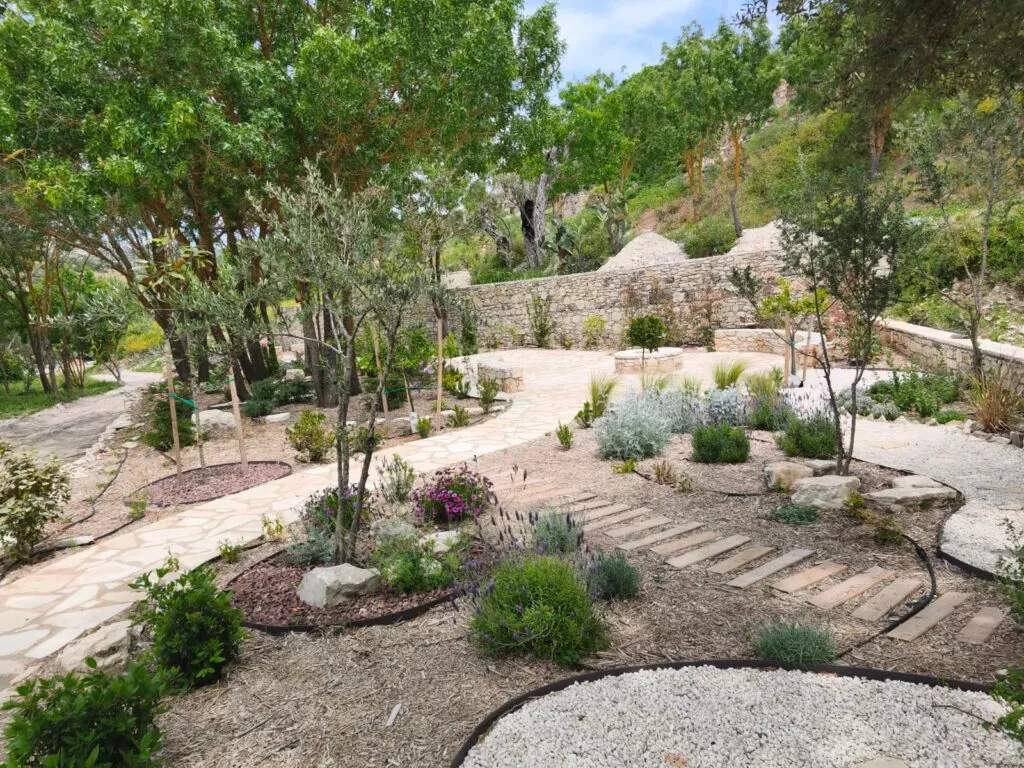
The photograph shows a small example of the beautification the investor carried out at his own expense at a spot in the village that had been nothing but brambles and snakes. No doubt someone will find a way to call that an environmental intervention too. Since we can never just be straight with ourselves.

