


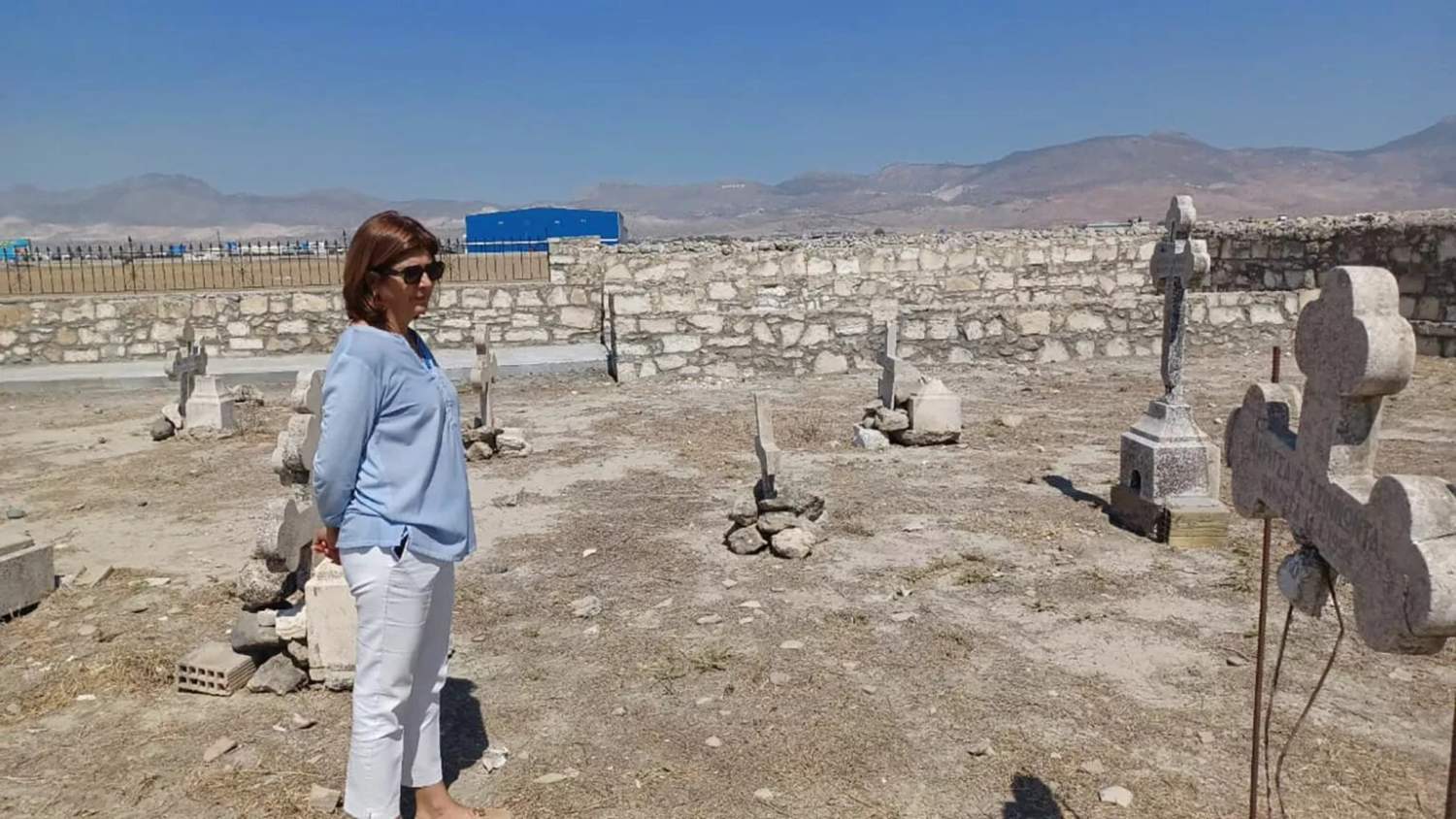
Maria Angela Holguin, the UN Secretary-General’s Personal Envoy on Cyprus, is about to join the long roll-call of UN envoys who came, saw and failed. Sadly.
But as her mission nears its end, she is trying to build a narrative about “what went wrong”. The familiar refrain: “the two leaders are to blame”. It is the easiest road, well trodden and cost-free: the policy of “equidistance”, followed for decades, which serves the aggressor. The blame gets shared out, and the aggressor gets an alibi.
The Cyprus problem is filed among the world’s unsolved problems. Yet not one of those who pontificate from on high about why an international problem remains unsolved ever mentions the occupying power. It is like discussing Ukraine and leaving Russia out of the equation. Or discussing the Middle East without counting Israel as part of the problem.
In her regular column in Politis, Holguin wrote that “the decision to resume negotiations rests with the leaders”. Either she has understood nothing, or she insists on a well-worn path that leads nowhere. Can she not see the occupation? Has she been reading the wrong handbooks on Cyprus? She plainly leaves the occupying power out of the picture. And as if dodging the substance were not enough, she believes that it is Ankara’s placeman of the day who calls the shots on Cyprus.
Holguin is a part-time envoy. She drops in on the island every so often and usually stays about a week. She is not there for the meetings or the events, but that does not stop her delivering verdicts. Which is how she breezily arrived, by way of a rhetorical question, at this conclusion: if the two sides have failed over the past two years to agree on things like crossing points, demining or tackling plastic pollution together, “how can they agree on a political, economic and social model capable of overcoming decades of division”?
It is part of her logic, and she says it time and again, that Nicosia has to make a move. “What does it cost Christodoulides to open Mia Milia?” she frequently asks the people she talks to. But nobody has ever heard her say that Turkey, as a goodwill gesture, should withdraw troops or make it easier for people to travel from Tylliria to Nicosia. She has never said it, because she considers such “demands” extreme. She hears the same from some on the Greek Cypriot side, after all, where any request Nicosia or the Greek Cypriots put forward gets branded “nationalist” and extreme. Politics by label. The impression is being cultivated that a way out can only be found by enticing the occupying power. Appeasement has been tried, and it has failed. Instead of cooperating, Turkey just grows more brazen. Yet still they persist.
Holguin invariably concludes that the problem in Cyprus is a “lack of trust”. And so, “methodologically”, the focus falls on confidence-building measures rather than on substance. But where does this lack of trust come from? Did she hear it from Turkish Cypriots who hold Republic of Cyprus passports and identity cards? From those who attend public hospitals in the free areas? Or who work there? Have all those crossing over from the occupied areas, to visit, shop or go out, ever felt threatened or in danger? No.
There is a lack of trust, and it is the product of the continuing occupation. Because that is the heart of the problem, the one the parade of envoys keeps sweeping under the carpet. And that is every Cypriot’s business.

