


It’s been barely six months since a British television documentary exposed the exploitation and sexual harassment faced by young British workers in Cyprus’s tourism sector in Ayia Napa. It aired in January 2026. The team behind that investigation managed to drag into the light a truth that was “hidden” only in the sense that everyone had somehow learned to look past it, through raw testimony from victims, and by capturing on record the behaviour of venue owners demanding sexual favours in exchange for hiring young women.
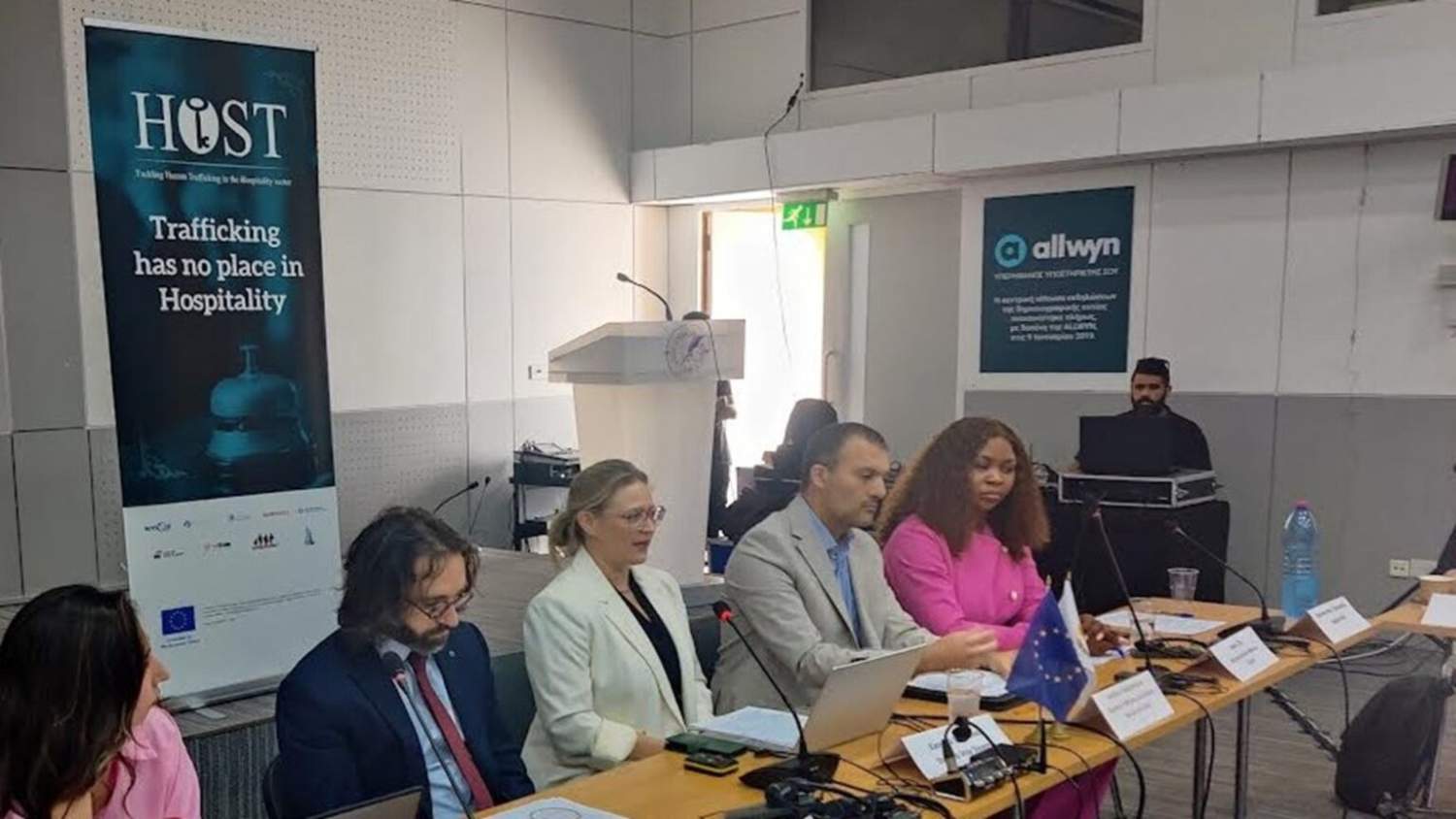
The event titled “From obstacles to bridges,” held yesterday, Thursday 30 July, at the Journalists’ Union building in Nicosia, was organised on the initiative of the NGO Step Up Stop Slavery and its director, Katerina Stefanou, with backing from the Ministry of Justice. It focused on this problem in its broader context, with particular attention to how Cyprus can tackle human trafficking in the hospitality sector. And it’s no accident it fell on World Day Against Trafficking in Persons, marked by the UN every year on 30 July.
The discussion brought together a wide range of voices and made room for real, productive exchange between representatives of every relevant body: the state, the European Commission’s representation in Cyprus, social partners and NGOs, the migrant community, and survivors who had lived through victimisation themselves.
One of the most important, and genuinely encouraging, messages to come out of the event is worth pausing on: the state’s recognition of the problem. As Andreas Hadjigeorgiou, representing the Ministry of Justice in his role as National Coordinator for Combating Trafficking in Human Beings, put it: “The rapid growth and rising demand for labour in the hospitality and tourism sector make clear the urgent need for safe, fair and ethical working conditions. Migrant workers, and third-country nationals in particular, provide invaluable services to our tourism industry. At the same time, however, we see that these workers often experience heightened vulnerability. Opaque recruitment practices by private agencies, language barriers, insufficient awareness of their rights, and the fact that their residence permits are tied to a specific employer, all create fertile ground for labour exploitation, which in serious cases can escalate into forced labour and human trafficking. As a State, we cannot and will not allow ‘grey zones’ to exist in the labour market. Economic growth cannot be built at the expense of workers’ protection and rights.”
Beyond what’s been acknowledged, what’s left to see is whether the effort to shrink that grey zone actually follows.

