


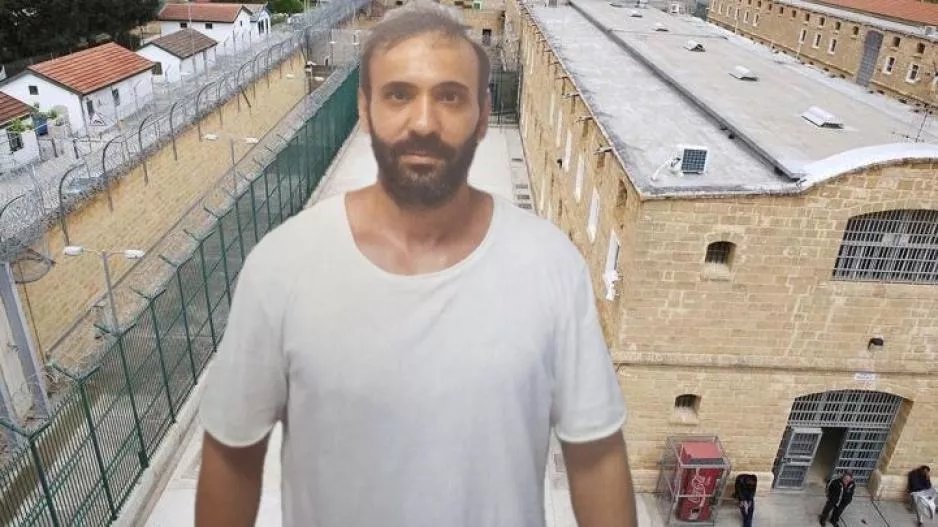
The Supreme Court has rejected a bid by a hairdresser serving a life sentence to reopen his case over the 2011 killing of his girlfriend and her young daughter, ruling that later witness statements he relied on were not new evidence.
The three judges found that statements in which witnesses sought to retract their earlier testimony did not amount to a “new element or fact” under Article 9(3)(d) of the relevant law. Neither of the two conditions for reopening a case was met, they ruled: there were no new or newly discovered facts, and no fundamental defect in the earlier proceedings capable of affecting the outcome.
The man, who escaped in September 2024, was convicted by Paphos Criminal Court on 31 October 2012 of the premeditated murder of Iulia Oboroc, 24, originally from Moldova, and the manslaughter of her daughter, Victoria Pozidou, aged three and a half, from Paphos. He was also convicted of possessing a firearm, cartridges and explosives. The offences were committed on 11 December 2011, and the Supreme Court upheld the conviction on appeal on 6 April 2015.
The application
Through his lawyer, Savvas Matsas, he asked the Supreme Court to order a retrial, either by the Court of Appeal or by the Criminal Court. He argued that new evidence had emerged since his conviction that fundamentally undermined the verdict.
He claimed that two key prosecution witnesses, Georgios Sachbazov and Antonis Prokopiou Kitas, had not told the truth at his trial, either for personal reasons or at the instigation of the police. According to him, his conviction rested largely on their evidence, which he said was fabricated.
He said Sachbazov had retracted his testimony in a sworn affidavit dated 1 June 2020, stating that he had not been at the scene of the crime and had given false evidence because he believed it would help his own criminal cases.
On Kitas, he submitted a copy of a statement by a man identified as A.M., taken on 20 January 2017 by lawyer Loukis Loukaides. According to that statement, Kitas allegedly told A.M. that the convicted man was not the killer and that Kitas had falsely implicated him.
The Law Office of the Republic argued that the conviction did not rest solely on Kitas’s evidence, but also, independently, on strong circumstantial evidence that remained intact.

