


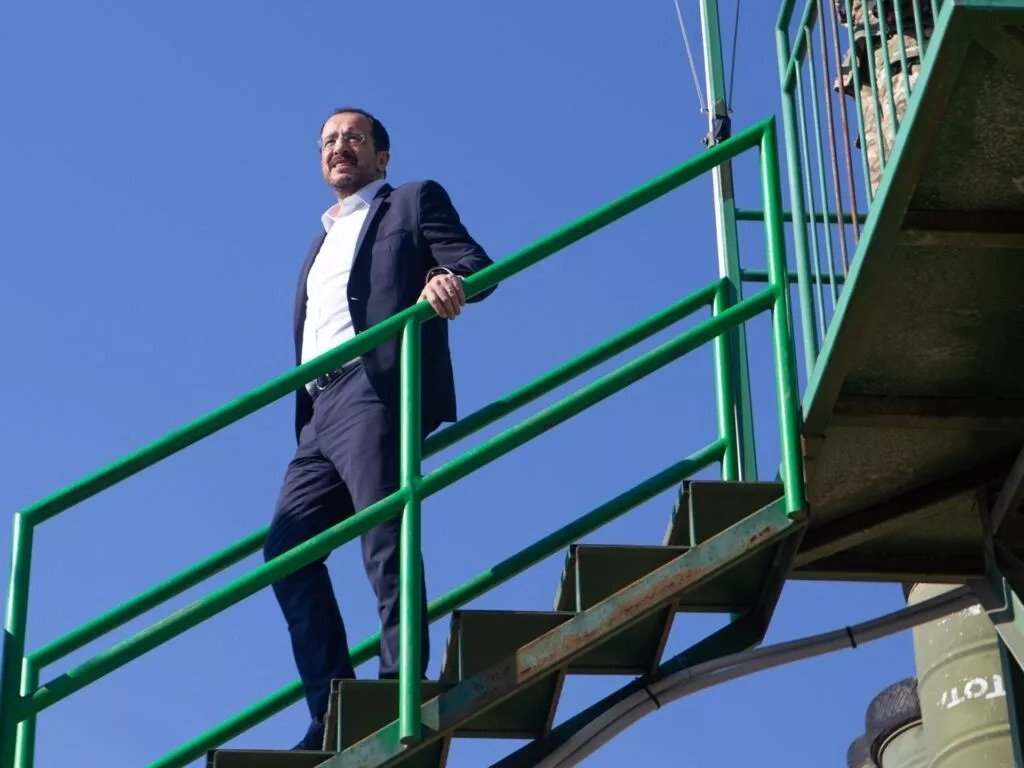
Every significant undertaking is difficult. Ascent is always challenging. Descent is easy and often slippery.
This is one of the wise sayings of Mahatma Gandhi that still applies today. Just like his advice on the seven things a person should not possess: Wealth without work. Knowledge without character. Politics without principles. Pleasure without conscience. Commerce without morality. Science without humanity. Love without sacrifice. We will focus on the first saying. Because although the ascent is hard and the descent is easy, much can be done to halt the descent…
The first year of governance by Nikos Christodoulides, and things have not evolved based on the expectations he created as a candidate – impeccable, unblemished, without burdens, a principled religious man, away from established interests that have troubled the place since the time of Cypriot independence and thereafter.
The world positioned itself based on who stood against him and gave him a real opportunity to enact what he announced. He was given a blank contract to change what citizens detest, criticise, and want to ostracise from public life. The tremendous favour he gained pre-election began to shrink with the assumption of his presidential duties, the choices he made, the people he gathered around him, and the way he conducts politics.
Certainly, presidential duties bear no relation to ministerial duties in a ministry like Foreign Affairs, which bears no cost. Nor does it relate to his previous role as a government spokesperson, a position that made him more known to the general public and made him a more familiar figure than politicians of his generation, regardless of party colour.
In an era where image plays a central role in everything we do, the image of Nikos Christodoulides gave him many points to be able to climb to the Presidential Hill. An image that a year later began to fade as the works so far did not align with the pre-election commitments. The problem is that, unfortunately, the new Presidential office operates with outdated mentalities. Anyone who says something disliked is an “enemy”… Surely last March did not bode for this year’s assessment. And it’s particularly depressing for the current occupant of the Presidential Palace compared to the immediately preceding two Presidents.
According to the diachronic popularity measurements of Presidents by Pulse Market Research, President Christodoulides’ popularity falls far short of his own. It started in 2019 with an astonishing 72% favourable opinion and 11% unfavourable.
In 2021, the favorable opinion was a point lower while the unfavorable opinion had risen by nine points. In 2022, with the presidential election campaign starting early, the favorable opinion was at 65% with the unfavorable opinion rising to 28%.
The 2023 assessment was clearly favourable for the new President of the Republic. 67% of the public had a favorable opinion of Nikos Christodoulides with 29% having an unfavorable opinion. By the end of February, the rates sound the alarm for those willing to listen to take corrective actions. The unfavourable opinion outweighs the favourable by two points. The rates are 49% unfavorable and 47% favorable.
The second warning bell that must be heard in the Presidential Palace is the comparative rates behind the two previous Presidents, who, a year after their election, had a very positive image in public opinion. President Demetris Christofias in 2008 had six out of ten citizens in his favour.
The rate of favourable opinion was 62% and the rate of unfavourable opinion was 35%. President Nicos Anastasiades, who began his presidential term with an economic disaster, the “haircut” of deposits, had a 58% favourable opinion and 39% unfavourable in 2013. The assessment turned negative for Nicos Anastasiades after the passport scandal, with his presidential term ending on a negative note: 56% unfavourable and 41% favourable opinion.
Dimitris Christofias’ term also ended on a negative note: 59% unfavourable and 39% favourable. The negative trend had begun a year earlier in 2011 with 53% unfavourable and 44% favourable opinions, following the Mari tragedy and a management that did not convince the public.
A year before the end of Nicos Anastasiades’ presidential term, the corresponding rates were 54% unfavourable and 43% favourable opinion, as the former President did not take corrective actions to combat the corruption that proved to be his Achilles’ heel and that of his governance.
The two previous Presidents had behind them two strong parties that traditionally supported the politicians emerging from their ranks. This gave them a solid base of favourable opinion, despite the crises they went through and the criticism they received from all sides.
Nikos Christodoulides is a special case. His strength of not being dependent on party gears is at the same time his weakness, as he cannot have any solid base on which to build. How did he put it recently, “I am politically orphaned,” differing from what he previously proclaimed about his DISY identity.
The findings of the Pulse poll show a problem in the party votes he gathers and indicate that he is running out of fuel early on. Just one year after his election to the presidency of the Republic, he loses his strongest weapon, not due to others’ fault, nor from the criticism he receives, nor from the opposition he faces.
He himself and his associates are to blame. A group of individuals who unfortunately do not act as a shield for the President… How did Tassos Papadopoulos put it about the people he wanted around him: They should give value to the chairs and not take value from them…
We’ve said it many times. And this President needs beside him a Pantelis Kouros. A friend, selfless, with vast knowledge who acts as a breakwater, functioning soothingly, reinforcing, behind the scenes and in the foreground, but primarily salvationally for the national and public interest and the good of the President himself…
The grace period is over for Nikos Christodoulides, who will only recover through deeds now. Less public relations and communication politics, work, work, and again work that has results for the daily life of the Cypriot citizen.

