


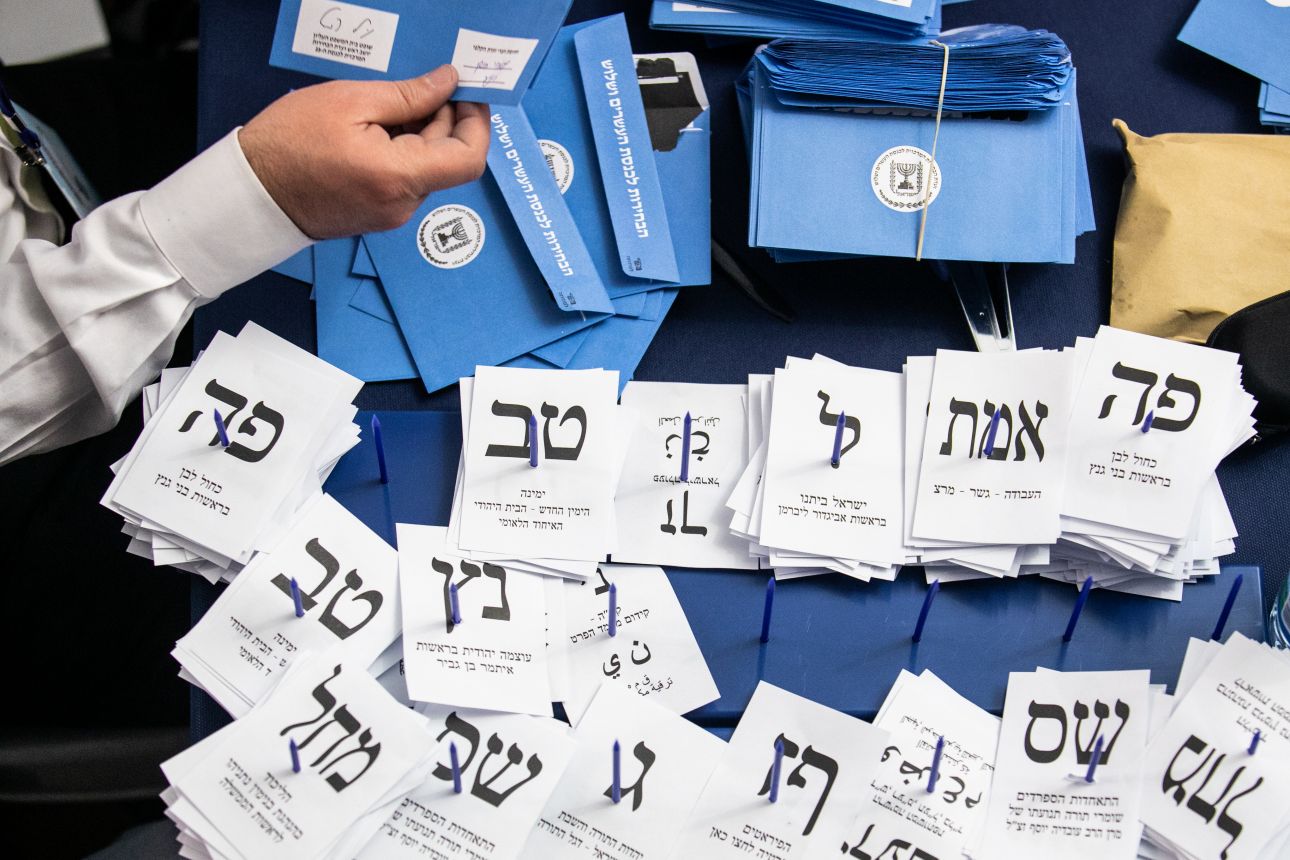
October 7 left an indelible scar on Israeli society, but it did not produce the sweeping change in political leadership that many demanded when the war broke out.
This is one of the contradictions Dr. Neil Bar identifies in Israel as it approaches the October 27 election: a deeply divided country in which both political camps view a victory by the other side as a threat to Israel’s security, institutions and future.
The Israeli academic, a researcher at the University of Haifa and the University of California, Berkeley, shares the view that this is the most consequential election in the country’s history. He sees the contest as highlighting disagreements over who should shoulder the responsibilities of citizenship, how the state should be protected, and which policies can secure its future.
“Never before has the Israeli population been polarised as it is now”, he says. He takes early 2023 as a point of comparison, recalling the confrontation over Likud-championed judicial reform and the mass weekly demonstrations that brought together Israelis from different political backgrounds. Even that period, he observes, was less polarised than the present.
The substance of this conflict explains why he attaches such weight to the election. He notes that “there are few democracies where a victory by either side carries such existential weight for the state’s institutional and geopolitical future.” The question of whether Benjamin Netanyahu stays or goes is thus bound up with a broader struggle over Israel’s character.

The fears on each side
He explains that government supporters are deeply concerned that an opposition victory would pave the way for concessions under international pressure on the Palestinian issue. Voters backing the current government worry that its opponents would accept the creation of a Palestinian state, which they regard as a threat to Israel’s security.
As he describes them, their concerns also extend to the message such a decision would send. They believe it would set a disastrous precedent: “that horrific acts of mass violence can successfully extract strategic concessions from Israel.” In this view, the next government’s decisions must also be judged by whether they would embolden those seeking to impose political outcomes through violence.
Part of the electorate, then, goes into this election convinced that Israel’s ability to safeguard its national security depends on the outcome.
Among opposition supporters, the anxiety centers on how Likud’s longstanding partnership with the ultra-Orthodox parties shapes the relationship between the state and society. According to Bar, they believe this alliance entrenches economic dependency and an unequal distribution of civic obligations, with consequences for education, employment and military service.
He describes their fear that the alliance “institutionalises dependency and inequality by continuing to subsidize exemption from secular education, the labor market, and military service”. At the heart of this concern is the middle class, which, in their view, is being asked to shoulder a disproportionate share of the cost of running and defending the state.
Military service is therefore part of a broader dispute over whether citizens bear their obligations equally. In Bar’s account, the economic and defense burdens are linked: opposition supporters believe the middle class is being left to shoulder, alone, responsibilities that should be shared by society as a whole.
Adding to their concerns is the growing strength of extremist factions in the West Bank. As he explains, they fear this will further fuel Jewish terrorism, bringing especially damaging international sanctions and deepening Israel’s isolation. In the argument he sets out, domestic political choices have direct implications for the country’s standing abroad.
Trauma and political continuity
Against this backdrop, October 7 remains the defining reference point. “October 7 is engraved deep into the Israeli psyche and will remain such for a very long time”, he says. Yet in his assessment, the depth of that trauma has not been matched by a comparable change in those holding positions of responsibility.
His observation is pointed: “Israelis tend to have a short memory and a political culture that does not punish failures.” He recalls that when the war began, many called for a complete overhaul of the political order. They believed that “everyone who was acting in a leading political or professional position shall retire in shame.” That expectation, he says, has not been met.
He offers specific figures to explain his assessment. According to the data he cites, 85.7% of the party leaders seeking election already serve in the Knesset or the government. Meanwhile, 64.3% of the candidates in the top five places on party lists serve in the current parliament or served in the previous one.
For Bar, these figures show how much of the political leadership has remained in place despite the scale of the crisis. His point concerns the survival of the same figures in electoral politics, even before it is clear who will serve in the next government. He concludes: “In other words, nothing meaningful has changed leadership-wise.”
The prospect of another deadlock
That continuity could also extend to government if the election fails to produce a new governing majority. Bar is cautious about the prospect of the current opposition forming the next government, stressing just how big an “if” that remains. He also sees another political deadlock as a distinct possibility.
“If the elections fail to produce a governing majority – which is a likely outcome – the country will enter a cycle of snap elections until a stable government is formed.” In that scenario, he explains, the current government would remain in power until a solution emerged. He points to the prolonged political impasse of 2019–2021 as a precedent.
In the Israel he describes, intense political conflict thus coexists with the prospect of further elections and a prolonged period under the same government. In his assessment, those taking part see the contest as existential. Whether it will also produce a viable governing majority remains one of the great unanswered questions about what comes next.
Ties with Nicosia and Athens will endure
A change of government in Israel could strengthen cooperation with Greece and Cyprus, according to Dr. Neil Bar. His assessment rests on the strategic importance Israel attaches to the two countries and the broad political support for those relationships. However, he describes a very different Israeli outlook on Turkey.
The Israeli academic and researcher does not assume that the current opposition will succeed in forming a government after the October 27 election. Should it do so, however, he expects no change in policy toward Athens and Nicosia.
He stresses that “this particular alliance is perceived in Israel as strategic not only across every significant party in the Knesset, but also across public opinion as a whole.” He sees similarly broad support in Greece. Indeed, he recalls that the trilateral partnership gathered momentum around 2016 under Syriza, which was “not exactly the most pro-Israel side of the Greek political spectrum.” In his view, this is a relationship that transcends the party affiliations of the governments involved.
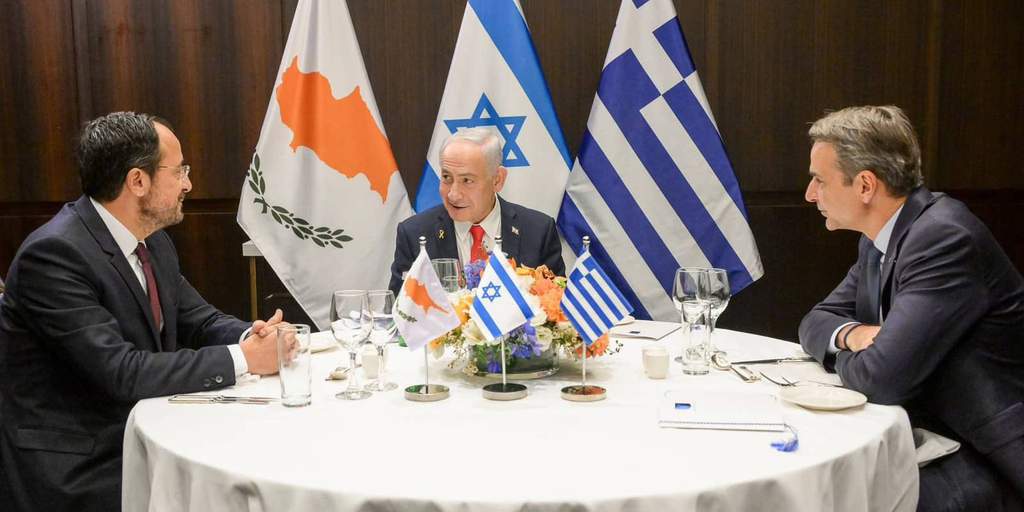
His assessment of Ankara is unequivocal: “I also do not see relations with Turkey improving, let alone being reinstated, while Erdoğan or his potential heirs are in power, as ties are beyond repair at this stage.” He describes a rift he believes will outlast Erdoğan’s own tenure. He sums up the distinction: “While Greece and Cyprus are perceived as strategic allies, Turkey is increasingly viewed as a strategic threat”.
According to Bar, this development reflects both “Iran’s diminishing hegemony in the Middle East” and Turkey’s active alignment with Israel’s enemies, specifically the terrorist organisation Hamas. He therefore does not see a change of government as the starting point for repairing ties with Ankara.
For Athens and Nicosia, by contrast, he believes Netanyahu’s departure could make cooperation easier to manage politically. The current prime minister, he notes, has borne the brunt of the criticism directed at Israel’s regional military operations over the past three years. Without him, Greek and Cypriot leaders could more easily mediate, maintain the relationship and defend it publicly at home.
Nor does the prospect of prolonged political uncertainty lead him to predict a diplomatic shift. He considers it possible that the election will fail to produce a governing majority and that further elections will follow, with the current government remaining in office until the deadlock is resolved. He cites 2019–2021 as a precedent, noting that the political stalemate of that period brought very little change in foreign policy.
Indeed, he sees prolonged electoral competition as giving the government a further incentive to highlight the trilateral partnership. Invoking Kissinger’s sardonic observation that Israel has no foreign policy, only domestic politics, he believes the government will want to point to concrete diplomatic achievements. He concludes: “If anything, the current government will seek to showcase and bolster Israeli-Hellenic relations to demonstrate the tangible success of its diplomatic strategy.”
Read more:

