


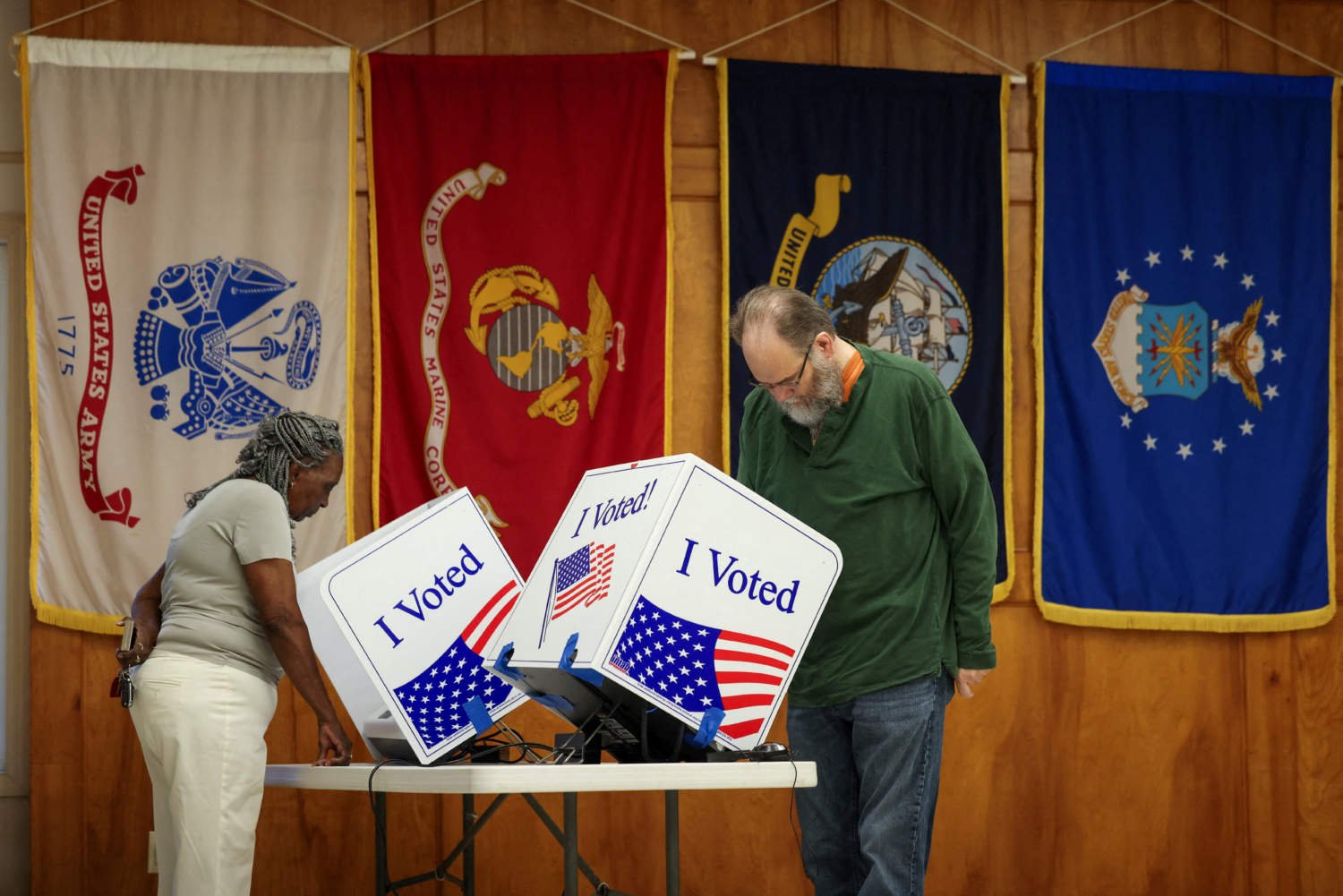
What really happened in the United States on 3 November may be simpler than the hundreds of analyses churned out across the Atlantic suggest. The message from the ballot box is a simple one: democracy always finds a way to correct itself.
Next time we hear about the right to vote, we should think of the 2026 US midterms. The American electorate chose to give its answer at the ballot box itself, not on the streets or through unrest.
According to the University of Florida’s Election Lab, around 124 million people voted, a record for a midterm election. The preliminary estimate puts turnout at 49.4 per cent of eligible voters, up from 46.1 per cent in 2022.
Americans chose to show up rather than stay at home. They grasped that by abstaining they were simply handing others the right to decide for them. And protest carries far more weight when it is cast at the ballot box than anywhere else, let alone on so-called social media.
Whatever faults you might find in it, the American system is built to correct itself. That is down to the Founding Fathers. They did not believe that those in power would always be virtuous, so they designed a system that does not depend on their virtue.
James Madison spelt it out in Federalist No. 51, in 1788: “Ambition must be made to counteract ambition.” That became what we know as checks and balances. Power is divided so that no one can grab all of it.
The midterms are one of the key cogs in that machinery. Halfway through a presidential term, two years after the President’s election, the American people are asked to pass judgment on him without voting on him directly, giving or taking away the legislative support he needs.
The American system does not stop excess before it happens, which is how you end up with presidents of the Donald Trump variety. But the same system can punish after the fact, and it will not tolerate a permanent concentration of power, whoever is chasing it.
But correction is not a cure, and it has its limits.
The first is time. A correction always comes after the damage is done. Whatever has been done over the past two years to the institutions, the courts and foreign policy cannot be undone at the ballot box. The war with Iran has not ended, and its consequences will still be with us after 2028.
The second is the circumstances. The system was tested in fair weather, with a result that left no room for dispute. The real test would have been a knife-edge contest, and that never came.
The third is the nature of the vote. Bernie Sanders himself admitted that the Democrats “are not very popular”, despite their win. Voters were punishing high prices and the war with Iran. They were not handing the opposition a blank cheque.
The fourth is the veto. The President has already vowed to block the new Congress’s agenda. The likeliest outcome is gridlock, not a change of course.
So voters have set things straight. But the cracks that showed before the vote are still there.
What is the lesson for us, and for Europe?
Institutions hold when citizens use them. Staying at home is not a protest. It is walking away from the only tool that corrects without violence.
Democracy on its own does not guarantee that we will be governed well. It guarantees that those who govern badly will not govern for ever.

