


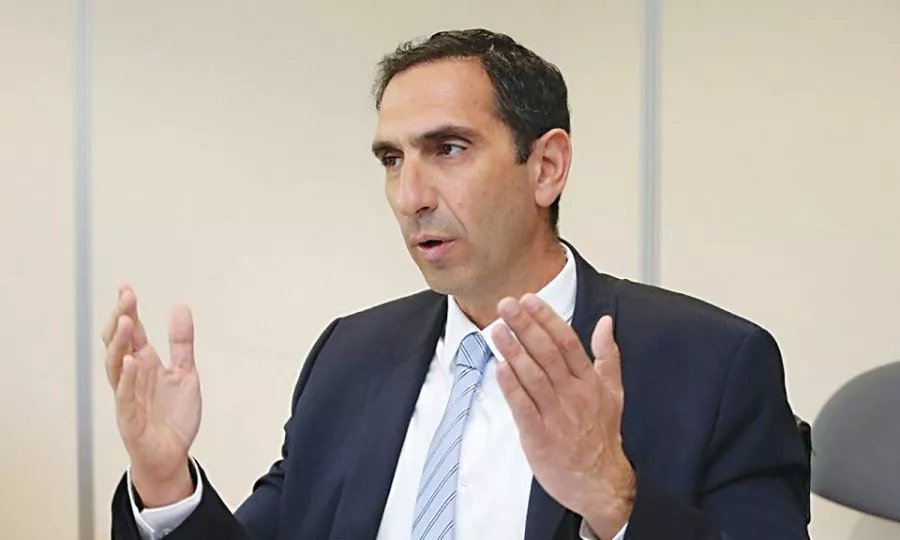
Cyprus will seek to attract new investors and talent, keep existing businesses and help them grow under a 2027-2030 strategy presented in Nicosia on Friday by Constantinos Ioannou, who heads the ‘Ministry of Interior and Civil Protection’.
Speaking on behalf of President Nikos Christodoulides at the annual conference of the American Chamber of Commerce in Cyprus (AmCham Cyprus), Ioannou also described closer transatlantic relations as a strategic priority for Cyprus.
He told the conference that the Strategy for Attracting Investment and Talent rests on four pillars: attraction, retention, expansion and connection. Its aim is to increase the presence of foreign investors and talent in Cyprus and tie them more closely to the economy. He also outlined the island’s role in regional trade and energy links.
“Investor confidence depends on transparent procedures, effective regulation and efficient public services,” he said, stressing that government and business needed to work together.
Ioannou said transatlantic relations rested on shared values such as democracy, the rule of law and respect for international law, and that both sides had common interests in energy security, innovation, defence and economic resilience.
“Together, we must protect critical infrastructure, diversify supply chains and strengthen our ability to respond to disruptions,” he added.
He highlighted the Cyprus-US Strategic Dialogue, through which the two countries are working together on security, crisis management, energy, trade, investment and education, with the aim of achieving concrete results.
Regional role
Ioannou said Cyprus aimed to act as a link between the European Union and its partners in the Middle East. He pointed to the island’s part in evacuating civilians from conflict zones and in humanitarian cooperation through the ‘Amalthea’ maritime corridor, noting that developments in the region had a direct impact on Europe’s security and prosperity.
He said the India-Middle East-Europe Economic Corridor (IMEC) offered opportunities for trade, investment and supply chains, and that Cyprus could contribute through its shipping expertise, professional services, regional partnerships and access to the EU single market. Success would require sustainable projects, coordinated regulatory frameworks and cooperation between the public and private sectors, backed by formats such as the ‘3+1’ grouping of Cyprus, Greece, Israel and the United States.
Energy and digital links
On energy, the minister said transatlantic trade in liquefied natural gas (LNG) and Eastern Mediterranean resources could help Europe diversify its sources of supply. He noted the involvement of US companies in Cyprus’s Exclusive Economic Zone and the potential of renewables, storage, electricity interconnections and energy efficiency.
Such investments, he said, must be based on sound technical assessment, reliable financing and environmental responsibility, and must respect international law and the United Nations Convention on the Law of the Sea.
He also underlined the importance of digital connectivity and cybersecurity for economic growth and the protection of critical infrastructure, citing the role of the CYCLOPS training centre in Larnaca in improving regional preparedness.
Business view
AmCham Cyprus president Marios Kapiris said the chamber, which marks 30 years since it was founded in 1996, represents more than 100 major US companies and businesses with US participation. Its main priorities are deepening economic ties between Cyprus and the United States, attracting investment and building partnerships in energy, digital and green technologies, sustainability, oil and gas, health and education, he said.
Kapiris referred to the chamber’s contribution to the Comprehensive Cyprus-US Strategy, in cooperation with the Foreign Ministry and the US Embassy, and to efforts to promote reforms that improve transparency, legal standards and competitiveness. He described AmCham as a platform for dialogue between businesses, policymakers and international partners, aimed at improving the business environment and encouraging innovation.
Cyprus Chamber of Commerce and Industry (CCCI) president Stavros Stavrou said relations between Cyprus and the United States were the strongest they had ever been, both diplomatically and in business. He stressed, however, that the island’s geographical position was not enough on its own to attract investment, and that strategic planning, upgraded infrastructure, greater energy and digital capabilities and a predictable regulatory framework were also needed.
He added that closer economic cooperation between Europe and the United States offered opportunities in innovation, energy security, technology and growth, particularly in the Eastern Mediterranean and the Middle East.
“The real test of strategic partnerships is ultimately whether they produce tangible results,” Stavrou said, listing new investment, stronger businesses, quality jobs, innovation and sustainable growth.
The conference was attended by policymakers, diplomats, business people and experts from Cyprus and abroad, including representatives of the American Chambers of Commerce in Jordan and Luxembourg.
(Information from Cyprus News Agency)

