


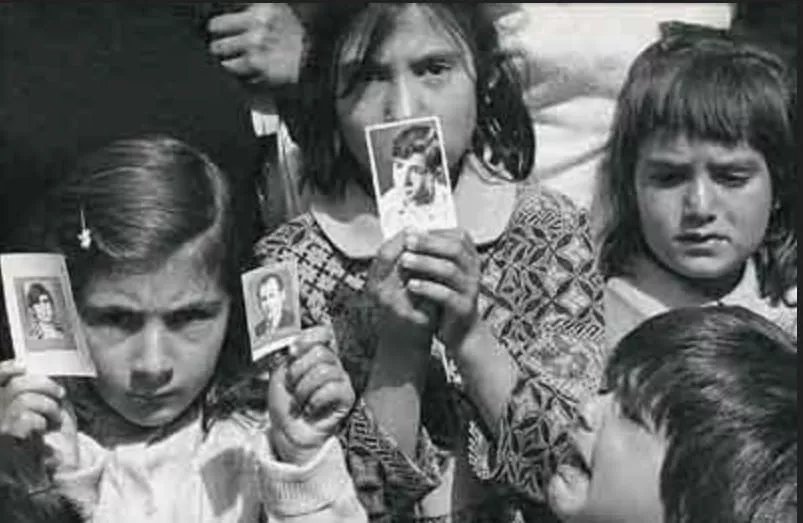
Fifty-two years after Turkey’s invasion, and the occupation of Republic of Cyprus territory that followed, the wounds are still wide open. There’s no shortage of unfinished business here, much of it down to one thing: the occupying power’s refusal to cooperate.
One of those unfinished chapters is the missing persons. A matter that should never have been anything but a humanitarian one.
At the last sitting of the House Refugees Committee, the missing persons issue came up again. It’s permanently on the agenda, both in parliament and in government, and has been for years.
What stood out, what genuinely matters here, is the sheer number of people whose fate we still don’t know. Fifty-two years after the invasion. Presidential Commissioner Marios Hartsiotis told the committee that of the official list of 1,619 missing persons, around 859 have now been identified, leaving 760 still unaccounted for. Just over half have been found. For the rest, still nothing. He said 46 sites had been excavated in 2026 so far, turning up five more Greek Cypriot missing persons now headed for identification: two in the area of occupied Kyra tou Morfou, two in the Saint Mamas cemetery in occupied Lapithos, and one in a well near occupied Karavas. So there’s movement, at least.
He went through the numbers: open cases, cases still under investigation, three hundred of them, being worked by the investigative team from the Office of the Greek Cypriot Member of the Committee on Missing Persons.
Plenty is being done, no question. But every inch of it comes with obstacles, because the occupying side simply won’t cooperate. Both the Presidential Commissioner and Christoforos Skarparis, the community leader of occupied Assia, brought up the Ornithi case during the discussion. As is well known, after the mass killing of the people of Assia and their initial burial at Ornithi, the remains were moved to the Dikomo rubbish tip, on which, with EU funding, an environmental park was later built.
The occupying side won’t allow excavations there. And, as the Commissioner noted, the President of the Republic will now raise the matter with the European institutions. At the very least, the EU should demand that if the Turkish side insists on stonewalling, it hands back the money it received for that project in occupied Dikomo.
This could all have been dealt with, sorted, in the early years. It wasn’t. And time, unfortunately, only piles on more problems. Relatives are dying off, while buildings now stand on the very ground where the dead lie buried.
Occupying Turkey needs to finally cooperate, and close one of the open wounds of the Cypriot tragedy.

