


Βy Farid Mirbagheri – Professor of International Relations and Senior Fellow at Strategy International
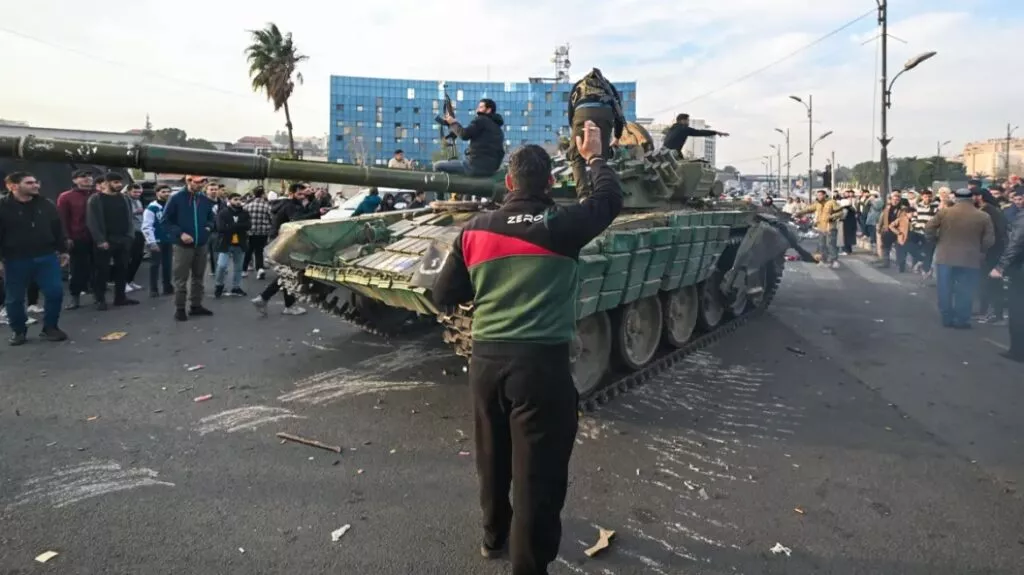
The surprising ousting of Bashar Assad from power in Syria last December has left many wondering about the future of the country and the wider implications for the region. The relative ease and the speed with which the change took place in Damascus indicated the near complete lack of domestic support for the Syrian regime. Like many other political developments, however, Assad’s demise should not be considered in isolation but rather in the context of greater regional and global changes.
Two countries in particular initiated and helped the process along. The Russian Federation that was effectively in control of the Syrian air space together with Turkey that had established close ties with Hay’at Tahrir al-Sham (HTS), a certain Islamist opposition group in Syria, and the Ankara-backed Syrian National Army, appear to have played the main role in toppling Assad and replacing him with Ahmed al-Sheraa, the leader of HTS.
Turkey, attempting to extend her sway geo-politically is eager to maintain the newly established Syrian government within her sphere of influence. The Islamist nature of HTS, however, together with the Turkish ruling Justice and Development’s Party’s (AKP) Islamic tendencies do not make for easy relations with Syria’s western neighbour Israel. Already Tel Aviv has taken advantage of the vacuum of power in Syria to take out several key military complex and to occupy Syrian land. The Israelis will be watching the new rulers in Syria very closely.
Ankara will also have to deal with the Kurds in Syria. The American-backed Kurdish coalition in Syria known as Syrian Democratic Forces (SDF) can neither be trusted nor wished away by Turkey. They are seen as a threat by Turkish authorities, who believe them to be the Syrian arm of the Kurdistan Workers Party (PKK), an insurgent group that has been waging attacks inside Turkey for decades. Up to now, however, no deal appears to have been worked out between the HTS rulers in Damascus and the SDF.
Despite Damascus’ secular politics during Assads’ rule, an alliance of sorts had developed between Syria and the Islamic Republic of Iran. The main drive for that close cooperation was the arming of Hezbollah by Tehran via Syrian territory. In return Iran was supplying free oil to Syria and invested in the Syrian economy. The near destruction of Hamas in Gaza and the significant weakening of Hezbollah in Lebanon by Israel, however, seriously reduced the Islamic Republic’s regional influence. Together with the demise of Assad those developments rendered the Islamic Republic of Iran the most disadvantaged in Syria and in the Middle East. Thousands of deaths and tens of billions of dollars went to waste in support of a regime and proxy groups that are no longer more.
The religious government in Tehran would not wish to see the new Syrian government exercise Islamist policies for such policies would naturally tend to be more Sunni-oriented and almost automatically anti-Shi’a, the sect represented by the Iranian clerical rulers. Therefore, ironically enough, the Iranian religious establishment would prefer a secular Syrian administration in Damascus.
Saudi Arabia, the Guardian of the two Holiest Shrines in Islam, would not wish to see Ankara in charge of developments in a neighbouring Arab country. Hosting a a meeting organized on Syria on January 12, Saudi Arabia invited leaders of regional Arab countries to Riyadh. It was only in a subsequent meeting that Turkey and some other Western countries were also asked to join the discussions. That goes to show the importance Prince Bin-Salman places on the Arabian nature of Syria, an aspect that naturally tends to diminish Turkey’s outreach in the country.
Moscow would not interfere in the internal dynamics of the new Syrian government so long as her strategic interests, namely the Tartus Naval Base and the Khmeimim Air Base, are left intact. That, however, remains uncertain as the new rulers in Damascus have now annulled the agreements on the bases and have demonstrated certain policy trend by banning imports from Russia, Iran and Israel.
The new administration in the United States would do everything possible to stay out of Syria so long as the security of her allies and partners in the region, are not threatened. Why should Washington wish to get embroiled in a complicated political maze that carries only risks with no tangible benefits.
All in all, the delicate balance of power that has to be maintained for Syria to withstand internal and external pressures is vital to peace and stability in the country and the region. Turkey, that has now placed herself in the position of power broker in the country, will need to exercise great brinkmanship to bring about and maintain that Balance. It is not a position to be envied as failure can come easily but can prove very costly to Ankara.
Iran just experienced that.

