The role of the British Sovereign Base Areas of Akrotiri has come under discussion in light of their involvement in the attacks carried out by the American and British forces against the Houthi rebels in Yemen.
However, this is not the first time that the British Bases have been used as a launching pad for attacks by the American-British coalition in the context of conflicts in the region.
In 1986, they were targeted in retaliation by armed Nasserite groups following the U.S. airstrikes in Libya.
In April 1986, the British offered the Akrotiri bases to the U.S. military as a launch site for attacks against Libya in Tripoli and Benghazi.
This operation, codenamed “Operation El Dorado Canyon,” involved U.S. airstrikes against Libya as a response to the bombing of a West Berlin discotheque, for which U.S. President Ronald Reagan openly accused Libyan leader Muammar Gaddafi.
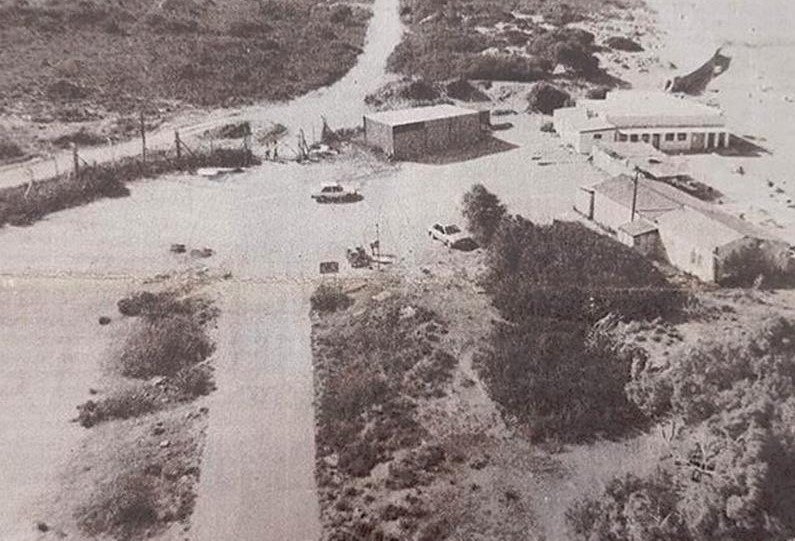
Four months later, on August 3, 1986, the British Sovereign Base Areas of Akrotiri became the target of retaliatory attacks by an armed group at various points, causing damage to buildings and injuring three individuals, including two British female military personnel.
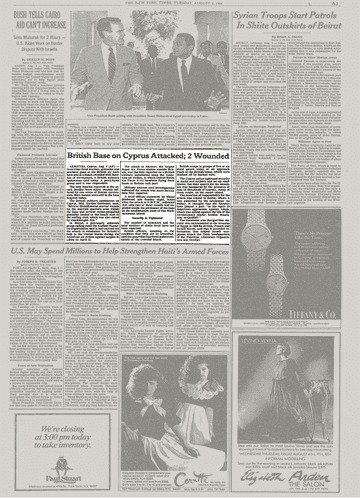
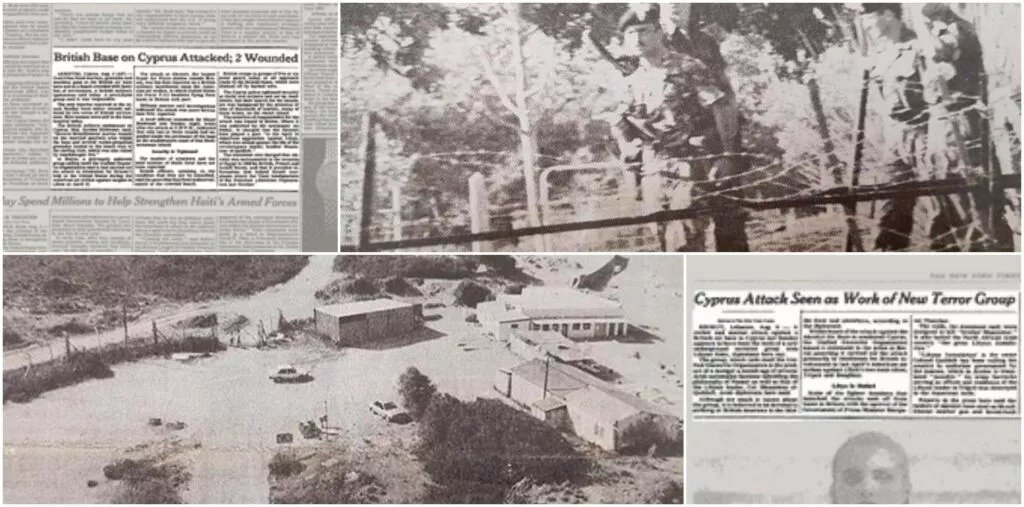
The New York Times reports from that time highlight the events.
An article on August 5, 1986, quotes statements from the (then) representative of the British army, stating that “guerrillas attacked with mortars and rockets at the British airbase and a beach (Akrotiri), full of soldiers’ families. A pro-Libyan group is responsible.”
In the investigation that followed, Scotland Yard investigators arrived in Cyprus, and Cypriot police increased security measures at ports and airports while setting up roadblocks.
British troops guarded roads near the British Bases, which were fenced with barbed wire.
The attack on Akrotiri, the largest RAF station outside Britain, was the first against a British military installation, following the U.S. airstrikes.
Two days later, the New York Times, in its analysis, attributed the attack to a newly emerging organization called the “Unified Nasserite Organization,” formed by the merger of several Arab nationalist factions supporting the philosophy of Nasserism and the Libyan leader Colonel Muammar Gaddafi.
The article also refers to a statement by the organization taking responsibility for the attack in Cyprus, as a response to the U.S. airstrikes in Libya in April 1986, claiming that its goal was to impact British interests in the Eastern Mediterranean.
Military analysts suggested that the scale of the attack indicated long-term preparation and significant effort, introducing a new dimension to “terrorist activity” against Western interests in the Middle East.
In August 1987, fighters from the armed group ambushed a British military vehicle travelling along a Cypriot road, causing significant injuries to a British soldier and a civilian companion through the use of light machine-gun fire.