


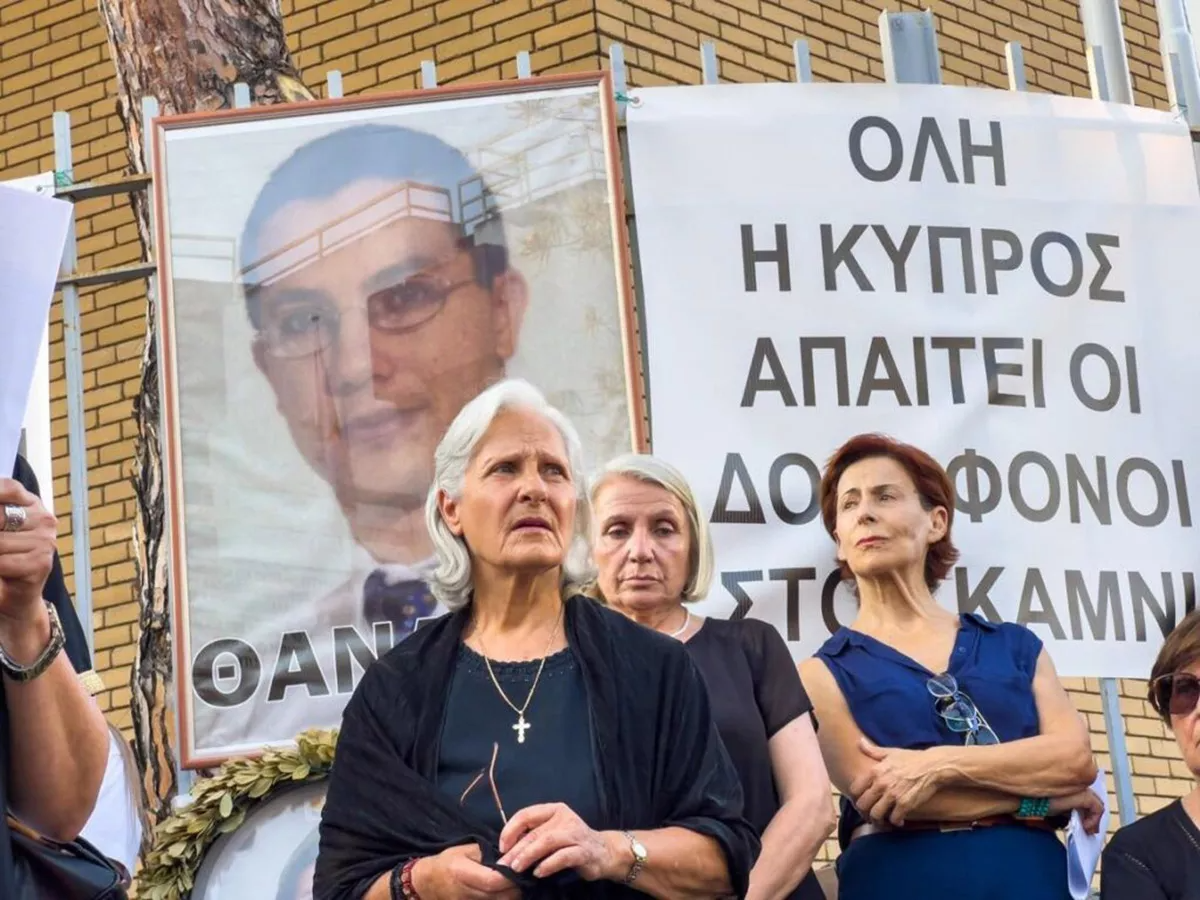
Extensive inconsistencies and contradicting testimonies from key witnesses have been revealed in the criminal investigators’ report on the death of Thanasis Nicolaou, delivered to the Cabinet on 12 March.
Nicolaou, a 26-year-old architect who returned to Cyprus from Australia to complete his national service, was found dead under the Alassa bridge in Limassol in September 2005. His death was initially ruled a suicide by military investigators. However, following the exhumation of his body in 2020 and forensic reanalysis, authorities confirmed that he had been strangled, indicating a criminal act.
The new report on Nicolaou’s death particularly criticises forensic pathologist Panikos Stavrianos, highlighting numerous contradictions and omissions allegedly made to “cover up the initial conclusion of death by falling from height – suicide”.
Significant lapses by Limassol Police Directorate officers were also identified, with investigators noting failures to explore all possibilities, conduct proper examinations, and obtain timely statements that could have shed light on the case.
The findings come from the Pappas-Athanasiou investigative report. The investigators note that the presumption of innocence applies to all involved, with any potential prosecutions remaining under the exclusive jurisdiction of the Attorney General.
Regarding Stavrianos, investigators state they carefully examined new evidence he provided but found it failed to answer their questions. His lengthy investigative testimony remained incomplete.
The report notes that during the autopsy, Stavrianos “did not take into account the distance between where the body was found and the vertical axis of the bridge, nor did he instruct police officers to take any measurements. The body position resembled placement rather than impact.”
Investigators further determined the pathologist “failed to consider, or adequately consider in cooperation with Police, the discovery of undamaged prescription glasses with a bent frame suggesting possible violence, and a wallet found beside the pocket of the trousers. The wallet position is inconsistent with a fall from approximately 30 metres.”
The report contains numerous additional concerns, including Stavrianou’s failure to document external bleeding on the right ankle, conflicting statements about body temperature, and varying explanations for the lack of ground indentation from the fall.
After examining all evidence and expert reports, investigators concluded Stavrianos “proceeded with hasty premature conclusions” and demonstrated “alternating positions and versions” of events.
However, investigators ultimately determined that “despite our efforts, after approximately 20 years, it unfortunately proved impossible to nearly unattainable to locate sufficient evidence to recommend charges against any person for Nicolaou’s murder or for covering up the crime.”
The report recommends potential criminal charges against four senior police officers, two military personnel, and Stavrianos, who faces possible charges of dereliction of duty, issuing false certificates, destroying evidence, providing false information to police, perjury, and interfering in judicial proceedings.
Read more:

