


By Giorgos Kentas, Associate Professor of Governance and Politics, University of Nicosia
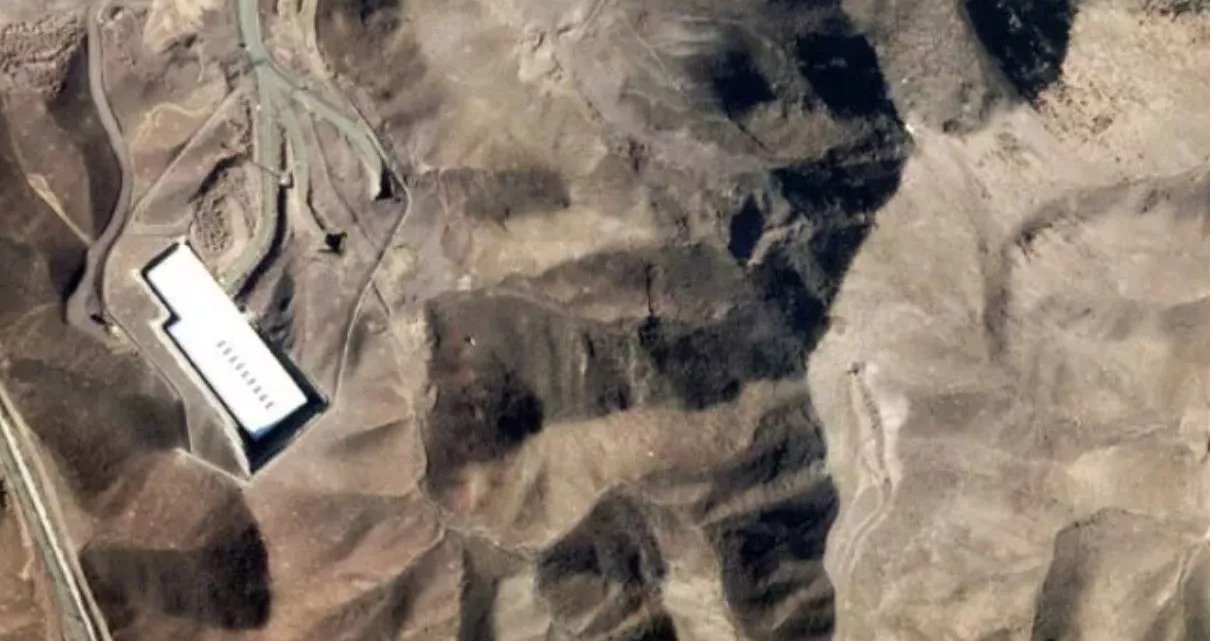
The United States’ recent airstrikes on Iran’s nuclear facilities at Fordow, Natanz, and Isfahan represent a serious escalation in the historically fraught relationship between Washington and Tehran. Executed with cutting-edge B-2 stealth bombers and precision-guided bunker-buster munitions, the operation aimed to dismantle Iran’s uranium enrichment infrastructure, which U.S./Israeli intelligence assessed as perilously close to weapons-grade capability. The Trump administration has declared the strikes as a resounding triumph, claiming the targeted sites were obliterated. Yet, beneath the rhetoric lies a web of uncertainties and risks that could reshape the Middle East and beyond for years to come.
Initial reports indicate significant damage to Iran’s known nuclear sites, dealing a substantial blow to its enrichment program. However, doubts persist about the resilience of undisclosed or deeply fortified facilities, raising questions about the operation’s long-term efficacy. Iran’s Islamic Revolutionary Guard Corps (IRGC) has issued an alarming response, proclaiming that “war begins now,” a declaration that foreshadows retaliation and threatens to ignite a broader regional conflagration. The world now stands at a precarious crossroads, where the choices made by both Tehran and Washington could either pave the way for de-escalation through deft diplomacy or spiral into a cycle of violence with global ramifications.
The Case for Preemption
Proponents of the strikes argue they were an indispensable act of preemption against an existential threat. Iran’s recent strides in uranium enrichment—to levels nearing weapons-grade—coupled with its opaque nuclear activities, had heightened fears of an imminent breakout capability. The operation capitalized on a strategic window opened by Israel’s earlier degradation of Iranian air defenses, enabling U.S. forces to execute a surgically precise strike with minimal civilian casualties. Advocates contend that neutralizing Iran’s nuclear ambitions before they could fully materialize was a bold, necessary step to safeguard regional and global security. By decisively disrupting Tehran’s path to a nuclear weapon, the strikes, they argue, may deter other aspiring proliferators and reinforce U.S. credibility in the face of mounting geopolitical challenges.
The Risks of Recklessness
Critics, however, decry the operation as a reckless gamble with catastrophic potential. The absence of congressional authorization has sparked fierce debate over the strikes’ legality and legitimacy, eroding domestic support and straining alliances. Iran’s vowed retaliation—whether through direct military action, proxy warfare, or asymmetric attacks—raises the specter of a wider conflict engulfing the region. Far from halting Iran’s nuclear ambitions, the strikes may instead galvanize Tehran to pursue clandestine weapons development with renewed urgency, abandoning any pretense of compliance with international agreements. The ripple effects could destabilize global oil markets, particularly if Iran targets the Strait of Hormuz, through which a fifth of the world’s oil flows. Such a disruption would send energy prices soaring, exacerbating economic fragility worldwide.
Moreover, the operation has deepened fissures with European allies, who view the strikes as a fatal blow to the already fragile diplomatic efforts for ceasefire an a new nuclear deal. The attack risks entrenching a dangerous precedent: that military force, rather than diplomacy, is the preferred tool for addressing proliferation concerns. This perception could embolden other states to seek nuclear arsenals as a hedge against external intervention, undermining the global non-proliferation regime. Historical analogies loom large—while the 2003 Iraq invasion illustrates the perils of preventive wars based on flawed intelligence, North Korea’s nuclear success underscores how such capabilities can deter aggression, even at the cost of international isolation.
Iran’s Strategic Dilemma
Iran now faces a momentous decision. A restrained response—such as symbolic missile strikes on uninhabited sites, cyberattacks on U.S. infrastructure, or calibrated proxy actions—could allow Tehran to project strength while avoiding an all-out war it is ill-equipped to sustain. Diplomatic backchannels, potentially mediated by Qatar or Oman, might accompany such a response, signaling a willingness to de-escalate. Conversely, a maximalist retaliation—major missile barrages on U.S. bases, Israeli cities, or Gulf oil facilities, or unleashing Hezbollah’s formidable rocket arsenal—would almost certainly provoke devastating counterstrikes, risking a regional war with catastrophic consequences. Closing the Strait of Hormuz, while tactically tempting, would alienate key partners like China and India, who rely heavily on Gulf energy exports, further isolating Iran on the global stage.
Global Stakes and Historical Lessons
The stakes extend far beyond the Middle East. A significant Iranian attack on Gulf oil infrastructure could trigger an energy crisis, with profound economic fallout. The strikes have already strained U.S.-European relations, complicating efforts to present a united front against Iran’s malign activities. Perhaps most alarmingly, the operation may reinforce a dangerous lesson: that nuclear weapons offer the ultimate insurance against regime change. This could accelerate proliferation pressures in countries like Saudi Arabia, Turkey, or Egypt, unraveling decades of non-proliferation efforts.
History offers cautionary tales: will the strikes deter Iran from pursuing nuclear weapons, or will they instead harden Tehran’s resolve to acquire them as a strategic deterrent?
The Path Ahead
The coming days will be pivotal in determining whether this crisis can be contained or whether it will erupt into a broader conflict. Iran’s response—whether measured or escalatory—will set the tone, but much depends on Washington’s willingness to pair its show of strength with diplomatic off-ramps. The international community, including reluctant allies and neutral mediators, must seize this moment to prevent a slide into chaos. Yet, even if immediate escalation is avoided, the strikes have fundamentally altered the Middle East’s security landscape, heightening tensions in an already volatile region.
The ultimate measure of the operation’s success lies not in the rubble of Iran’s nuclear facilities but in its long-term impact on Tehran’s strategic calculus. Will the strikes compel Iran to abandon its nuclear ambitions, or will they drive it toward more desperate and defiant actions? For now, the world watches with bated breath, as the Middle East navigates one of its most perilous junctures in recent memory. The consequences of this high-stakes gambit—whether a triumph of preemption or the prelude to a wider war—will reverberate for generations.
Read more:

