


In a significant development for the safety of workers in the construction sector, an agreement was signed yesterday to introduce mandatory training on safety and health issues within the construction industry.
The agreement, highlighted by Minister of Labour Yiannis Panayiotou in remarks following the signing of a joint political statement on the matter, underscores the importance of tripartite cooperation in industrial relations.
This cooperation involves collaboration between trade unions, employers, and the government to manage labor issues effectively.
According to the terms of the agreement, training programs for workers in the construction sector will be established, leading to the issuance of a “safe pass” card upon completion.
Initially, participation in the “safe pass” program and training will be voluntary. However, the Minister of Labour indicated that there is a possibility for it to become mandatory for access to construction sites after a two-year voluntary period.
Panayiotou also revealed that the Ministry of Labour and Social Insurance, through the Human Resources Development Authority, has taken necessary steps to provide educational programs for obtaining the “safe pass.” He further stated that a specific provider for the training has been selected through a tender process.
It is anticipated that approximately 15,000 workers out of the estimated 40,000 employed in construction will undergo training initially to obtain the “safe pass.”
The training for obtaining the “safe pass” will last for six hours, with the card being valid for five years. Subsequent retraining of six hours will be required for card renewal.
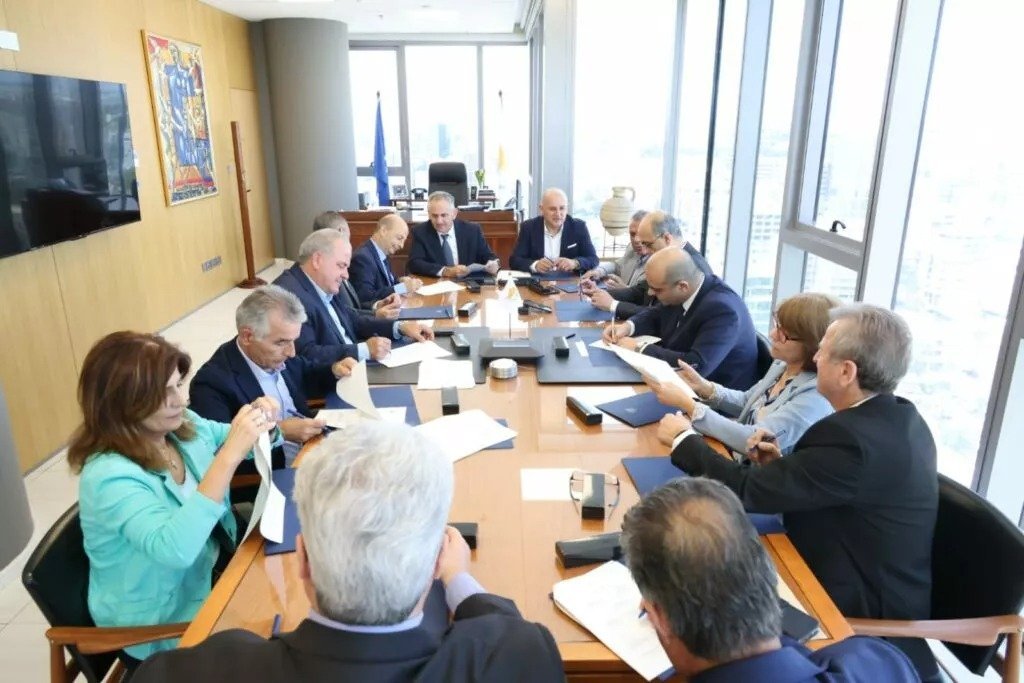
This initiative, along with the training programs for obtaining the “safe pass,” was formalized in a joint political statement signed at the Ministry of Labour, titled “Vision ‘Zero Accidents’ – ‘Safe Pass’ Card – Training of all construction workers on safety and health issues.”
The joint statement and the agreement, which followed negotiations over recent months, were signed by the Minister of Labour and Social Insurance, along with representatives from Employer Organizations, Trade Unions, the Scientific Technical Chamber of Cyprus, the Registration and Control Council of Contractors, and the Human Resources Development Authority.

