


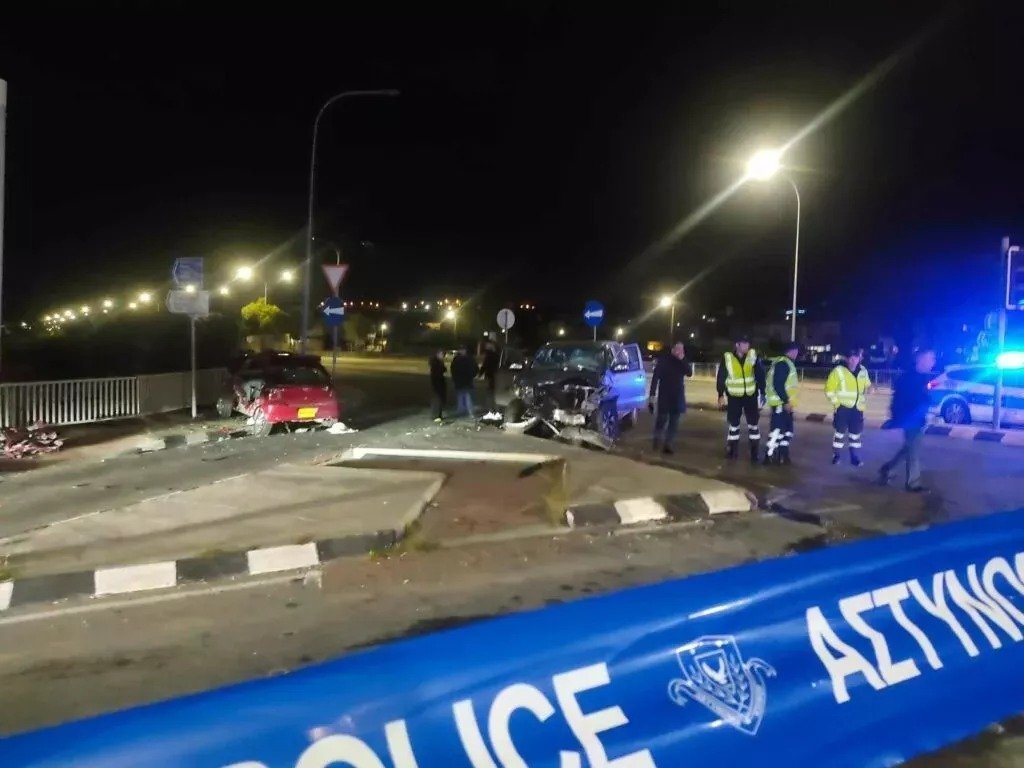
Multiple findings emerged from the reconstruction of the fatal collision that occurred 30 minutes into the new year at an intersection in Limassol, resulting in the death of four individuals.
The reconstruction last night has clarified some aspects contributing to the collision. However, there are still unresolved issues, particularly regarding the visibility between the two drivers and whether the headlights were switched at the time of the impact.
Key points clarified from the reconstruction include:
- The driver was exceeding the speed limit (set at 50 km/h), preliminarily estimated to be approaching 90 km/h.
- The driver appears to have run a red light, despite contradicting claims.
- No signs of braking are visible on the road, prompting an examination into whether the double-cabin vehicle was equipped with an ABS system.
- Simultaneously, investigators are carefully examining whether the two drivers had visual contact with each other, a detail that will be clarified through witness testimonies and surveillance footage from the nearby petrol station.
The calculation of the speed of the double-cabin vehicle heavily relies on video evidence. According to sources, the time the vehicle is visible until the time of collision is timed, and the speed is estimated through scientific calculations.
All the findings from the experts will be documented in a comprehensive report, expected to be submitted, along with witness statements and on-site evidence, to the Law Office on Monday.
The report will aid in determining the charges against the 44-year-old driver, considering whether criminal prosecution is warranted. The outcome of the driver’s alcohol test is also anticipated.
Police Spokesperson Christos Andreou mentioned that the findings from the reconstruction would be presented before the court.
He added that certain conclusions have been drawn, which will be considered in the ongoing investigation, within the criminal case file, to substantiate or at least provide the necessary material to assess the severity of the offences arising from the investigation.
Andreou noted that the process has been kept away from the public eye to safeguard the integrity of the investigation.
Read more:

