


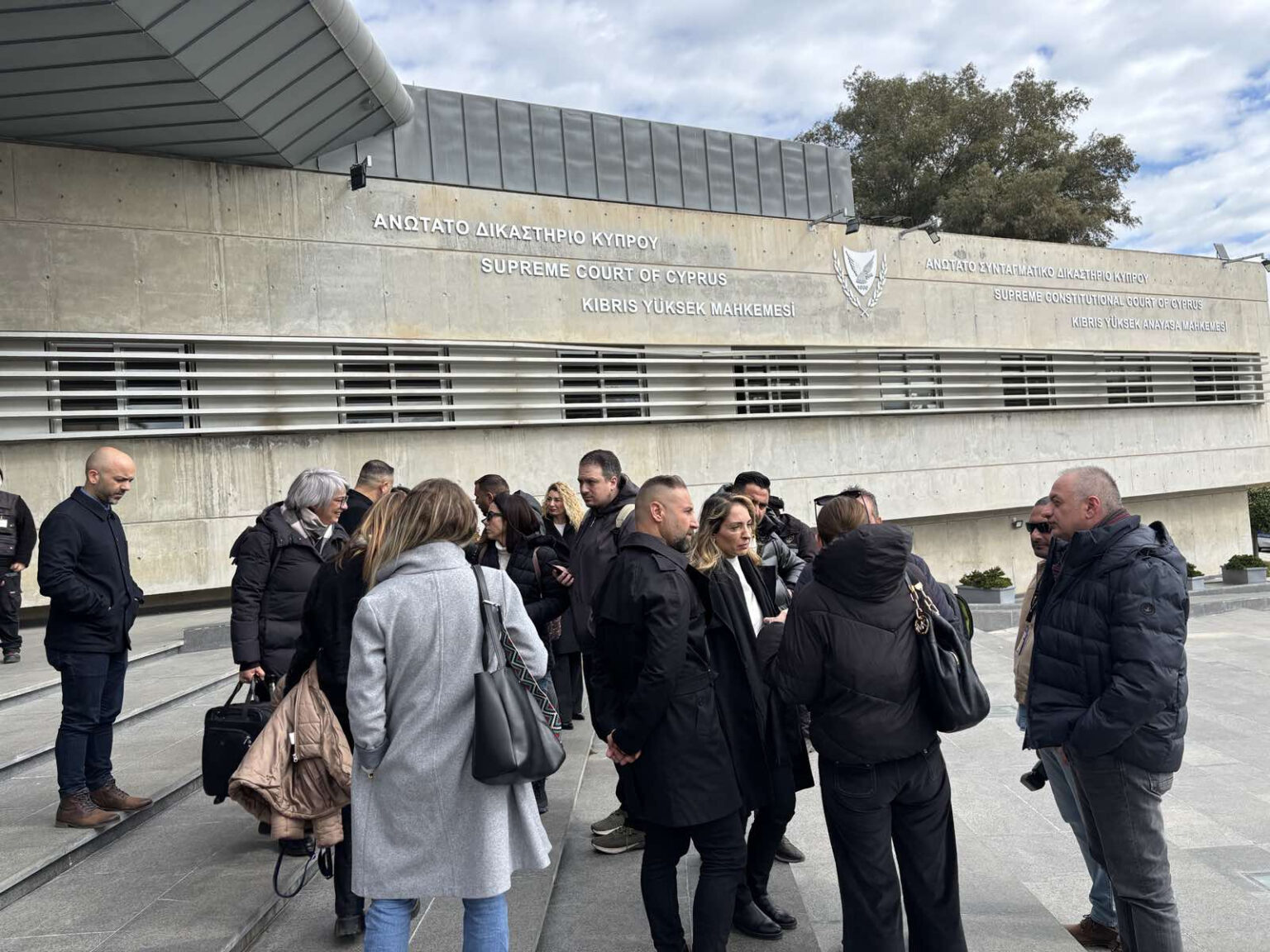
The Supreme Court is deliberating a case that could set a precedent for thousands of children born to mixed Turkish Cypriot marriages, as it considers the citizenship application of 46-year-old Eda Hanser Akor.
Akor, born in 1978 to a Turkish Cypriot mother from Lefka and a Turkish father from Adana, attended yesterday’s hearing where a three-judge panel reserved judgement after hearing arguments from both sides.
The case has drawn significant attention in the occupied north, potentially affecting children from an estimated 17,000 mixed marriages, many of whom currently lack Republic of Cyprus citizenship. Her parents’ marriage took place in the northern part of Cyprus in 1975.
“This decision matters for me and many others,” Akor told reporters through an interpreter outside the courthouse. She pledged to take her case to the European Court of Human Rights if her appeal fails. Her husband Emin added that the issue affects many Turkish Cypriot children who “support a federal solution to the Cyprus problem.”
About 30-40 supporters gathered at Ledra Palace at 8:30 am before marching to the Supreme Court building for the 9:30 am hearing. The demonstration, held in the court’s spacious Room 1, included Turkish Cypriot journalists and citizens supporting Akor’s bid for citizenship.
The legal battle began when Akor filed for “Registration of Adult Person of Cypriot Descent” on July 19, 2004. After several attempts, she was informed in 2015 by the acting director of the Population and Immigration Department that her application had been rejected.
Akor’s lawyer, Nicoletta Charalambidou, argued that current citizenship criteria discriminate against children with one Turkish Cypriot parent and violate Articles 8 and 12 of the European Convention on Human Rights. “The provisions and criteria adopted are discriminatory and violate Article 12 of the European Convention on Human Rights and Article 8, which protects every person’s right to private life. Nationality is part of the right to private life,” Charalambidou told media.
State lawyer Nicoletta Nicolaou, appearing alongside Republic’s lawyer Maria Kyprianou, challenged Akor’s claims. Nicolaou pointed out that Akor waited until 2004 to apply for citizenship, despite being born in 1978, arguing this undermined claims about lack of choice in taking Turkish citizenship.
The Administrative Court had previously rejected Akor’s case in June 2020, with Judge Ariadne Zervou ruling that the law’s general formulation regarding legal or illegal entry and stay in the Republic did not create impermissible discrimination or violate any constitutional provisions.
Read more:

