


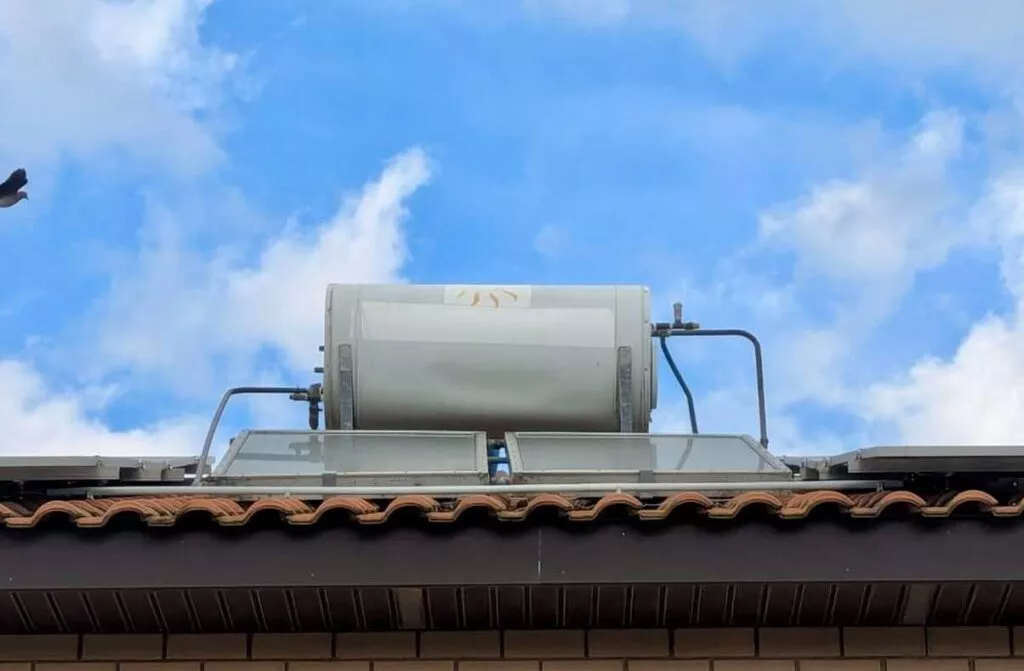
Freezing temperatures across Cyprus have caused damage to solar water heaters, with authorities now launching an assessment programme to provide financial assistance to affected homeowners.
Numerous reports have emerged of cracked glass panels on solar heating systems following recent sub-zero temperatures that swept the island. District administrations have been instructed to immediately begin recording and evaluating damage to residential solar water heaters.
Eliza Vasiliou, vice president of the Scientific Technical Chamber (ETEK), explained that in extremely low temperatures, water freezes and expands inside the panels, causing cracks. “It’s similar to what happens with a beer in a freezer,” Vasiliou told Philenews. “The liquid freezes and the pressure causes the bottle to break.”
The damage assessment will be conducted over the coming days, with a proposal for financial aid to be submitted to the Council of Ministers in collaboration with the Ministry of Energy, Commerce and Industry.
Residents affected by damaged solar heaters are urged to contact their district administration by Friday, 28 February, to report damage and schedule an inspection.
According to Vasiliou, improved material quality has limited the extent of damage. She noted that contrary to popular belief, covering solar panels with blankets is ineffective at preventing freezing.
Instead, Vasiliou suggested that constant water flow helps reduce freezing risk, though acknowledged water conservation concerns make leaving taps running impractical. She added that systems with water pressure pumps are less susceptible to freezing damage than those relying on gravity flow.
When questioned about reports of damaged photovoltaic panels, Vasiliou clarified that while these systems contain crystals, they should not freeze at temperatures recorded in Cyprus, noting that such systems operate without issue in much colder countries.
The Ministry of Interior confirmed its services remain on standby to provide all possible assistance to protect citizens, in cooperation with other relevant ministries and departments.
Read more:

