


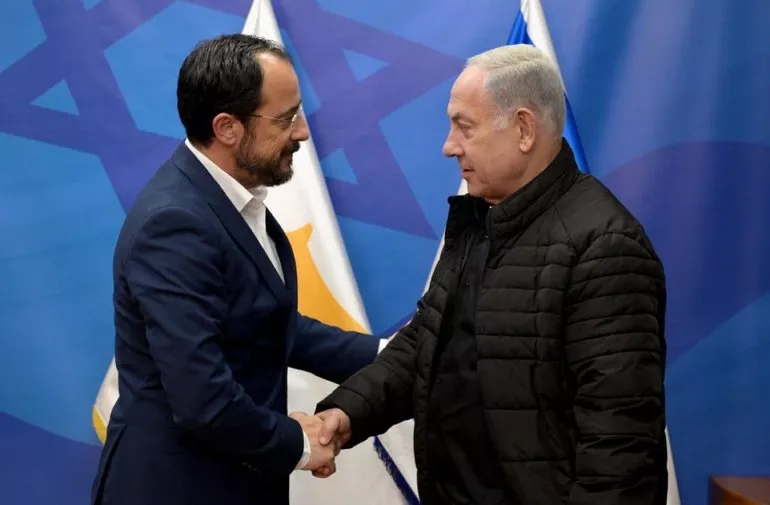
President Christodoulides will travel to Jerusalem and Ramallah on Sunday for meetings with Israeli and Palestinian leaders during a one-day working visit focused on regional stability and humanitarian concerns, the presidency announced.
The trip comes as Cyprus prepares to assume the rotating presidency of the Council of the European Union and will address bilateral issues as well as current developments in the region, according to a statement from the Cypriot presidency.
Christodoulides will start his May 4 visit in Jerusalem, where he will meet with families of hostages captured by Hamas during the October 7, 2023 attack.
The Cypriot president will then hold talks with Israeli President Isaac Herzog, followed by expanded discussions between their delegations. Later, he will meet privately with Israeli Prime Minister Benjamin Netanyahu before heading wider bilateral discussions.
Christodoulides will travel to Ramallah in the afternoon for a private meeting with Palestinian President Mahmoud Abbas, followed by expanded talks between their delegations and a working dinner hosted by Abbas.
Before returning to Cyprus late Sunday, the president will meet with UNICEF officials based in Ramallah.
The Cypriot delegation will include Foreign Minister Konstantinos Kombos, Energy Minister George Papanastasiou, Deputy Minister for European Affairs Marilena Raouna, National Security Advisor Tasos Tzionis, and other officials.
Cypriots protesting Israel visit
Meanwhile, opposition parties and activist groups have called for a demonstration outside the Presidential Palace on Friday, May 2, at 7 p.m., to protest Christodoulides’s visit to Israel amidst the war in Gaza.
The conflict began after Hamas’s attack on Israel on October 7, 2023, which Israeli authorities say killed 1,200 people, mostly civilians, and resulted in 250 being taken captive.
Israel’s subsequent military campaign has killed at least 50,000 people in Gaza, according to the local health ministry, with most casualties being civilians.
Most of Gaza’s 2.1 million population has been displaced, many multiple times. An estimated 70% of buildings have been damaged or destroyed, with healthcare, water and sanitation systems collapsing amid shortages of food, fuel, medicine and shelter.
Experts, governments, United Nations agencies, and non-governmental organisations have accused Israel of carrying out genocide against the Palestinian people.
Read more:

