


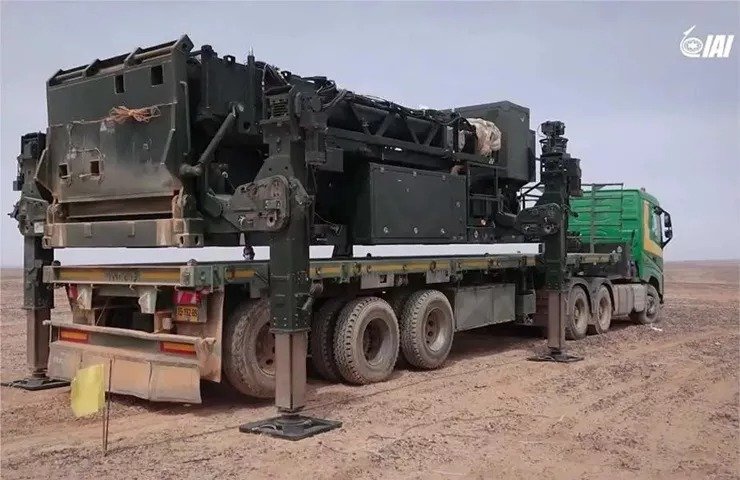
Defence Minister Vasilis Palmas said the Israeli Barak MX air defence system will not be abandoned despite Turkish reactions, drawing comparisons with the 1997-98 S-300 missile crisis.
Turkish reactions to Cyprus’s acquisition of the Barak MX anti-aircraft system from Israel do not differ in intensity from those recorded during the 1997-98 period surrounding the S-300s, with Turkish television media continuously showing the missiles in action, creating a virtual reality and the impression that the targets being hit are Turkish.
For the government of Nikos Christodoulides and current Defence Ministry leadership, the events of 1998 may constitute a historical-political lesson, as in 2025 that path was not followed.
Minister calls Turkish reactions hypocritical over defence system
Asked whether Cyprus would experience abandonment of the Barak MX system again due to Turkish reactions and pressure from third parties, Palmas was sufficiently clear, noting the different conditions between the two cases.
He noted that the difference with the S-300 period was that it was a pre-election period, heavily publicised, with competition between candidates over who would bring the S-300s and who would not.
“The result was ultimately unbearable pressure on the Republic of Cyprus and throwing away 300 million pounds, which was the amount the S-300s cost then, which were installed in Crete,” he said.
Cyprus chose silence over publicity in Barak MX acquisition
“Today we chose the path of silence, low tones, and ultimately because we chose this method and this path, I can declare to you with full responsibility that we have the capabilities to defend the Republic of Cyprus anti-aircraft and anti-missile, if and when this is needed,” Palmas said.
Everyone, he noted, “hopes that there will not be such crises and such situations in the Republic of Cyprus or in our territory”.
He also emphasised that as long as the occupation and presence of Turkish troops continues, Cyprus must take its measures to ensure that the struggle for a Cyprus solution “is worth the effort”.
EU SAFE programme faces pressure over Turkish participation
Referring to Turkish reactions to the installation of the Israeli anti-aircraft system in Cyprus, Palmas characterised them as hypocritical.
“I consider them absolutely hypocritical in the sense that for 51 years, 40,000 Turkish troops have been in occupied Cyprus. Cyprus is a victim of invasion. And the self-evident right to defend its territorial integrity and sovereignty through its deterrent power, through its defensive armour, is an obligation we have towards the Cypriot people and towards ourselves,” he said.
On the European defence programme SAFE, the Cypriot Defence Minister moved along two axes, recording realities regarding the EU’s own position and realism concerning the “gaps” and relations between Turkey and NATO member states.
Despite clear positions from European Council President Antonio Costa, Turkey is a NATO member state, he said. Most European Union countries are also NATO members and have direct relations and cooperation with Turkey on various issues.
He said they expected such pressures from NATO to give Turkey the opportunity through SAFE to strengthen its defence and armaments programmes.
Palmas emphasised the clear position of the Republic of Cyprus expressed “with one mouth, one voice” with Greek Minister Nikos Dendias over at least the past year in all EU Defence Councils.
They emphasised that they are not against third countries of the international community being able to participate through other European states in these programmes, provided they do not pose a threat to Union member states.
In this case, Turkey is a state established in Cyprus as an invader for 51 years and simultaneously threatens Greece daily in the Aegean and Greek islands, he said.
Regarding possible participation of companies with Turkish interests operating within the EU, the Minister clarified that if such an issue arises and such an application is submitted, it must be examined by the European Commission and there must be unanimity to accept such a request.
Read more:

