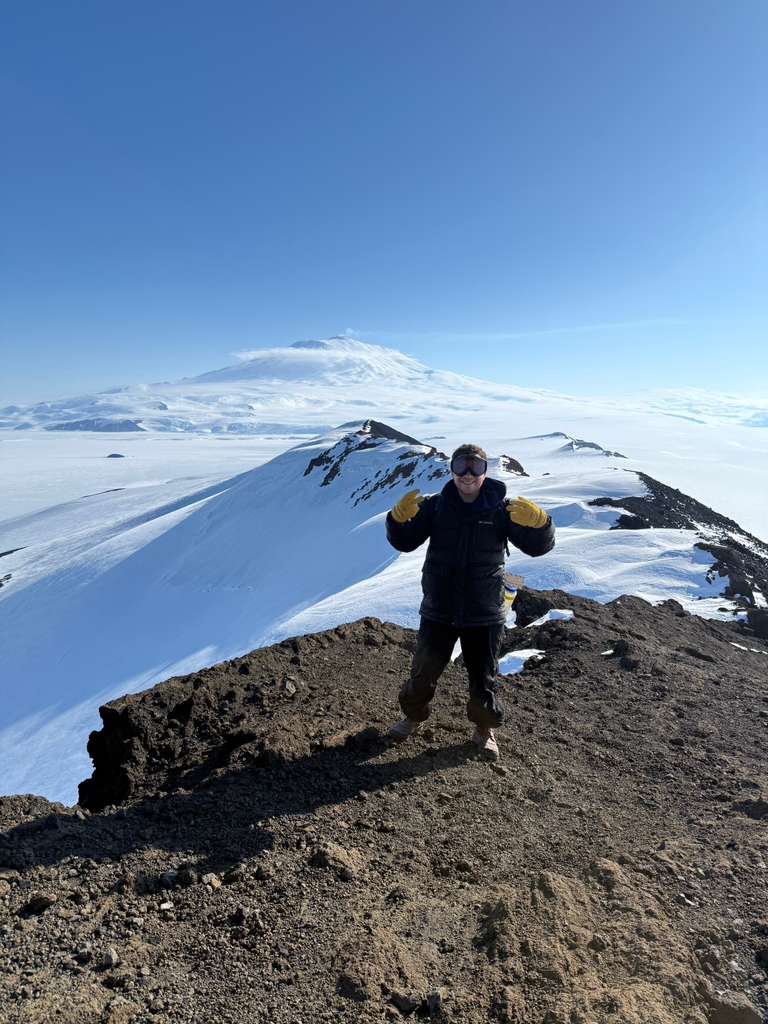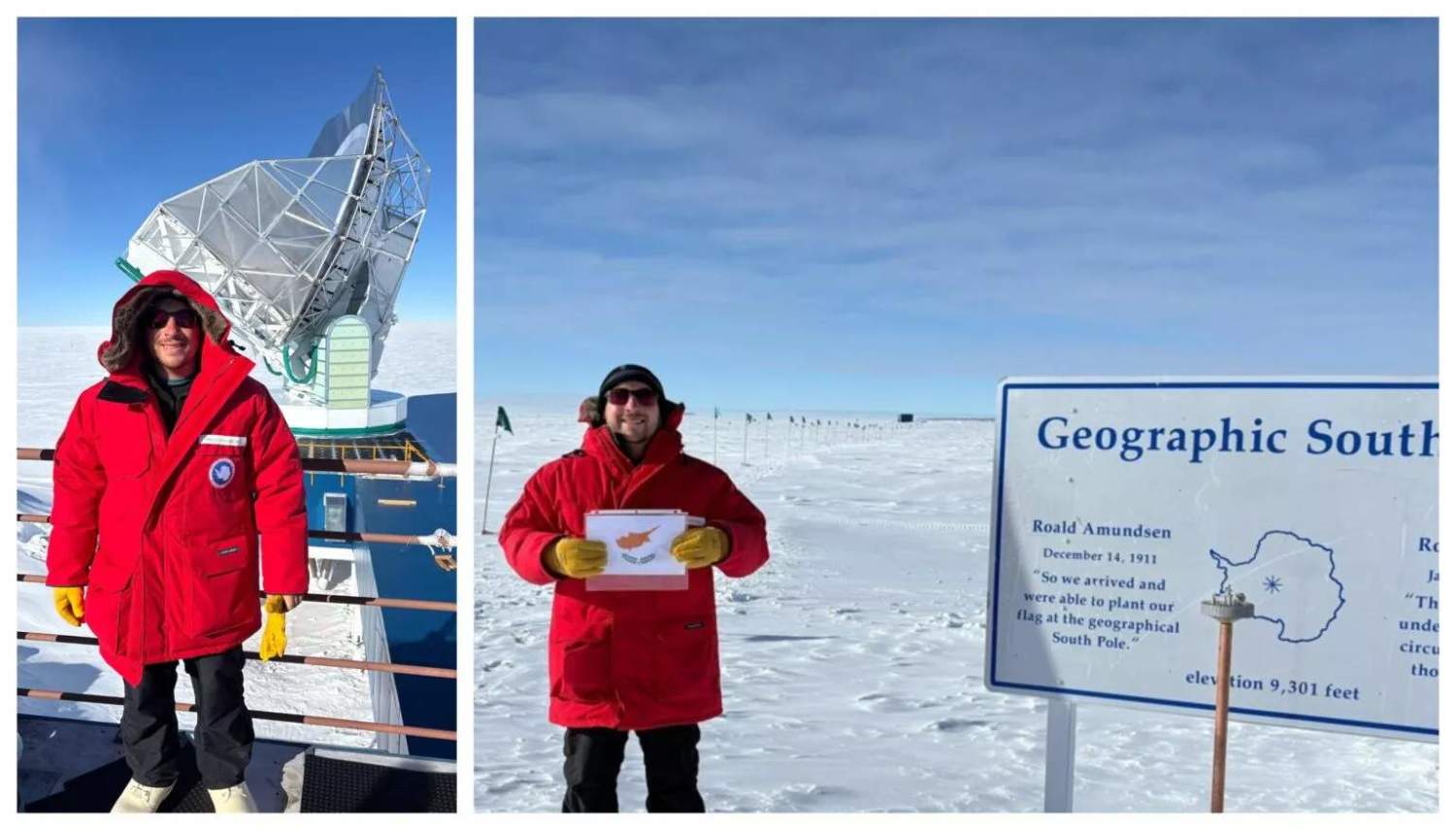
Vasilis Mavratsas, a Cypriot doctor specialising in General Pathology and Space Medicine, spent two months in the Antarctic and South Pole, enduring temperatures as low as -30°C to provide medical care in extreme conditions.
His experience included working with minimal equipment, living on food frozen for up to 20 years, and encountering penguins up close—an adventure that also brought him closer to his childhood dream of becoming an astronaut.
Mavratsas, 32, recently returned to his base in Texas and talked to Phileleftheros about his experience. Born in Larnaca and raised in Nicosia, he says that his fascination with space began early, inspired by his mother’s stories of the first man on the Moon. At just four years old, Mavratsas even told a nurse before surgery that he wanted to be an astronaut: “I was in the operating room at age four, about to have my tonsils removed. Just before the anaesthesia kicked in, the nurse asked me what I wanted to be when I grew up, and I said, ‘An astronaut.’”
After moving to the United States to study in Texas, where his mother’s family lives, Mavratsas was encouraged by his mother to pursue his dream. “My mother is Greek-American, and my father was an Armenian Cypriot refugee from Famagusta,” he explained. He first studied Chemistry at Rice University, before pursuing medicine at The University of Texas Medical Branch (UTMB). Now in his fourth year of residency, Mavratsas has completed two years in General Pathology and is set to finish his Space Medicine specialisation in five months. UTMB, he adds, is located near NASA’s headquarters, offering practical opportunities at NASA, SpaceX, and Blue Origin.
“As part of my training, I provided medical care in the most challenging environments, including Antarctica and the South Pole,” he says, reflecting on the nature of his work in one of the most extreme of circumstance.
Medicine in polar conditions
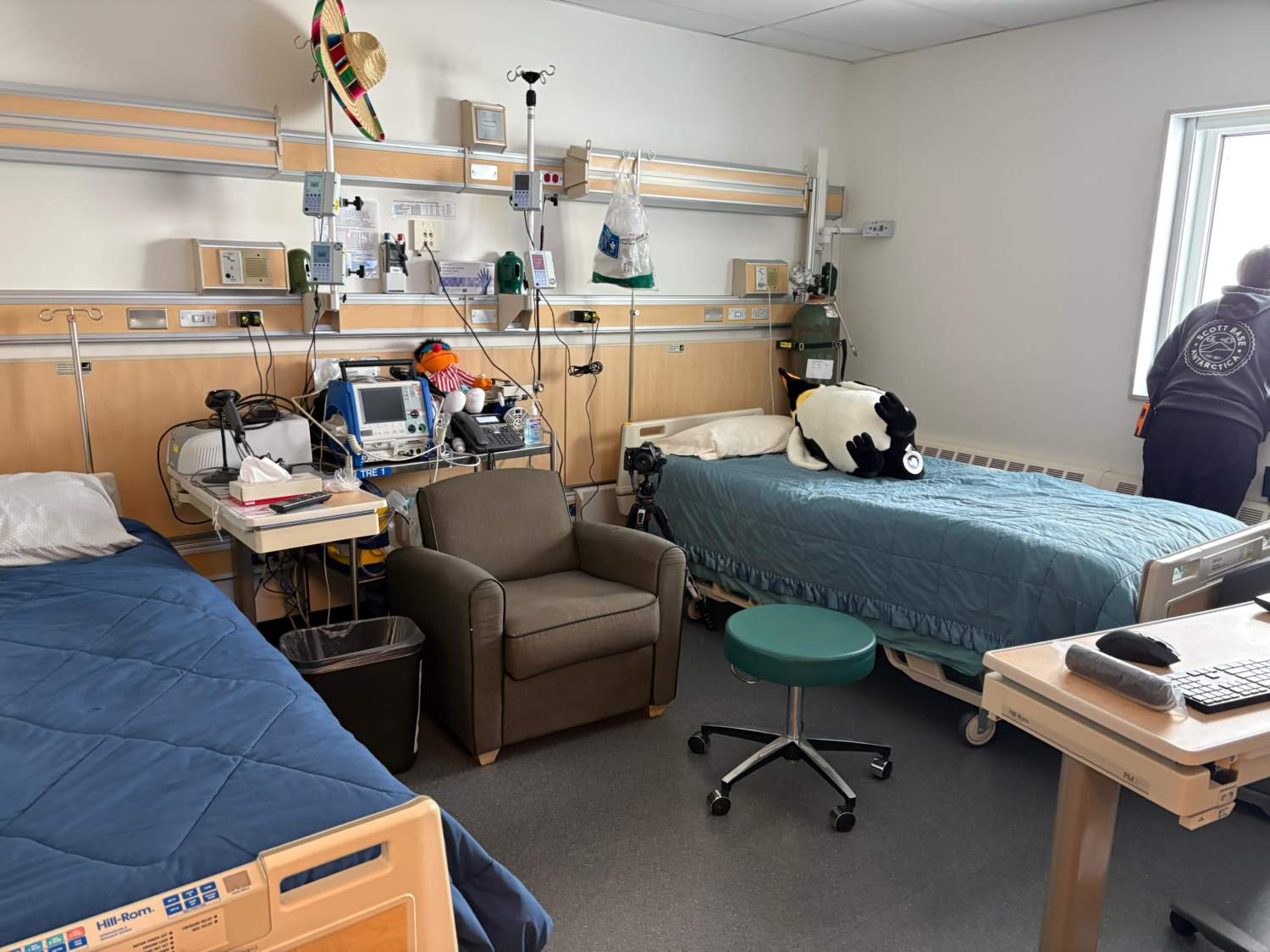
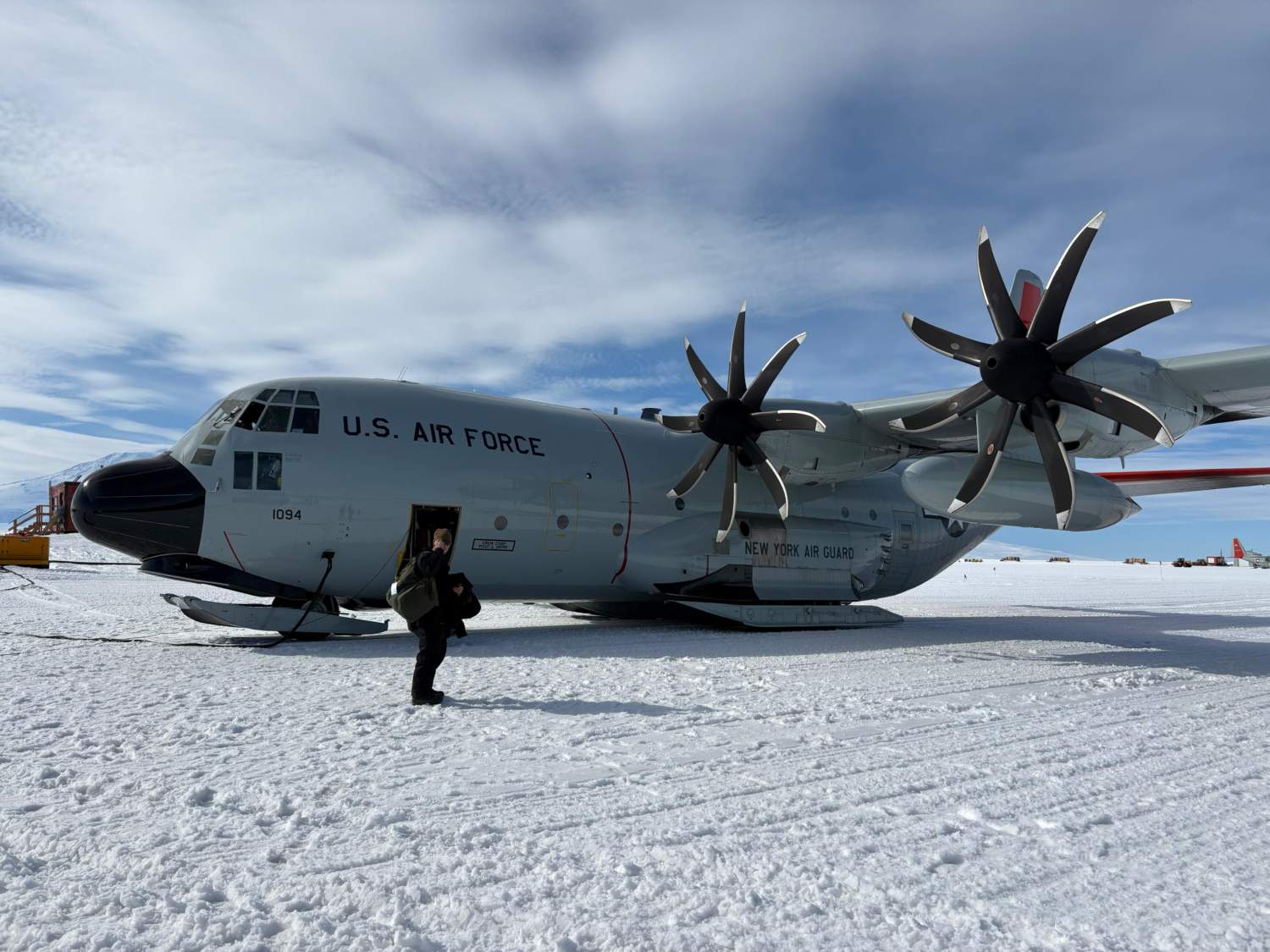
The US Antarctic programme currently operates three permanent research stations, and Mavratsas worked at both McMurdo and South Pole Stations. “Our visit took place during the summer, so we had 24-hour daylight. We stayed in dorms with four or five others and had many shared spaces. While the food was varied, most of it was frozen. At the South Pole, some of the food was 15 or even 20 years old,” he recalls.
“What I missed the most was fresh salads and fruit,” Mavratsas says. “And I found it surprising that there were no insects.”
With proper equipment and thick clothing, Mavratsas and his colleagues could venture outside. “In just 15 minutes, you could feel the moisture on your nose turning to ice,” he adds. “But it was worth it—the landscape was breathtaking, and we saw seals and penguins come right up to us.”
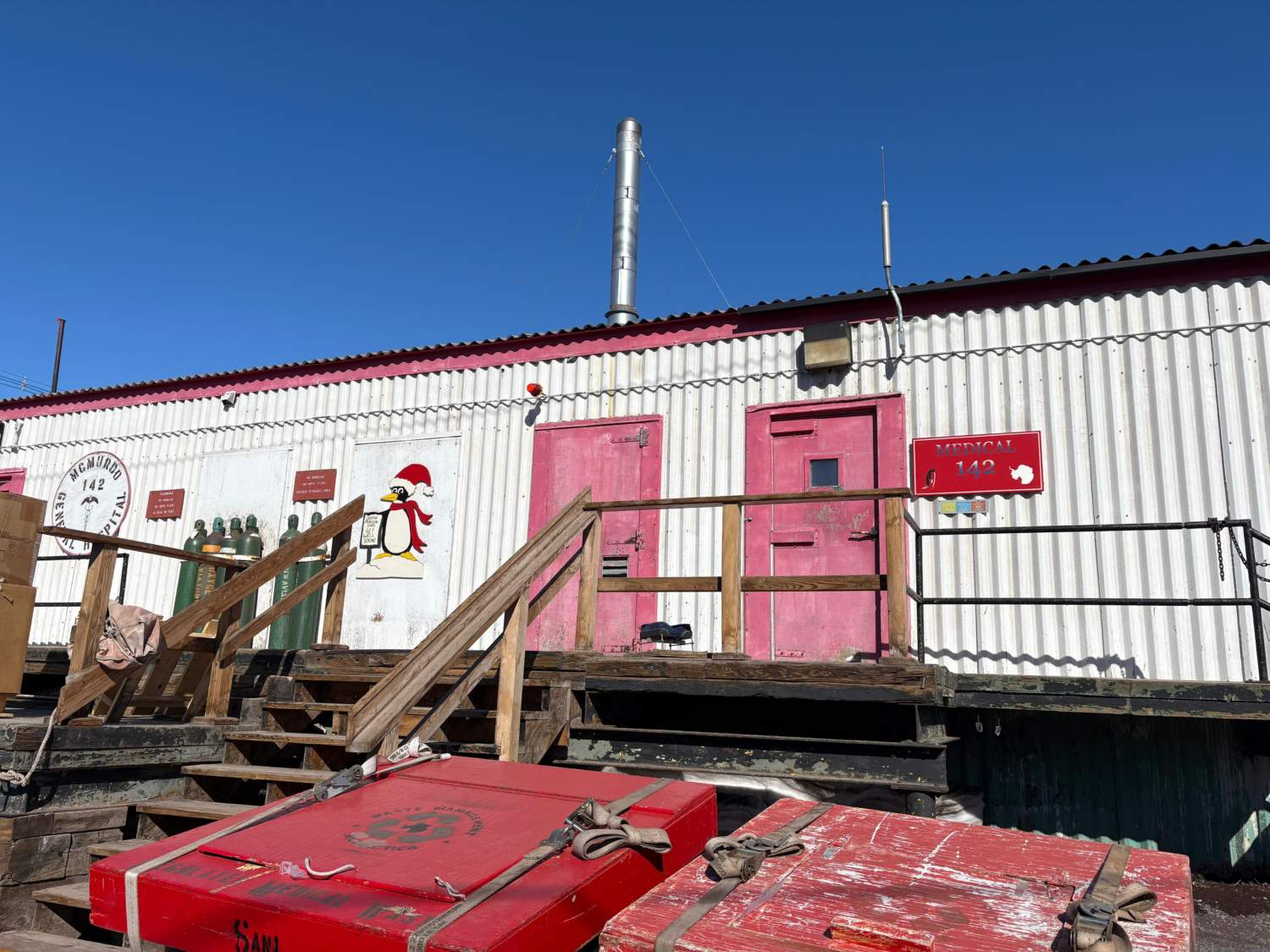
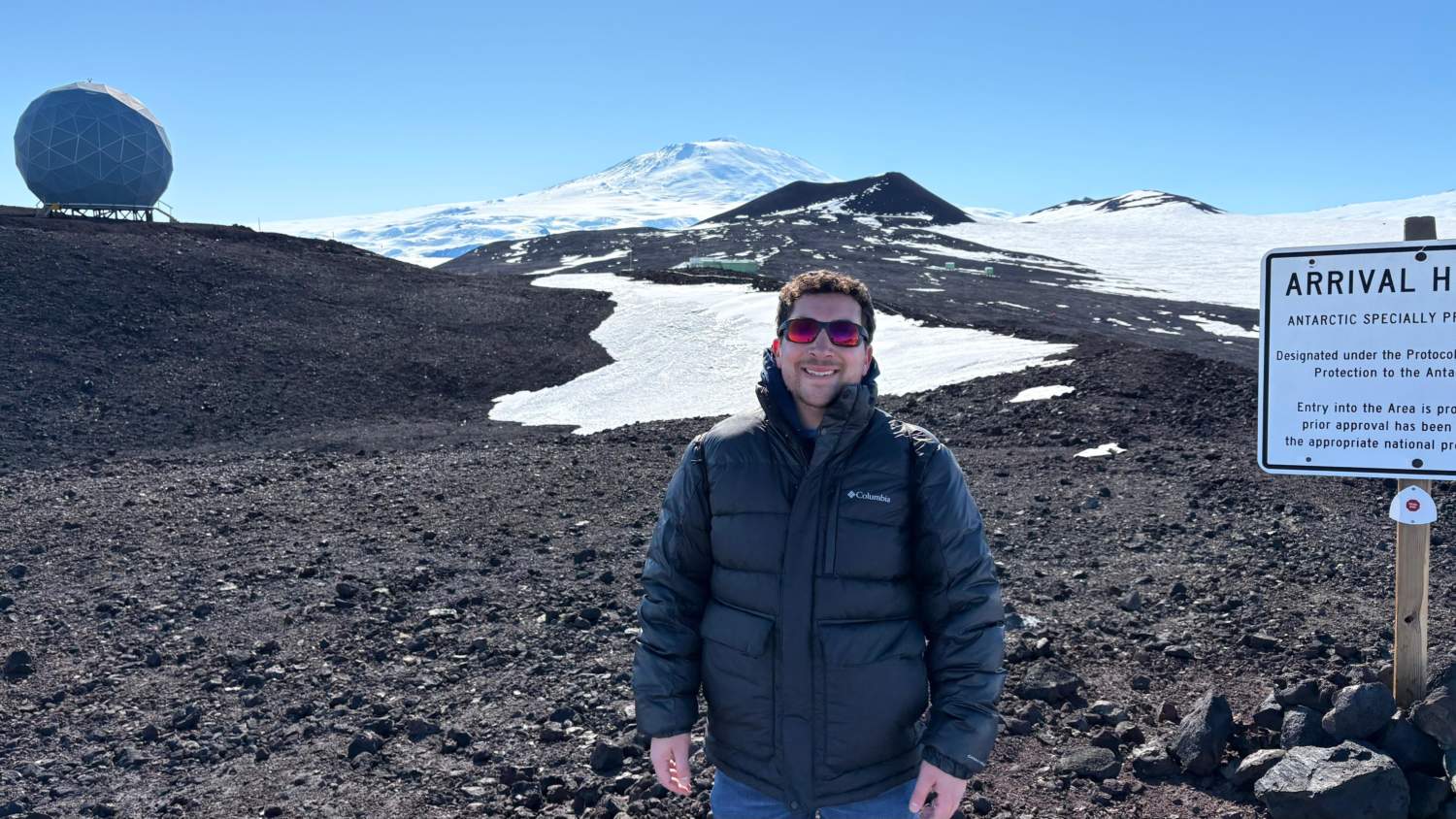
Mavratsas spent most of his time at McMurdo Station, where the medical facilities provided basic care. The station, home to about 1,000 people in the summer, operates like a small town with scientists, researchers, and other staff. “The temperatures there ranged from -5 to 3°C during the summer months,” he says. He then moved to the South Pole Station, which is smaller, with more limited facilities and harsher conditions. “The temperature here ranged from -20 to -30°C, and in winter, it can drop to -80°C,” he adds.
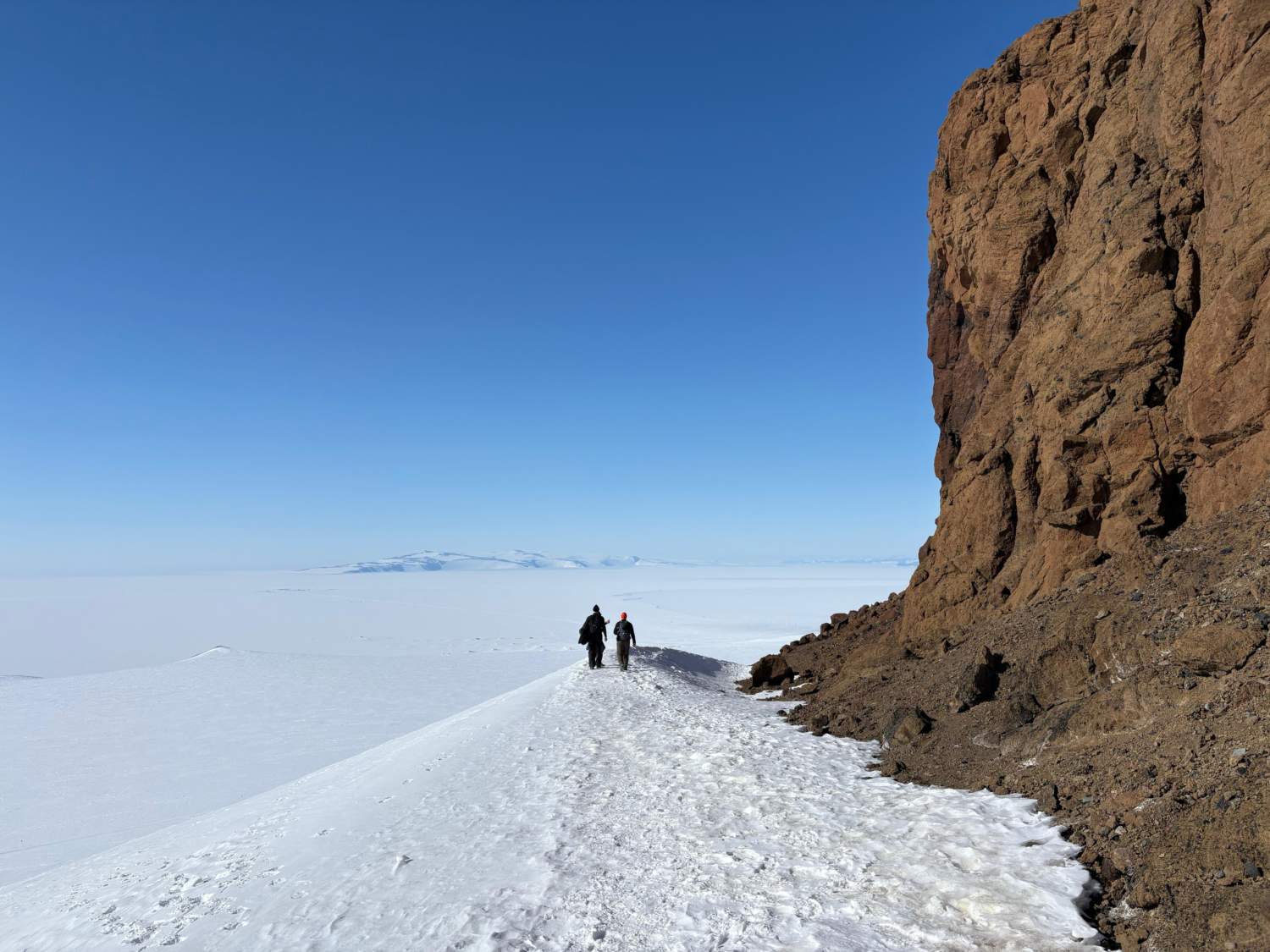
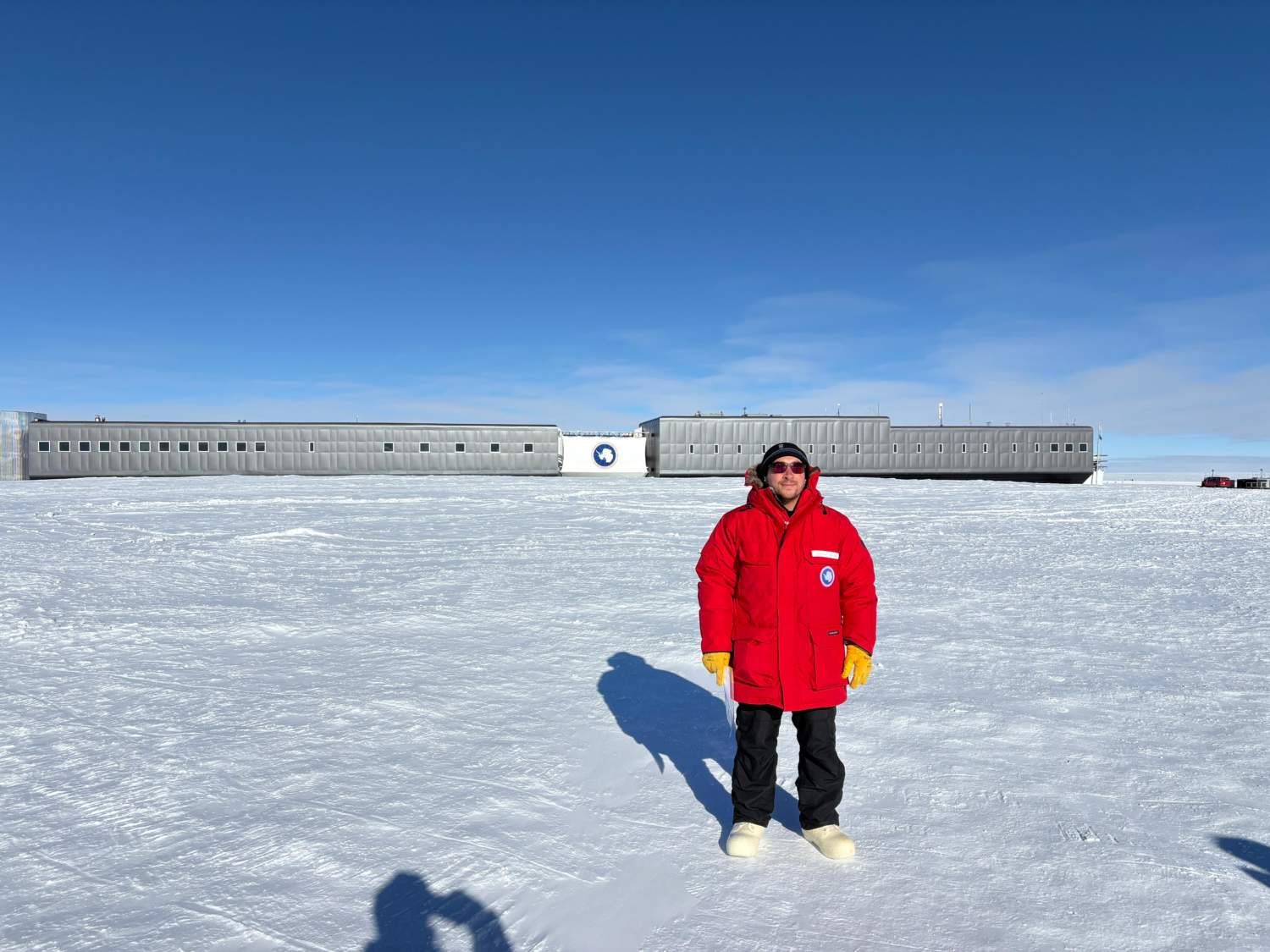
At the South Pole, Mavratsas says he was amazed by the vast expanse of snow and ice, a place he describes as the “End of the World.” “It’s a flat, snow-covered desert. I visited an area called ‘The End of the World.’ It’s hard to describe—it’s just white as far as the eye can see.”
From the South Pole to space
The challenges space travel presents to the human body, particularly in relation to gravity, are profound, Mavratsas explains. Space doctors play a key role at every stage of a mission, starting with assessing astronauts’ health to ensure they meet the medical standards for space travel. “Today, missions on the International Space Station last between 6 to 12 months. During these missions, space doctors conduct tele-sessions to monitor astronauts’ health remotely,” he says.
In space, astronauts face several physical issues, such as Space Motion Sickness (SMS), disorientation, and other complications. “Because of the lack of gravity, bodily fluids shift upwards, causing congestion and swelling. Bones and muscles weaken, which is why astronauts must exercise for two hours every day,” Mavratsas explains.
Medical care continues even after astronauts return to Earth, as their bodies must readjust. “Most astronauts return with low blood pressure and sometimes faint,” Mavratsas adds.
He also dispels the myths about astronauts’ diets, saying, “They have a varied menu aboard the Space Station, though things will change when we go to the Moon and Mars.”