


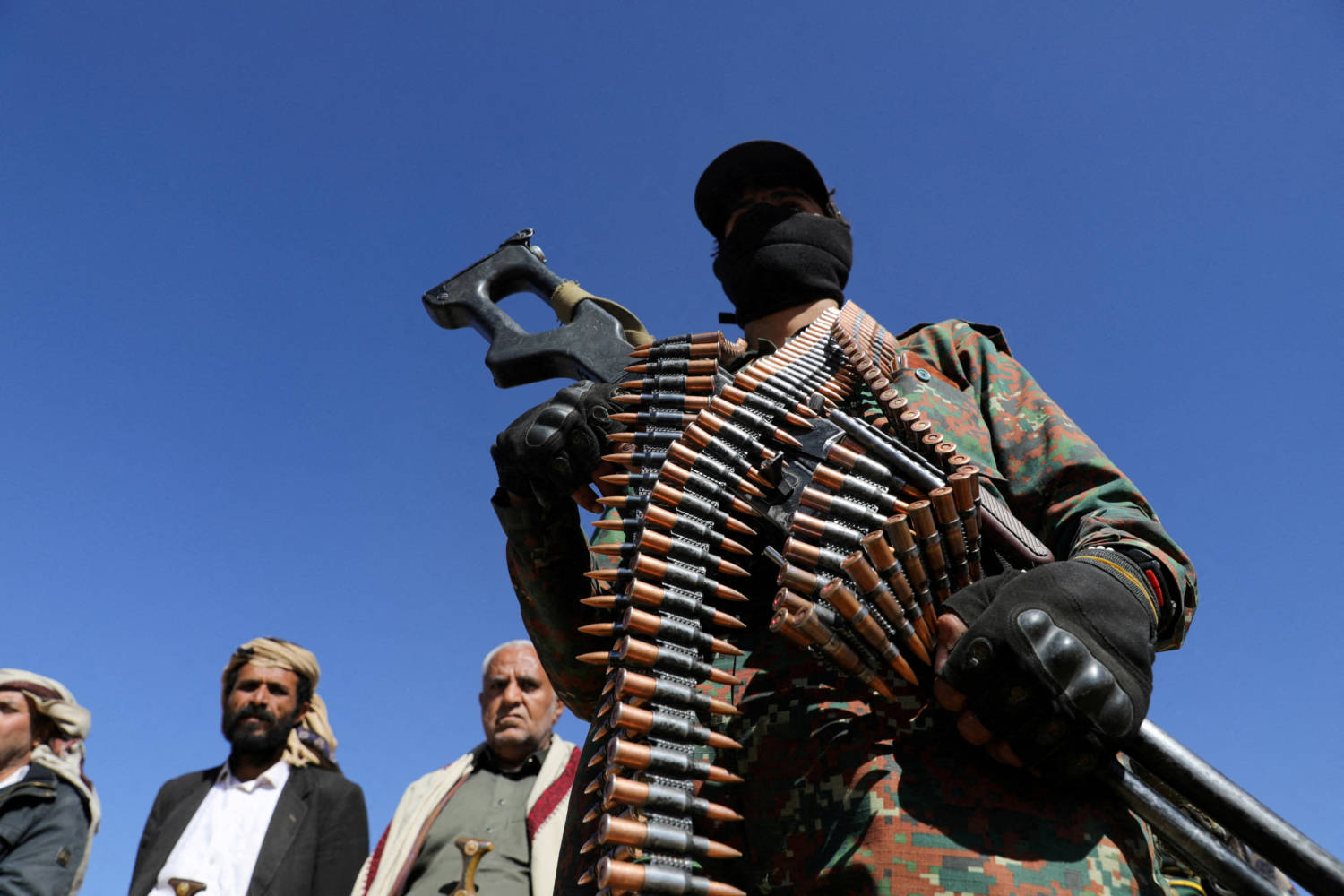
Yemeni government forces have withdrawn from an area overlooking the strategic Bab el-Mandeb Strait, leaving the Iran-backed Houthis in control of a key maritime chokepoint and raising fresh concerns about global shipping and oil supplies.
The withdrawal, announced on Sunday by southern forces loyal to Yemen’s internationally recognised, Saudi-backed government, gives the Houthis greater leverage over one of the world’s busiest shipping routes.
The development comes as Iran continues to disrupt maritime traffic through the Strait of Hormuz, on the opposite side of the Arabian Peninsula.
Pressure on both waterways threatens to further restrict Gulf oil producers’ access to their main export routes.
The Bab el-Mandeb Strait connects the Red Sea to the Gulf of Aden and is a vital passage for goods and commodities travelling between Asia and Europe through Egypt’s Suez Canal.
Government forces retreat towards Aden
Southern Yemeni forces said they were redeploying towards Aden, the seat of the internationally recognised government, as Houthi fighters increased pressure on government-held territory in the south.
The Houthis already control much of northern Yemen, including the capital Sanaa and the country’s most populous areas.
“The Southern Armed Forces announce the implementation of a redeployment operation for its forces from Dhubab Airport and the Bab el-Mandeb area, west of Taiz Governorate,” the southern forces said in a statement.
“This step is taken based on the priority of securing the capital, Aden, and the neighbouring governorates, as well as strengthening the front lines and addressing existing threats.”
Government forces launched a military campaign in October to recapture strategic coastal areas after the Houthis advanced southwards in September, seeking control of Yemen’s entire Red Sea coastline.
The rapid offensive brought Houthi forces within reach of Bab el-Mandeb.
Fighting intensifies amid wider Iran war
The renewed fighting has shattered a UN-brokered truce established in 2022 and opened another volatile front in the wider US-Israeli war against Iran.
The Houthis have continued attacking Saudi Arabia, a key US ally and the world’s largest crude oil exporter.
Saudi Arabia had experienced relative calm during the early months of the conflict with Iran, now in its ninth month.
However, Houthi attacks on Saudi ports, airports and Saudi Aramco facilities have disrupted flights and oil supplies.
Targets have included Yanbu, the kingdom’s major Red Sea oil export hub.
Saudi Arabia has responded with strikes against Houthi positions in Yemen.
The country has been devastated by civil war since 2014, when the Houthis forced the internationally recognised government from Sanaa and pushed it southwards.
The conflict has left Yemen facing one of the world’s worst humanitarian crises.
Humanitarian crisis deepens in Taiz
Fighting is intensifying around the western region of Taiz, where humanitarian conditions continue to deteriorate.
The city is hosting approximately half of the 300,000 people displaced across Yemen by the latest fighting.
Taiz remains under siege, with aid supplies unable to enter and civilians unable to leave.
(Reuters)

