


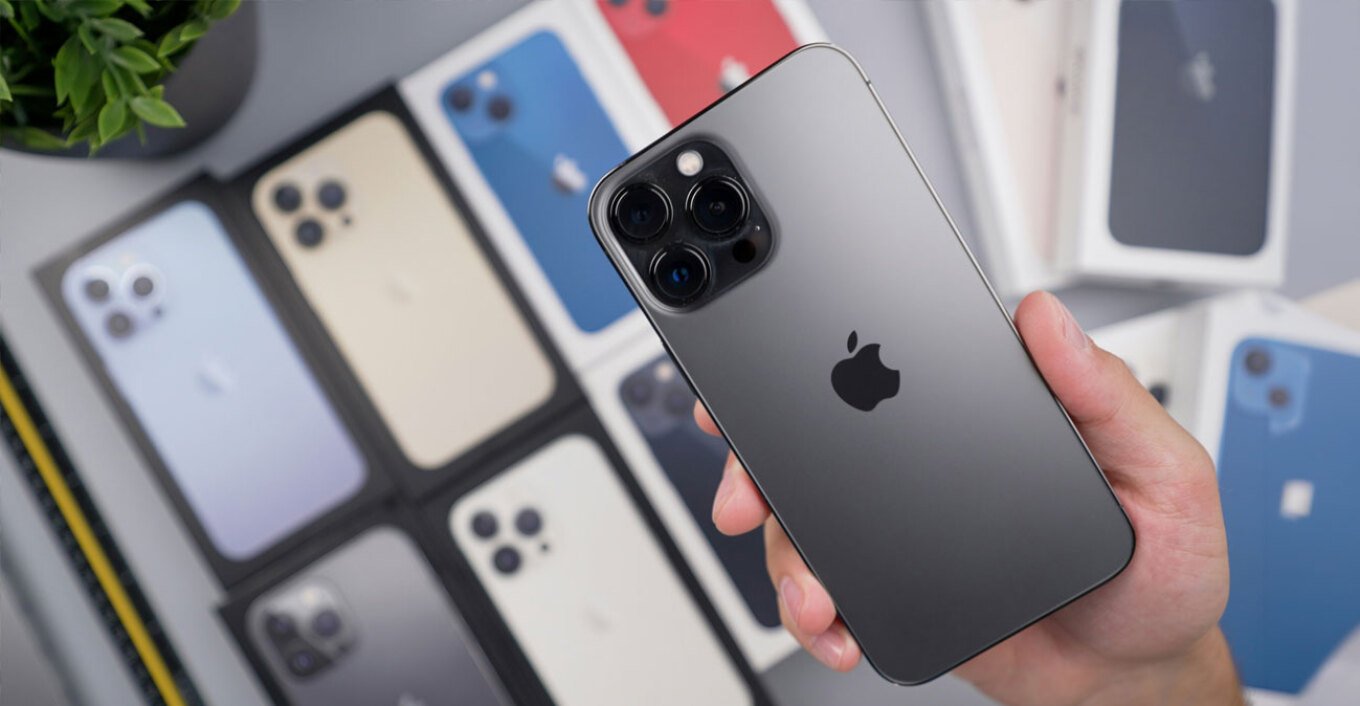
European prosecutors on October 13 ordered the freezing of assets in Greece belonging to five people, in a case in which four Cypriot businessmen are suspected of leading a network that allegedly used iPhone trading to avoid paying more than 115 million euros in VAT in Sweden and Germany.
The order was signed by European Delegated Prosecutor Charikleia Thanou of the European Public Prosecutor’s Office (EPPO).
According to the EPPO, the VAT allegedly not paid totals 115,529,455 euros. Of this, 80,860,171 euros relates to 33 cases of transactions in Sweden in 2019 and 2020, and 34,669,284 euros to VAT allegedly evaded in Germany. European judicial authorities consider that there are serious indications of organised and coordinated action aimed at illegally appropriating VAT.
The alleged roles
According to German judicial authorities, the network was headed by four Cypriots operating from offices in Cyprus. The case file refers to them as the ‘Cyprus Boys’ and identifies them by the nicknames ‘Andy’, ‘Chris’, ‘Blondie’ and ‘Little George’. Investigators attribute the central role in planning the alleged fraud to ‘Andy’, who allegedly created the invoicing mechanism, organised the phone purchases and controlled the financial platform through which the money moved.
The order describes ‘Chris’ as Andy’s ‘right hand’ and alleges that he was actively involved in distributing money that investigators say came from the illegal activity. ‘Blondie’, also known as ‘Tall George’, is described in the case file as the group’s ‘banker’, because he allegedly created and controlled the payment platforms P-Exec and Rivalz.
‘Little George’, who is also known by other nicknames, previously worked at KPMG and was responsible for analysing and monitoring accounts, remittances and financial statements, according to the prosecutorial document. He and ‘Chris’ were allegedly the beneficial owners of P-Exec Limited and played a key role in managing and distributing the money.
The alleged scheme
According to the EPPO order, those involved set up an iPhone trading mechanism to avoid paying Swedish VAT, which is charged at a standard rate of 25 per cent, and to share the proceeds. To conceal the fraud, they allegedly created a chain of invoices that included transactions for Voice-over-IP telephone services and gift vouchers. Investigators say these services and vouchers were not genuinely traded but were used to disguise how the network really worked.
According to the case file, a Berlin-based German company acted as an intermediary cover company, the iPhones were moved through other German companies, two companies based in Albania acted as intermediaries, and seven companies appear in the Swedish part of the scheme. Investigators link these transactions to the 33 cases of unpaid Swedish VAT.
The four men also allegedly secured the funding needed to buy large quantities of phones, channelling millions of euros through companies they controlled, according to the EPPO. In about two and a half months, from late July to mid-October 2019, 7.25 million euros was made available to buy mobile phones, and further funding worth millions of euros went to companies involved in the transactions. The first iPhone deliveries began in autumn 2019, according to the case file.
The money trail
According to the EPPO, the money was first collected in the bank accounts of companies in Sweden and then transferred to Cyprus through companies and payment platforms allegedly controlled by the four men. Investigators say it was then gradually moved into the legitimate economy, through repeated transfers between accounts, cash withdrawals, investments and asset purchases, to make it appear to come from normal business activity.
The four are therefore also being investigated for money laundering and for participation in a criminal organisation.
The asset freeze
On March 12, 2026, a German court issued four decisions providing for the seizure of assets belonging to the four alleged leaders, with reference to the sum of 80,860,171 euros, according to the Greek prosecutorial order.
The October 13 order, No. 199/2026, covers a 78 square metre third-floor flat on Vasileos Georgiou B Street in Glyfada, together with a four square metre storeroom in the same building. It also covers two cars belonging to ‘Andy’, a DS 3 Crossback and an Audi A3 45 TFSIe. The freeze extends to bank accounts, investment products, safe-deposit boxes, and movable and immovable property of the five people named in the order, where these are in Greece and fall within its scope.
With information from protothema.gr

