


The Environmental Authority has rejected plans to reopen a restaurant at Lady’s Mile, expand a tourist zone at Avdimou and create a livestock zone at Ormideia. At the same time, it effectively approved a development framework for the British bases at Akrotiri and Dhekelia, subject to strict conditions.
Its opinion comes as the policy statement for the bases is being finalised. It now serves as the roadmap for the Sovereign Base Areas Administration and the Town Planning Department.
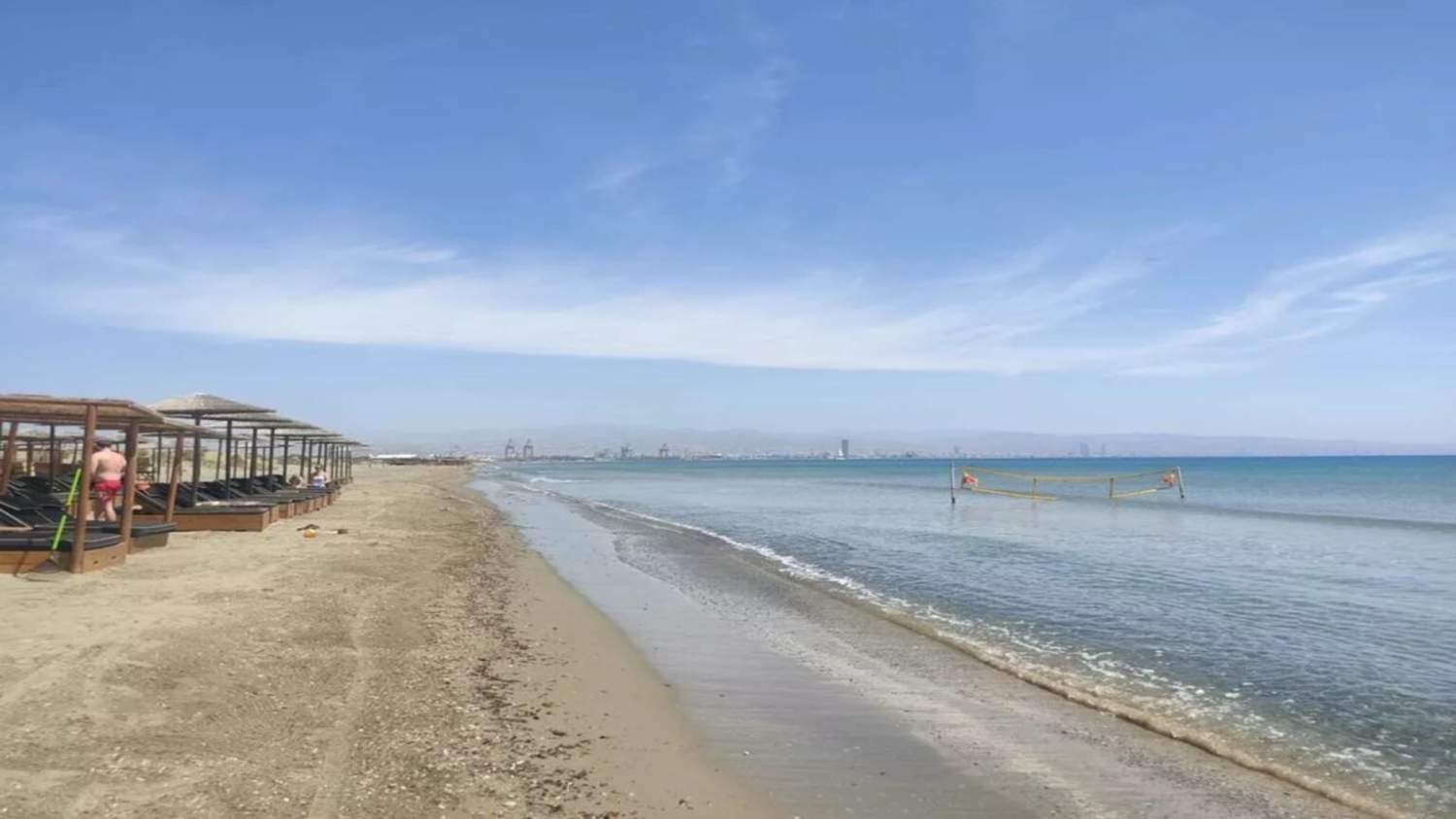
The restaurant, on the coast at Lady’s Mile between ‘Oceanica’ and ‘Columbia Sun’, would cause irreparable damage to a critical breeding habitat for the sea turtles Caretta caretta and Chelonia mydas and a nesting site for rare birds. That was the conclusion of the appropriate assessment, whose findings the authority fully adopted. The site lies within the Natura 2000 ‘Akrotiri’ Special Area of Conservation (SAC) and ‘Akrotiri Wetlands’ Special Protection Area (SPA).
Building and running the restaurant would bring more people and disturbance to the area, causing habitat loss and degradation, disturbance to species, noise and light pollution, and further pressure in combination with other developments nearby.
The 6.6-hectare expansion of the T4a tourist zone at Avdimou was also rejected. The regulator said the existing zone remains completely inactive and undeveloped, making any expansion unjustified and a danger to the species for which the neighbouring ‘Episkopi’ SAC was designated.
Any licensing of the existing restaurant is to be based on its footprint, ensuring it is not expanded.
The proposed livestock zone at Ormideia was turned down because a stream with a large catchment area runs through the site. Livestock farming there would sharply increase the risk of flooding and cause serious water pollution, the opinion found.
Residential expansions
The opinion deals extensively with proposed residential expansions in communities including Ypsonas, Kolossi, Trachoni, Paramali, Ormideia, Xylofagou, Achna and Frenaros.
The Environmental Authority said planners must avoid, as far as possible, the loss of productive farmland and any impact on land consolidation schemes and government irrigation projects. Expansions will be adopted only where a pressing housing need is documented.
A single master plan for stormwater management and flood protection is now mandatory for Ypsonas and Kolossi. In the G3-H3 industrial area of Ypsonas, owners must carry out an assessment study and decontaminate the soil before any land is converted to residential use.
In the KAF residential and plantation zone at Asomatos, the expansion of residential zones and the building of agrotourism accommodation on Z1 irrigated farmland are frozen. They must wait for a comprehensive study of the needs of the SPA’s birds, the area’s hydrology and mosquito management.
Approvals with conditions
The regulator approved a number of other provisions in the Supplementary Strategic Environmental Assessment, subject to strict conditions.
Expansions of up to 50 per cent are allowed at the monasteries of Agios Nikolaos ton Gaton in Akrotiri and Symvoulou Christou in Sotira. They are limited to licensed auxiliary uses such as guesthouses and communal areas, and need prior screening for an appropriate assessment. At Xylofagou, an organised camping and caravan site must move at least 200 metres further west, away from the ‘Cape Pyla’ SAC, and keep 50 metres from the shoreline. Redevelopment at the Panagia Evangelistria church site is limited to 43,000 square metres.

