


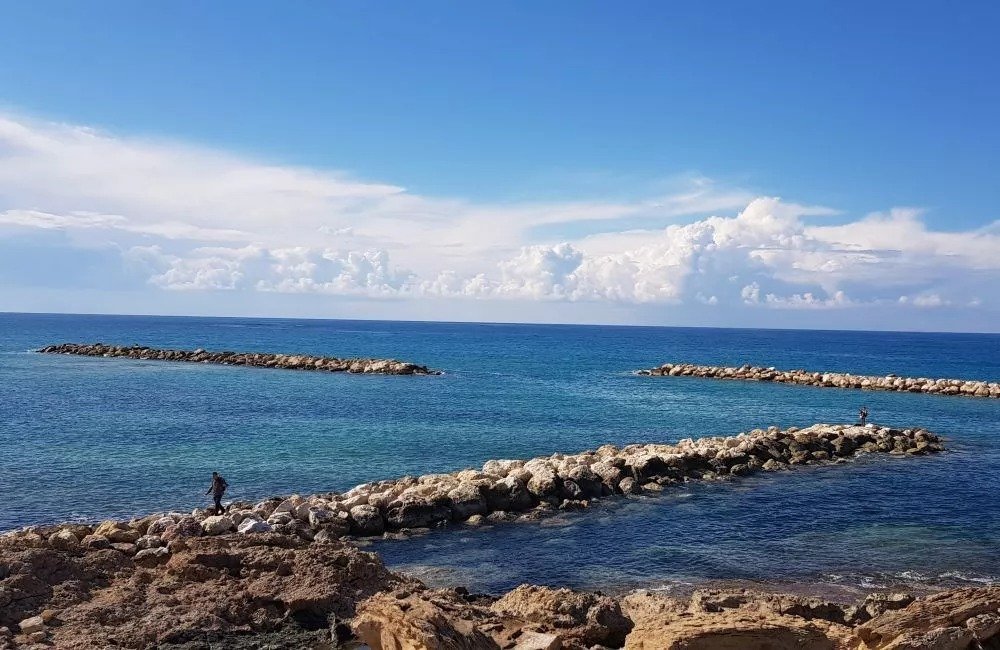
There will be no additional breakwaters along the coastline from Neo Chorio, Paphos, to Pachyammos, as indicated by the Special Ecological Assessment report. Therefore, alternative methods must be sought to limit the severe erosion observed in the wider area.
The project is assessed to have negative and irreversible impacts on the species and habitats in the area and therefore cannot proceed.
The proposed project is approximately 25 kilometres long and is located on the northern coastline of Cyprus. It is bounded to the west by the rocky outcrop near the Anassa hotel (Asprokremmos area within the boundaries of the Neo Chorio community) and to the east by the eastern boundary of Pomos Bay and the community of Pachyammos.
The Public Works Department and other competent authorities have proposed the construction of 43 breakwaters in five sub-areas.
In sub-area 1, extending from the eastern boundary of the Chalavro area to the natural protrusion of the coastline, east of the camping site in the eucalyptus forest of Polis Chrysochous, nine detached breakwaters are proposed.
In sub-area 2, extending from the natural protrusion of the coastline east of the camping site in Polis Chrysochous to the western boundary of the Argaka coastline, 13 detached breakwaters are proposed.
In sub-area 3, extending from the western boundary of Argaka beach to the western boundary of the coastal front of Nea Dimmata, seven detached breakwaters are proposed.
In sub-area 4, from the coastal front of Nea Dimmata to the Pomos fishing shelter, nine detached breakwaters are proposed.
In sub-area 5, from the Pomos fishing shelter to the eastern end of Pachyammos beach, one detached breakwater is proposed east of the Pomos fishing shelter, along with the construction of four detached breakwaters on Pachyammos beach.
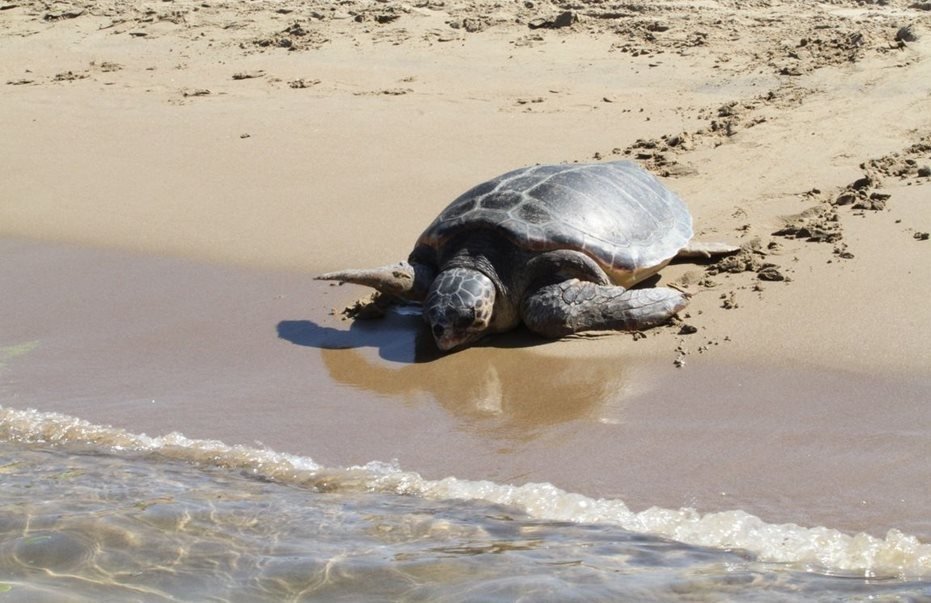
As mentioned in the report’s conclusions, the beach in the Natura 2000 network area of ‘Polis-Gialia’ is extremely important for the nesting of Caretta caretta and Chelonia mydas turtles. Therefore, the integrity of this area is crucial for the protection of these species.
Furthermore, it is emphasised that the construction of breakwaters poses a high risk of impacting the area and species due to various implications. Additionally, there are potential impacts on the other mentioned species and habitats, including a priority habitat.
The Special Ecological Assessment study has shown that the project could potentially affect the integrity of the Natura 2000 network sites and its implementation is not recommended.
It appears that even if no development takes place within the Natura 2000 network areas, there is still a risk of impact on these sites if breakwaters are constructed nearby, as they would shift the erosion problem to adjacent areas. This means that the coastal and marine sections of Special Areas of Conservation (SACs) and Special Protection Areas (SPAs) will be negatively affected even if no development occurs within their boundaries.
Moreover, turtles utilise the entire coastline within and outside the Natura 2000 network area, so impacts are likely from breakwaters outside this zone too. The same applies to the priority habitat 1120* Posidonia oceanica seagrass beds, which will suffer loss even outside the Natura 2000 zone.
The report also emphasises that the study does not adequately assess the impacts on the Mediterranean monk seal (Monachus monachus), considering that this protected species uses a cave near the project site and the wider study area.
Specifically, the entrance to the sea cave used by the monk seal is 220 metres from the first breakwater, and Asprokremmos beach, located 300 metres to the west, is also used by turtle species for nesting.
Significant impacts
Although breakwaters are a marine structure, they can also affect the land with the potential increase in beach area and subsequent human use, resulting in heightened human presence and disturbance to the species.
In conjunction with the existing coastal footpath in the area, this increased human activity could have additional cumulative impacts.
The area already has existing breakwaters and a small harbour, which add to the pressure and cumulative impacts on the region.
The initial assessment of the existing breakwaters deemed their impacts as insignificant, but with the addition of more structures, the cumulative effects will become significant.
Furthermore, there is already considerable pressure on the area due to illegal interventions in the beach protection zone, adjacent tourism and residential developments, existing legal and illegal catering and entertainment establishments, organised beach services, and breakwaters from the municipal beach to the camping site in the eucalyptus forest of Polis Chrysochous.
Impacts from the implementation of the development
Potential impacts that may arise during the construction and operation of the development within the Natura 2000 network area include habitat loss.
Specifically, during the construction phase, there is a potential risk of losing Posidonia seagrass meadows due to anchoring by vessels involved in the works.
The primary expected impact of constructing breakwaters is the reduction in the population of turtles that nest in the area. This is due to the displacement of nesting sites, as turtles rarely change their nesting locations.
Additionally, if a large part of the wider region is fitted with breakwaters, any potential displacement will become even more challenging.
It is important to note that there is a risk to hatchlings as they attempt to reach the sea, as they may become trapped by the breakwaters, crawl onto them, and become vulnerable to predators, or expend excessive energy trying to avoid the structures, again increasing the risk of predation.
Breakwaters create new habitats that can be utilised by predators, further increasing the mortality rate of hatchlings.
Breakwaters are designed to reduce erosion, which they achieve in front of the structures, but they cause erosion in areas not shielded by them.
Considering this, some sections will experience more sediment deposition and have more space for nesting, while others will have less. Since turtles typically return to the same nesting site each time, a portion of them will need to find alternative locations for egg deposition.
Additionally, with the construction of breakwaters, there is an expectation of a localised increase in the extent of the beach, leading to greater human presence and subsequent disturbance to the species.

