


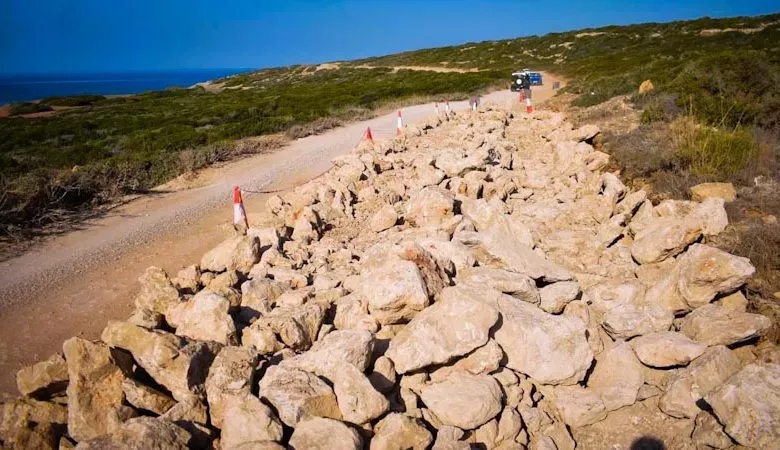
The Audit Office has sent its special report on construction works in Akamas National Forest Park to the Attorney General to assess possible criminal or other liability.
Auditors found that problems were caught only after the natural environment had already been disturbed, leading to suspended works, terminated contracts, redesigns, extra construction costs and irreparable environmental damage. The Department of Forests and the Environment Department, which are responsible for the works, reject the report’s conclusions.
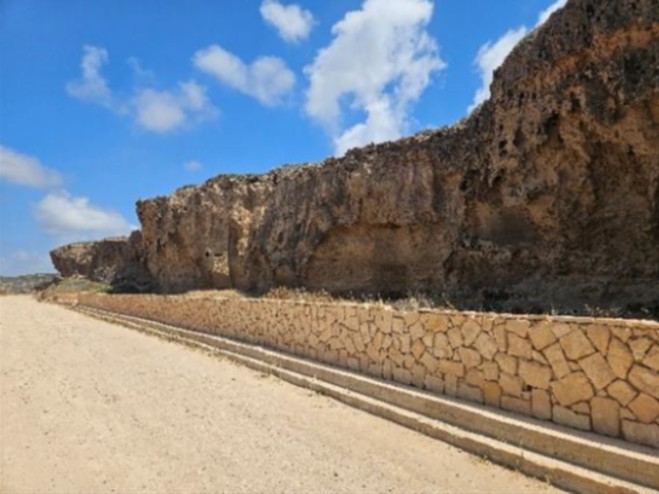
The contract to upgrade part of the park’s main road network under Phase A was worth 6,295,000 euros plus VAT. When work was suspended on 11 December 2023, only 1,112,158 euros’ worth had been carried out, 17.67 per cent of the project, although 94 per cent of the contract period had passed.
The report, which examines whether the works protect the environmentally sensitive Akamas peninsula, records a series of interlinked weaknesses, institutional gaps and departures from the conditions of the works’ environmental approval. Auditor General Andreas Papaconstantinou concludes that the planning, environmental assessment, incorporation of conditions into construction drawings and monitoring of the works point to a system without consistent preventive safeguards.
The report calls for real preventive safeguards to be put in place, saying the protection of Akamas cannot rely on spotting damage after the event but requires strict compliance with the law, transparency and timely supervision before any work starts on site.
It also notes that Cyprus was referred to the EU Court of Justice in April 2026 for continued failure to comply with the Habitats Directive.
Departments dispute findings
In a 34-page response from the Environment Directorate-General of the Ministry of Agriculture, Rural Development and Environment, the two departments defend their decisions and say the criticism overlooks the project’s technical features and its main aim, the sound management and protection of the park.
They do not accept the report’s references to irreparable environmental damage or to the works’ incompatibility, saying the plans were drawn up to protect the environment, control unregulated visitor numbers and implement the approved sustainable development plans.
Environmental assessment
According to the report, the Environmental Authority carried out the appropriate assessment of the Sustainable Development Plan without first setting specific conservation objectives for the ‘Akamas Peninsula’ Natura 2000 site. Under recent EU Court of Justice case law, setting such objectives beforehand is a legal precondition for a valid assessment, it said. No special ecological assessment study was carried out for Phase A of the road network either, despite what the report called the undeniable likelihood that the habitat would be affected.
The departments reject the view that the process was legally or environmentally flawed. They say the absence of a formal decree setting conservation objectives at the time of approval does not undermine the substance of the assessment, as all protected species and habitat types in the Natura 2000 site were taken into account.
Design and construction
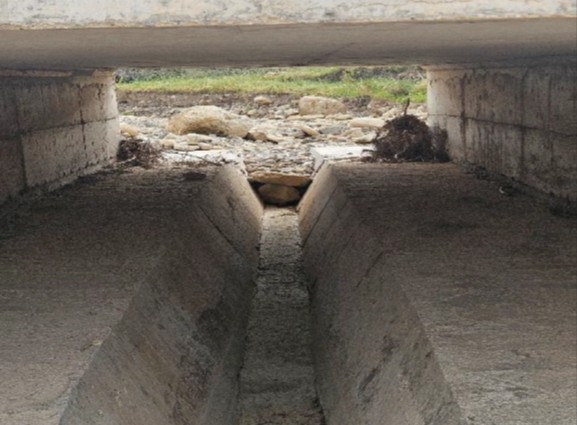
Auditors found that legally binding environmental conditions were not correctly reflected in the final construction drawings. On the Toxeftra–Avakas–Lipati road, box culverts were designed instead of bridges that leave the riverbed open to allow the movement of the critically endangered and strictly protected European eel (Anguilla anguilla). There were also discrepancies in road cross-sections and carriageway widths.
During construction, excavations reached depths of up to 2.10 metres against a permitted maximum of 1.875 metres, and the road was widened more and the works covered a wider area. Box culverts were built on top of the riverbed rather than sunk into it, and fish passes were blocked by sediment. Supervision proved inadequate, the report said, as the authorities did not detect the breaches in time.
The departments say the work, including the excavations and road widths, was carried out within the technical specifications needed for a safe road surface. They reject the view that the culverts blocked the movement of eels.
Waste and supplementary conditions
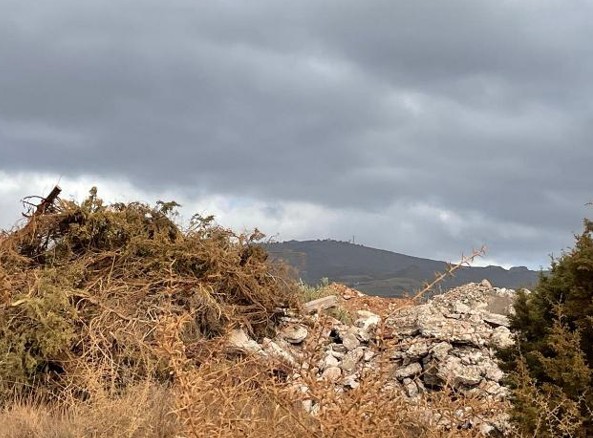
The plan for managing excavation, construction and demolition waste had serious shortcomings and did not include licensed disposal sites, according to the report. As a result, rubble and soil were dumped unchecked at various points inside the park, on undisturbed ground and natural habitats, in breach of the environmental approvals.
After the works were suspended in 2023, the Environmental Authority imposed 19 supplementary or amended conditions. Seventeen remained unmet, auditors found, while the other two, on over-excavation, could no longer be applied because the environmental damage was irreversible. The report also found that public money had been wasted on laying a 3,800-metre water pipe and cable, which it was later decided to remove because of their environmental impact.
The departments say the pipe and cable were initially considered necessary for visitor service points to run properly, and that later changes were part of a review and improvement of the design. They say most of the 19 conditions are being implemented or built into new plans, denying that nothing has been done.
Other findings
Peyia municipality rebuilt and widened the Lara road without a hydrological study or environmental approvals, channelling rainwater that is causing serious erosion on the park’s road network, the report found. It also said a tender issued by the Department of Forests in March 2026 included provisions inconsistent with Cabinet decisions and the Environmental Authority’s binding conditions.
The report also notes that illegal restaurants and leisure venues are still operating in the area.

