


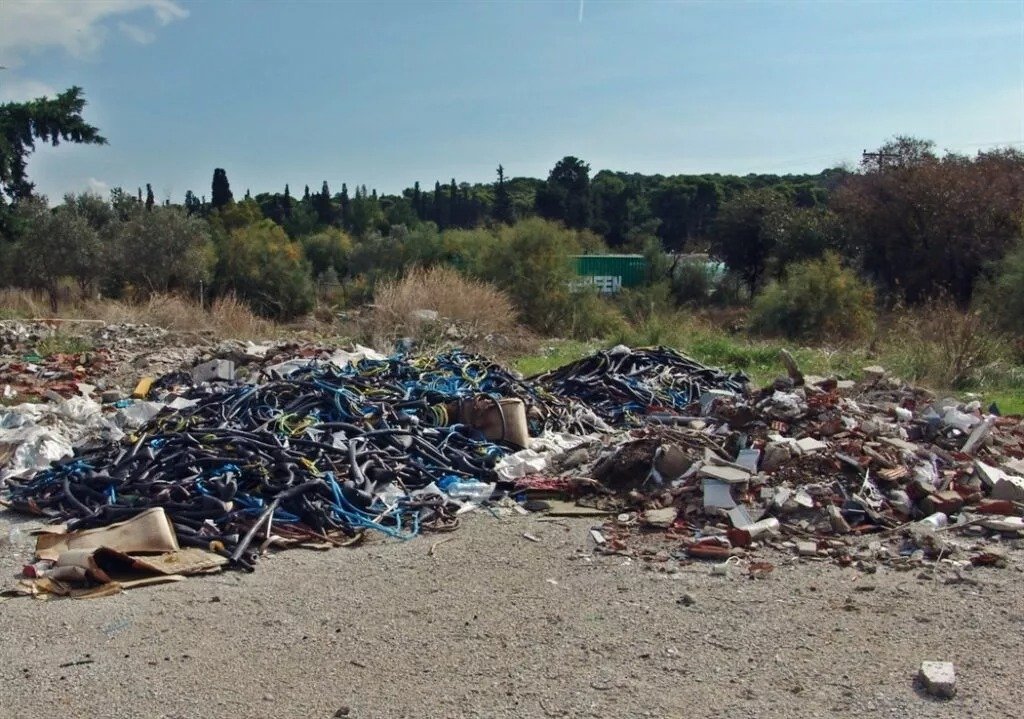
Household rubbish collection fees could soar to €1,000 per year without proper implementation of waste management reforms, Amathus mayor Kyriakos Xydias warned MPs yesterday.
Even in the best-case scenario, if local government reforms work as intended, each household would still pay around €400 annually, Xydias said during a parliamentary interior committee discussion on state grants to local authorities.
The mayor’s stark warnings came as he defended local government reforms against criticism from MPs that promised savings had not materialised.
Xydias pointed to a municipal district in his municipality that used to run up a €500,000 annual deficit before the reforms. He said the problem was solved in one year.
Responding to MPs’ criticism that reforms had not delivered promised savings, Xydias said staffing cuts alone saved over €200 million, but that ends up in state coffers whilst “we’re beating up the municipalities,” as he put it.
He highlighted what he called distortions in the system, asking whether it was not a distortion that legislation had recorded without local authorities’ consent a fixed state grant amount regardless of economic changes such as inflation and increased costs.
The mayor said local authorities found themselves in crisis over the grant last year, spending four months reaching an agreement, and this year the Finance Ministry had raised the issue again regarding grant percentages for salaries.
He said local authorities handle 20-25% of the state’s total responsibilities but receive only 1.06% of funding, compared to 3.16% in Greece and 28.8% in Denmark. If there was proper funding, he said, there would be no need to discuss whether salaries should be under 40% of each municipality’s budget.
Xydias said the tendency in Cyprus was to blame local government reform for everything, even when problems had nothing to do with it. He asked whether the reform was responsible for 8,000 pending planning applications before the reforms, or for the decision to transfer these backlogs to planning authorities against municipalities’ objections.
“We drowned the baby before we baptised it,” he said, adding that he could not listen to MPs saying no effort was being made to put municipalities’ houses in order. He said incredible efforts were being made for savings and rationalisation.
He said one municipal district, which deserved a Nobel Prize if one existed for such things, had a half-million-euro annual operating deficit. The issue was solved within a year, he said, asking where the state and the governor had been to check on this.
Xydias said huge efforts were being made and not everything should be blamed on the reform. On waste management, he warned that if the source separation system was not managed properly – something parliament voted for whilst municipalities opposed it – rubbish would be charged at €1,000 per household.
If the reform works and economies of scale materialise as announced, the fee might be €400, he said. But journalists would write that the reform meant fees rose from €200 to €400, he predicted.
The mayor said local authorities had always said their goal was to offer better services at the lowest price, but never claimed fees would be lower. Reforms had produced huge savings from staff cuts at provincial administrations, planning departments for permits, and public works for primary roads taken over by municipalities.
He said the amount saved was over €200 million. “The difference is that central government reaps the savings but we’re beating up local government,” he said.
Read more:

