


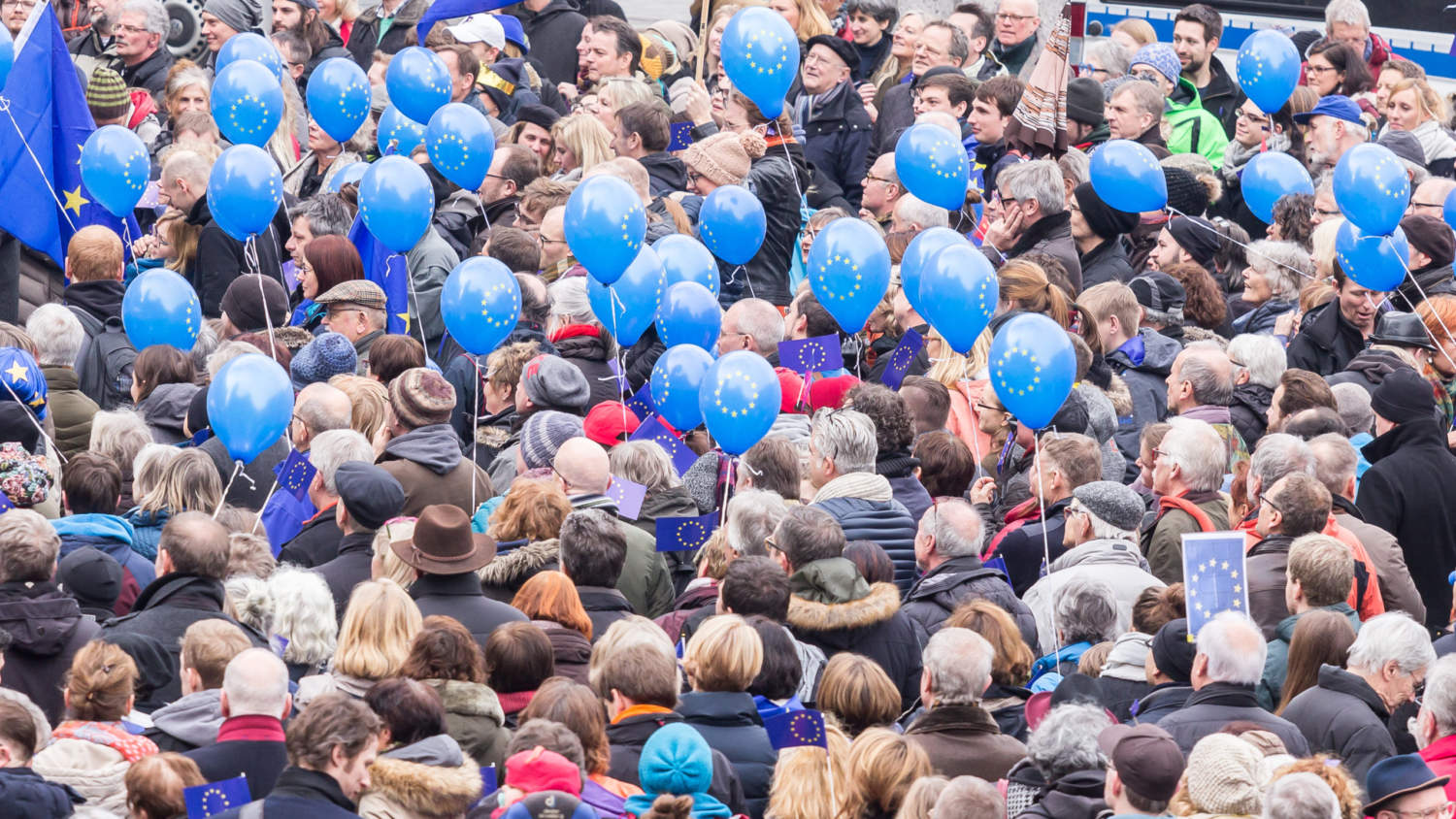
A new Eurobarometer survey finds rising civic participation among young people, as employment, inequality and affordable living remain their top priorities ahead of the next EU Youth Strategy.
Young Europeans are becoming more active in civic life, but they want policymakers to translate that engagement into tangible improvements in their prospects, according to a new European Commission survey published Wednesday.
The Flash Eurobarometer on Youth and Democracy, which surveyed 26,806 people aged 15 to 30 across the EU’s 27 member states, found that 75% had participated in at least one organisation’s activities in the previous 12 months, up from 64% in 2024.
Participation on the rise
More than half of respondents (55%) had taken part in an initiative aimed at bringing about societal change, compared with 48% two years earlier. Meanwhile, 60% said they had participated in activities in another EU country, an increase of 17 percentage points from a similar 2024 poll.
Sports clubs were the most common setting for organisational participation, cited by 26% of respondents, followed by youth clubs and youth organisations at 20%.
The findings point to growing civic engagement as Brussels prepares to shape its EU Youth Strategy beyond 2027.
Jobs and the cost of living top priorities
But greater participation comes with expectations for policymakers to deliver on the economic challenges facing younger generations.
Three-quarters of respondents said EU action affects their daily lives. Asked what they expected the bloc to deliver for their generation, young people most frequently cited preserving peace (33%), fighting poverty and economic and social inequalities (32%), and increasing job opportunities (31%).
Employment and the cost of living topped the list of priorities for future youth policies, with 40% identifying these issues as the most important focus. Ensuring young people and youth organisations have a say in decisions, and providing financial support for youth programmes, each ranked at 32%.
The results highlight a challenge for EU institutions: sustaining democratic engagement while addressing concerns about economic security and equal opportunities.
Commissioners warn of generational divide
“More engagement in society should mean more opportunities and access in society,” said Roxana Mînzatu, the Commission’s executive vice-president for social rights and skills, quality jobs and preparedness.
She added that reducing barriers in education and the labour market was a shared responsibility.
Glenn Micallef, commissioner for intergenerational fairness, youth, culture and sport, said young people wanted “a decent job, a home they can afford and a fair chance to build a good life”.
He added that only one in three respondents believed they had the same opportunities as the previous generation, describing the finding as a concern for policymakers.
Voting remains key to having a voice
Voting in elections and engaging on social media were the most frequently cited ways for young people to make their voices heard, at 33% and 32%, respectively.
The survey comes alongside the Commission’s “Protect What Matters — Our Democracy” campaign. A European Citizens’ Panel on democratic resilience, with one-third of participants aged 16 to 29, is preparing recommendations on strengthening democracy across Europe.
Conducted online from June 19 to July 1, 2026, the survey will inform the Commission’s reflection on the post-2027 youth strategy, including democratic participation, mobility and intergenerational fairness.
The message for Brussels is clear: young Europeans are increasingly willing to participate, but expect the EU to help build a more secure and fair future.
(Sources: Eurobarometer, European Commission)
Read more:

