


On Tuesday morning, a senior Israeli military delegation arrived in Rabat, Morocco, for talks with the country’s military leadership and intelligence chiefs.
The visit was hardly a secret. On the contrary, considerable details were disclosed while it was still underway — a move some could interpret as a message from Israel to several audiences, including Ankara.
Nor was this an isolated development. Strengthening defense ties with Morocco, the geopolitical contest unfolding across the Mediterranean, and the expansion of Israeli defense companies into Europe are all elements of a broader strategy that now extends well beyond conventional arms exports.
A new geostrategic landscape is taking shape across the Mediterranean, as Israel systematically expands its network of defense partnerships, from the eastern Mediterranean to the North African coast and Europe’s industrial heartlands.
The official visit to Morocco was the latest in a series of developments pointing in that direction. It carried particular significance against the backdrop of Israel’s rivalry with Turkey and Ankara’s efforts to extend its influence across the Mediterranean via Libya.
Meanwhile, a series of agreements with European countries highlights an increasingly important dimension of Israeli policy: rather than simply exporting weapons systems, Israel is investing in manufacturing facilities, technology transfers, and a growing role in Europe’s defense-industrial base.
Why Morocco — and why now?
The visit by the director-general of Israel’s Ministry of Defence, retired Major General Amir Baram, accompanied by senior representatives from across Israel’s security establishment, went well beyond reaffirming already close bilateral ties.
In Rabat, the delegation inaugurated the permanent headquarters of Israel’s defense attaché’s office, headed by Colonel Sharon Itach, the country’s first permanently stationed Israeli defense attaché.
“Morocco is not just another defense partner. It is much more than that,” Baram said, pointing to mutual trust, a shared historical heritage, and longstanding ties between the two peoples.
Relations between the two countries have developed rapidly, particularly since diplomatic ties were restored in 2020 under the Abraham Accords and a defense cooperation memorandum was signed in November 2021.
Since then, cooperation has expanded to include intelligence-sharing, military training, cybersecurity and government-to-government arms procurement. Israel’s recognition of Moroccan sovereignty over Western Sahara in 2023 also helped consolidate the political relationship.
Turkey, Libya and the Mediterranean
Morocco’s strategic location, overlooking both the western Mediterranean and the Atlantic, offers Israel an opportunity to establish an influential partnership well beyond its immediate neighborhood.
Israeli analysts argue that the deepening relationship takes on additional significance in the context of Turkey’s Mediterranean strategy, particularly Ankara’s efforts to consolidate what they regard as unlawful arrangements with Libya under its Blue Homeland doctrine.
The Turkey–Libya maritime delimitation memorandum, whose full ratification by the Libyan side on October 20 prompted renewed objections, illustrates the wider dispute over maritime jurisdiction in the region.
With the support of the European Union and the United States, Greece, Cyprus and Israel reject the memorandum, arguing that it infringes the sovereign rights of third countries and cannot produce legal consequences at their expense.
Morocco, however, is not a member of the Greece–Cyprus–Israel trilateral partnership, nor has it declared any common strategy directed against Turkey. Indeed, Rabat maintains good relations with Ankara.
Nevertheless, Israel’s growing presence along the North African coast significantly broadens the geographic scope of its defense and diplomatic engagement.
Its strategic importance lies primarily in the additional opportunities it creates for intelligence gathering, coordination, and monitoring developments across North Africa, at a time when Mediterranean security is increasingly intertwined with control of shipping routes, energy infrastructure, and shifting regional balances.
From buying weapons to building an industry
Beyond its geopolitical implications, the Israel–Morocco partnership marks a significant shift in the substance of defense agreements.
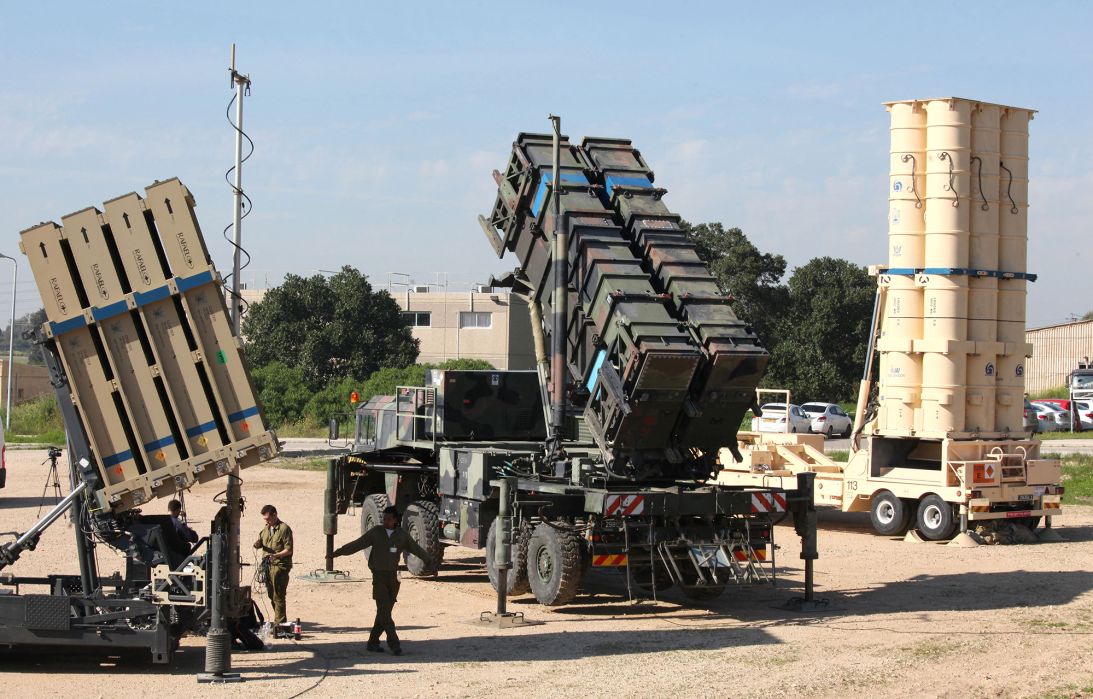
Israel’s Ministry of Defense confirms that Israeli companies are helping Morocco build an independent domestic defense industry through joint ventures, technology and expertise transfers, and industrial offset arrangements.
In other words, the relationship is no longer confined to Morocco’s acquisition of Israeli weapons systems. It increasingly involves developing Morocco’s own manufacturing capabilities.
An important step came in October, when Israel’s Ministry of Defense participated officially in the Marrakech defense exhibition for the first time.
Eight Israeli companies attended, alongside a national pavilion operated by the ministry — a highly symbolic presence that underscored the remarkable pace of development of bilateral defense ties.
Israel now accounts for approximately one-quarter of Morocco’s arms imports.
This approach strengthens Israel’s partners’ capabilities while establishing enduring technological, economic, and military ties.
The expansion into Europe
The same strategy is increasingly evident in Europe, where Israeli defense manufacturers are pursuing agreements that combine their technological expertise with European countries’ production infrastructure.
On November 9, Israel Weapon Industries and the Dutch company Artillerie Inrichtingen Armaments announced plans to establish a manufacturing and assembly facility for Israeli small arms in the Netherlands. The arrangement covers ARAD 5 rifles and NEGEV UX machine guns, intended for European customers and NATO member states. Notably, the project is moving forward despite political disagreements between the two governments.
Increasing demand for advanced defense systems appears to be creating opportunities for industrial cooperation even amid diplomatic tensions.
A similar development is unfolding in Germany, where Volkswagen, the German state of Lower Saxony, and Aurelius Capital have agreed to the principal terms of the proposed transfer of the Osnabrück automotive plant.
The aim is to gradually convert the facility into a center for developing and producing defense systems, with Israel’s Rafael Advanced Defense Systems participating in an initial air-defense program.
The planned investment carries considerable symbolic weight. A historic German automotive manufacturing facility could be repurposed to meet Europe’s defense needs, with Israeli technology playing a role.
Separately, Israeli defense manufacturer Elbit Systems is working with Germany’s Diehl Defense to market the SkyStriker loitering munition system to the German armed forces, with provisions for local manufacturing and assembly should a contract be awarded.
In Sweden, Elbit announced in October plans to establish a European center for producing, maintaining, and providing technical support for laser warning systems. The facility is expected to begin operations in 2027.
In Romania, Rafael has secured an agreement to supply SPYDER air-defense systems under a deal worth approximately €2 billion, including extensive industrial cooperation and domestic manufacturing participation.
These projects are at different stages of development, ranging from signed contracts to investments still on the drawing board.
Taken together, however, they illustrate a clear trend: Israeli defense companies are becoming increasingly embedded in Europe’s military-industrial production.
A new strategy within the EU
Europe’s drive to strengthen its defense capabilities is creating additional opportunities for Israel.
The European Union’s €150 billion SAFE financing instrument is designed to encourage European defense production and joint procurement.
Israeli companies’ ability to participate in these programs depends on specific EU rules governing where companies are established, corporate control, component origin, and rights over the technology involved.
Nevertheless, partnerships with European manufacturers offer fresh opportunities for industrial cooperation and investment.
For Israel, the benefits go well beyond the commercial value of weapons exports. They include building lasting international partnerships, strengthening its industrial base, and integrating Israeli defense technology into the long-term requirements of European armed forces. Similar partnerships are already taking shape with other EU member states.
From Rabat to the far reaches of the European Union, a broader strategy is increasingly apparent: Israel’s defense industry is evolving into an instrument of economic cooperation and enduring strategic influence.
In the Mediterranean, where competing claims to maritime jurisdiction intersect with energy ambitions and Europe’s growing defense requirements, that transformation is taking on particular significance.
Cyprus and Greece and Israel’s defense expansion
The Athens trilateral meeting, a common position on the Turkey–Libya maritime memorandum, and the prospect of developing a defense industry in Cyprus are reshaping regional security and creating new opportunities for Nicosia.
Israel’s expanding defense partnerships across the Mediterranean, most recently illustrated by its strengthening relationship with Morocco, have particular strategic significance for Cyprus and Greece.
The trilateral partnership among Nicosia, Athens and Jerusalem is steadily taking on a more practical dimension, extending beyond diplomatic declarations into defense production, maritime security and operational cooperation.
This was evident at the November 5 trilateral meeting in Athens, where officials responsible for defense policy from the three countries issued joint statements on maritime security, protecting energy infrastructure, and developing joint defense activities, including industrial cooperation.
Of particular importance was their explicit rejection of the Turkey–Libya maritime memorandum.
The joint statement stressed that the agreement infringes the sovereign rights of third countries and cannot have legal consequences at their expense.
It also reaffirmed support for the sovereignty, independence, and territorial integrity of the Republic of Cyprus, in accordance with United Nations Security Council resolutions.
This position extends beyond the specific dispute.
It demonstrates that Israel’s stance toward Turkish ambitions is not confined to individual bilateral disagreements but is part of a broader approach to security and maritime jurisdiction in the eastern Mediterranean.
Israel’s cooperation with Morocco could further expand this geostrategic landscape, though it does not imply a coordinated front with Athens and Nicosia.
It does, however, provide Israel with additional opportunities for engagement and strategic presence in North Africa, at a time when Turkey is seeking to strengthen its regional position through Libya.
For Cyprus, the industrial dimension of the trilateral relationship may be even more consequential.
At the Athens meeting, the three countries agreed to explore establishing a joint defense-industry working group to promote co-production, technological cooperation, and the development of shared defense capabilities.
The initiative coincides with interest among Israeli defense companies in establishing manufacturing facilities and administrative centers in Cyprus.
The prospect was discussed during Israeli President Isaac Herzog’s September visit to Nicosia.
Such investments could create jobs, transfer expertise, and enable Cyprus to join European defense manufacturing supply chains.
Access to European financing instruments such as SAFE, however, would remain subject to specific eligibility requirements.
From diplomacy to operational capability
The cooperation is already yielding tangible results.
On October 26, an agreement was signed to acquire a second Israeli offshore patrol vessel equipped with Rafael systems and to modernize Cyprus’s existing patrol vessel, Andreas Ioannides.
In Greece, meanwhile, an agreement worth approximately €3 billion for the Achilles Shield program is expanding Israel’s role in creating a new multilayered air-defense system.
Protecting critical underwater infrastructure, energy interconnections, and freedom of navigation is another central priority of the trilateral partnership.
These issues are of immediate importance to Cyprus, particularly regarding major projects such as the Great Sea Interconnector (GSI).
For Nicosia, therefore, the significance of the relationship extends far beyond military procurement.
The challenge is to turn its strategic partnership with Israel into a lasting framework for security, productive investment, and participation in Europe’s expanding defense industry.
This prospect could strengthen not only the Republic of Cyprus’s military capabilities but also its geostrategic standing.

