


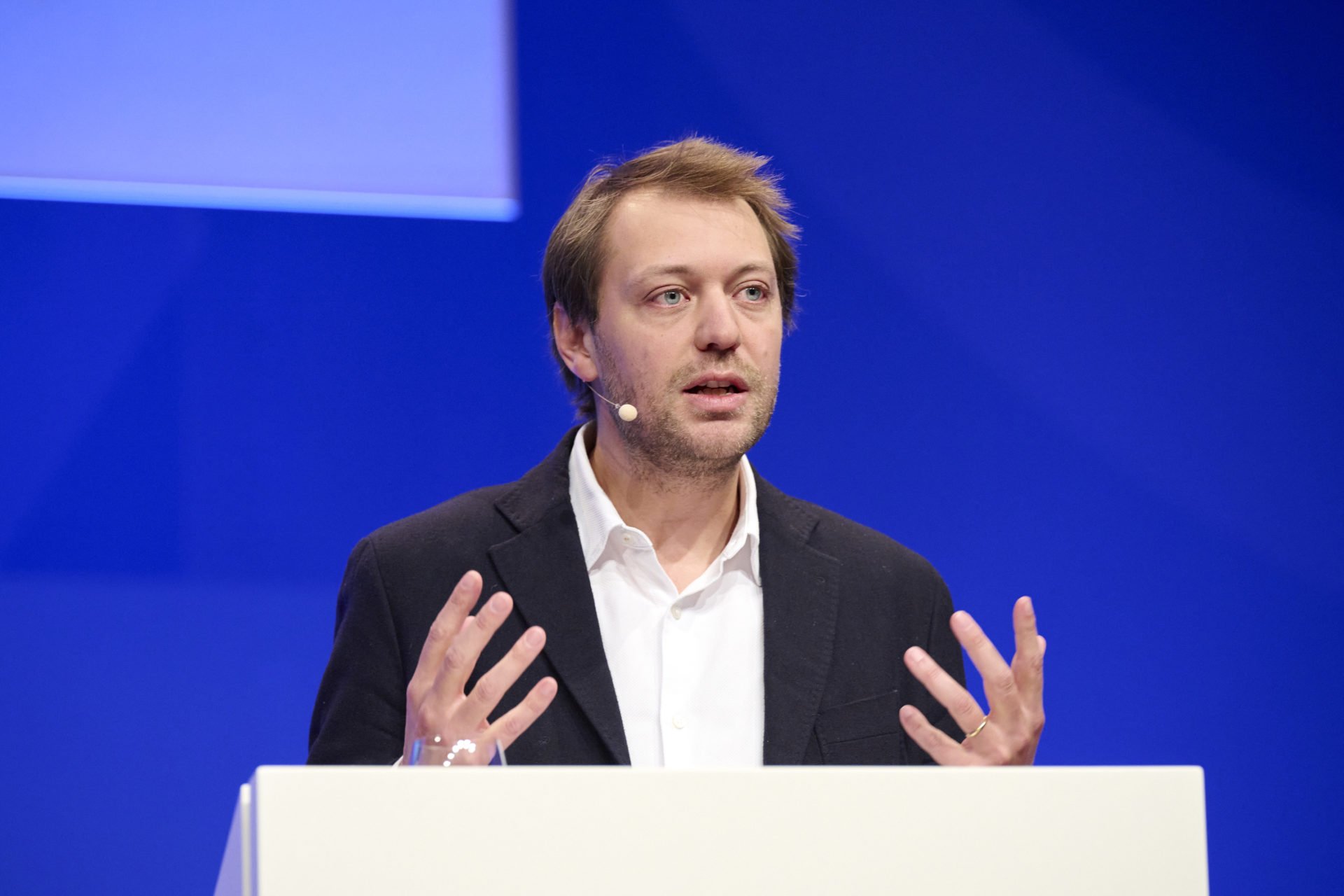
Picture by BKA.
Recent terrorist attacks in New Orleans and at the Christmas market in Magdeburg, combined with developments in Syria where confirmed jihadists now control the country, have awakened memories of when the Islamic State dominated the Middle East and attacked Europe.
Islamic terrorism is once again in the spotlight. Several European Union countries are on alert. How likely is it that Islamic State will capitalise on Abu Mohammed al-Julani’s success in Syria and regenerate, becoming a renewed threat to the West?
The situation is concerning, Thomas Renard, director of the International Centre for Counter-Terrorism (ICCT), told Phileleftheros. He explained that the greatest danger isn’t from jihadists leading Syria, but rather from terrorist organisations potentially exploiting the unrest to regroup. He also expressed concern about foreign fighters currently held in prisons in Kurdish areas.
Anti-terrorism services are on high alert, and Thomas Renard emphasised that Europe is better positioned today to counter terrorist threats, with measures and laws already in place strengthening counter-terrorism action. International cooperation and early intervention to prevent attacks are particularly important. Social structures and the internet play a decisive role in recruitment and radicalisation, making prevention and social strategy key in the fight against extremism.
He also stated that Cyprus, as a European Union member, plays an important role in international counter-terrorism efforts. He particularly highlighted the prevention of radicalisation. As he explained, Cyprus’s geographic location, especially its contact with Turkey, which is directly connected to Syria, makes it a significant entry point for terrorists trying to reach Europe.
How concerned are you about the fact that Syria is now led by a jihadist terrorist?
The situation is concerning, but at present, this isn’t what worries me most, in the sense that the Assad regime was also a very harsh regime that didn’t contribute to the international fight against terrorism. Therefore, if the new regime can bring more stability and security, this might be a positive development for the country and the region. Of course, there are many ‘ifs’ and ‘maybes’.
What concerns me now is a series of issues. First, there’s the fate of international foreign fighters and their family members who are still detained in Syria, mainly in the northern part of the country under Kurdish forces. And naturally, the question is what will happen if the new regime yields to Turkey and increases pressure on the Kurdish forces responsible for the camps and prisons where the detainees are held.
Another issue is that Syria’s new leader, al-Julani, is a former member of a jihadist organisation. It now appears he’s transformed his belief in global jihad and is focusing on a national struggle. But what will happen with the other jihadist groups? Will he be forced to fight them to stop their activities in Syria, or will he provide them some form of sanctuary? The latter could create significant causes for concern. Also, we need to see if he’ll manage to remain in power for long. His potential removal would destabilise the country again, and one of the consequences could be seeing Syria become a safe haven for international jihadist groups once more.
Could developments in the Middle East and Syria lead to terrorist attacks in Western countries?
I would say that what’s happening in Syria doesn’t directly increase terrorist threats to Europe. What could potentially create a greater danger would be if two things happen. The first would be a mass escape of foreign fighters from camps and prisons, because in such a scenario, you can imagine that several of them might travel back to Europe seeking revenge. The second would be if al-Julani’s government, either deliberately or through inability to prevent it, provides sanctuary to some international jihadist group. This could happen either deliberately as a strategic move or because they don’t have full control of the territory. In these two scenarios, we would need to reassess the risks from Syria.
Do you have data on approximately how many of these foreign fighters there are?
We don’t have exact figures. We estimate we’re talking about several hundred people, perhaps fewer than 500. And I’m referring to both the fighters and their family members.
Several years ago, Europe experienced terrorist attacks like those at Charlie Hebdo and the Bataclan. Is the West now better positioned to handle similar attacks?
Definitely, we’ve learned a lot since then, and those events brought about a real revolution in European counter-terrorism. I say this because, firstly, over the last decade we’ve seen the adoption of many laws that have essentially allowed further criminalisation of terrorism and particularly acts that could lead to terrorist attacks. Laws were adopted that strengthened counter-terrorism services, while many countries also increased relevant funding, resulting in these services growing in size and increasing their jurisdictions, such as surveillance or online infiltration.
Secondly, we’ve improved our ability to cooperate at national and international levels. There’s much more information sharing between counter-terrorism services, which is key to detecting and preventing terrorist attacks. Thirdly, our very perception has changed. Traditionally, there was a view that services should wait as long as possible to be able to prosecute and convict individuals involved in terrorist activities. Now, this no longer applies because counter-terrorism services have more powers and because laws allow them to intervene much earlier. Thus, they’re able to disrupt terrorist networks earlier and reduce the risk of terrorist attacks to a large degree.
Can you estimate approximately how many terrorist attacks have been prevented?
It’s very difficult to speak in exact numbers because many prevented attacks aren’t made public. However, on average, we can say that for every attack that happens, five to ten are prevented. In any case, it’s not often that a terrorist attack reaches completion and kills innocent people.
Is there evidence of Cyprus being connected to international jihadist networks? And what role can it play in counter-terrorism due to its geostrategic position?
We don’t have exact data for Cyprus because our organisation doesn’t collect such information for each country. Regarding the second part of the question, I would say that Cyprus, as a European Union member, is an important partner in the international fight against terrorism, especially concerning the prevention of radicalisation. Of course, as an island that has direct contact with a non-member country, Turkey, which is directly connected to Syria, Cyprus plays a very important role in this context as a potential entry point for individuals trying to reach Europe.
What is the current status of Islamic State and other jihadist organisations in the Middle East? Do they have the operational capabilities to carry out terrorist attacks against Western targets?
Jihadist groups, and especially Islamic State, are less capable and threatening than they were ten years ago because they don’t have the same ability to recruit, train, and plan attacks. However, there is a branch of Islamic State, Islamic State Khorasan in Afghanistan, that continues to be quite concerning and is considered the main terrorist threat to Europe by European intelligence services. But again, it’s not comparable to Islamic State in Syria and Iraq during the peak of the caliphate. It doesn’t control the same amount of territory, doesn’t have the same financial resources, doesn’t attract tens of thousands of foreign fighters.
But it has the ambition to carry out attacks globally, including in Europe, and has connections with hubs in Central Asia. We’ve seen individuals, mainly from Tajikistan and other Central Asian countries, being radicalised in Europe in recent years. We’ve also detected attempts by Islamic State Khorasan to infiltrate its members into Europe using refugee flows through Ukraine. These individuals travel through Central Asia, enter Ukraine, and enter Europe through the refugee flow from Ukraine. Thus, today it’s considered the most likely threat for a terrorist attack. The organisation can carry out a larger-scale terrorist attack with multiple casualties, as happened recently in Moscow.
Online radicalisation and recruitment
What role do social media play in recruiting and radicalising new members?
A very significant role. I won’t be breaking new ground by saying that for many years now, the online dimension has played a crucial role in radicalisation and the operational execution of terrorist attacks across Europe. What’s striking is that the age of individuals being radicalised and getting involved with terrorism is getting younger and younger. So now in Belgium, the Netherlands, and Britain, we’re seeing individuals aged 13 to 14 being arrested for planning terrorist attacks. This is mainly a result of the new generation being online most hours and therefore not only encountering extreme content earlier but being recruited too. It’s a real challenge for security services, because on one hand, we don’t want to imprison them for the rest of their lives, but on the other hand, this is a very serious crime.
What role do mosques and Islamic centres in Europe play, which are often accused of radicalisation and recruitment?
For some time now, mosques and Islamic centres in Europe haven’t been the main point for recruitment and radicalisation. What we’ve observed over the last two decades is that the most important role is played by online activities combined with friends and family environment. However, it’s true that certain mosques and Islamic centres present a different challenge related to democratic cohesion and stability. They don’t call for direct political violence or terrorism but rather seek to undermine democratic principles. For example, in relation to Muslim Brotherhood ideology and other similar ideologies, they play more at a long-term level and essentially try to instil the idea that some Muslims, the ‘real’ Muslims in their opinion, don’t need to follow the democratic principles of our European societies, but can live according to Sharia in Europe, which naturally presents a significant problem.
What measures can be taken to tackle extremism?
Unfortunately, after 60 years of research on terrorism and extremism, we still haven’t found the magic solution to answer this question. However, what we have done, particularly over the last 10 years, is that across Europe, we’ve invested significantly in preventing radicalisation and extremism. This can be achieved through engagement with young people and efforts to prevent delinquency. Authorities must be present and create structures, especially at the local level, that are informed about what’s happening with young people, understand what they’re facing, and listen to their concerns. It’s not so much about radicalisation, but more about identifying the early signs of a problem before it escalates. Social, preventive work must be done.
So it’s good for governments to invest in this effort?
Exactly. And here I should add that I’m worried that in these times of economic austerity we’re living in, funding for these services might be reduced or stopped, and we’re already seeing this happening. It’s a wrong move that holds many potential dangers. If you look back in time, some countries were pioneers in these efforts, particularly Britain, Denmark, and the Netherlands. Innovative programmes were created at both national and local levels. And all of this stopped more or less around 2010-2011 due to lack of funding and the reduction in terrorist threats. The following year, we had the Arab Spring, we had Syria, and then we saw large numbers of young people becoming radicalised, mobilised, and travelling to the Middle East. No one was there to talk to them and deter them.
Today we’ve built the infrastructure to detect early signs, to prevent these young people from doing something foolish. But of course, we need to continue investing in these programmes, in these people. And this is, naturally, something difficult. I understand that the economic situation is difficult, but the cost of not spending money in this direction will be much greater in the long term.

