


Nine countries currently possess nuclear weapons or are widely believed to hold such arsenals, according to the Associated Press and a recent report by the Stockholm International Peace Research Institute (SIPRI).
These countries include the five “traditional” nuclear powers and four additional states outside the Treaty on the Non-Proliferation of Nuclear Weapons (NPT).
The five nuclear powers under the NPT – the United States, Russia, China, France and the United Kingdom – have officially declared possession of nuclear weapons and signed the NPT, committing to long-term nuclear disarmament.
Outside the NPT framework, India and Pakistan have not signed the treaty and independently developed their nuclear programmes. India conducted its first test in 1974 and another in 1998, whilst Pakistan responded with its own tests the same year.
Israel, whilst not officially acknowledging nuclear possession, is widely considered a nuclear power. It has not signed the NPT and maintains a policy of “nuclear ambiguity”.
North Korea was an NPT member until 2003, when it withdrew citing US aggression. Since then, it has conducted a series of nuclear tests.
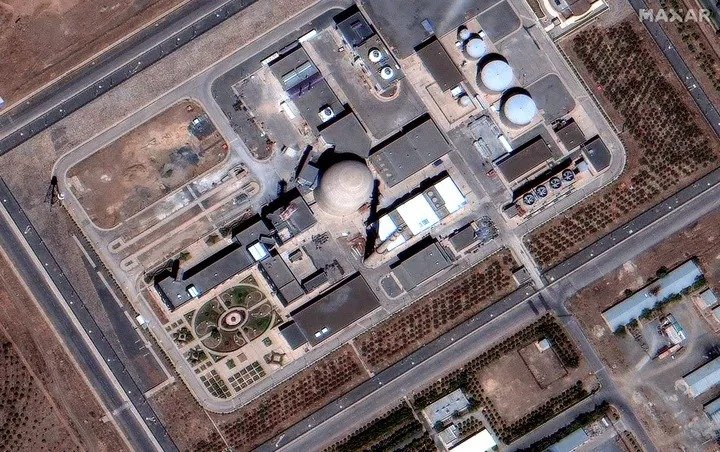
Iran, whilst not having confirmed weapons, continues uranium enrichment to levels up to 60%, approaching the 90% required for weapons, causing significant international concern.
According to SIPRI estimates from January 2025, nuclear warhead stockpiles stand at Russia 4,309, United States 3,700, China 600, France 290, United Kingdom 225, India 180, Pakistan 170, Israel 90, and North Korea 50.

Despite existing agreements and international pressure, the overall trend does not indicate global nuclear disarmament, as many countries continue investing in modernising or expanding their nuclear capabilities.
(information from huffingtonpost.gr)

